

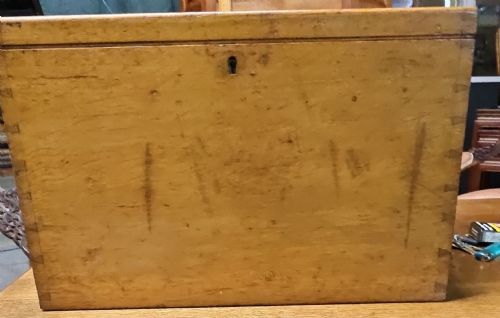
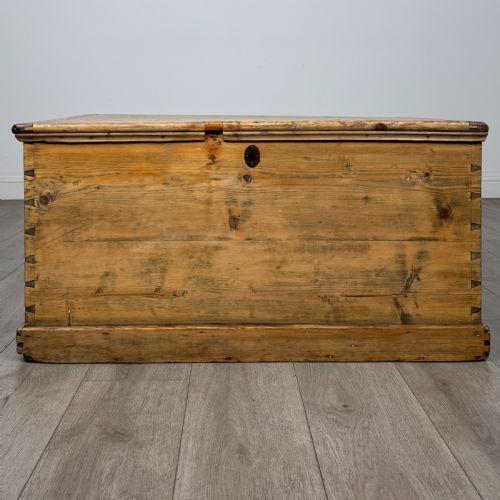
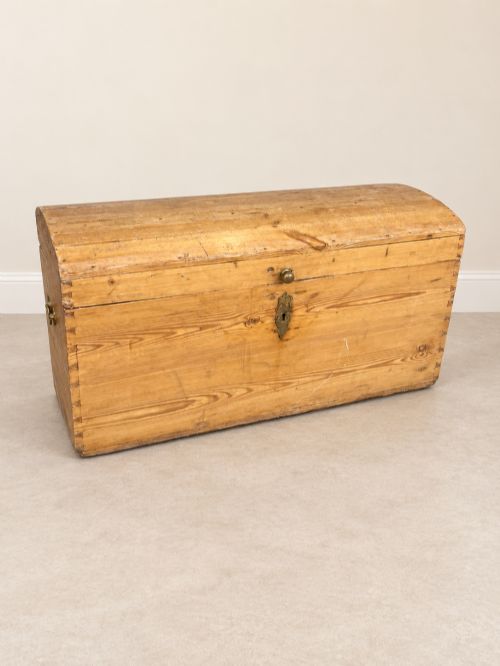
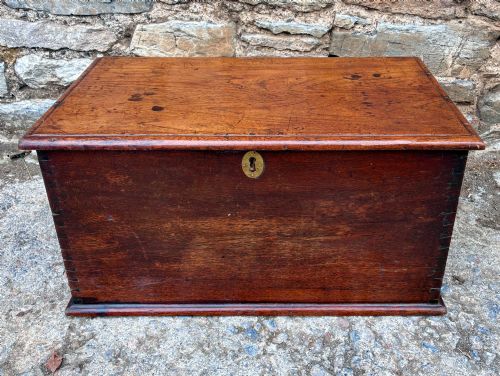
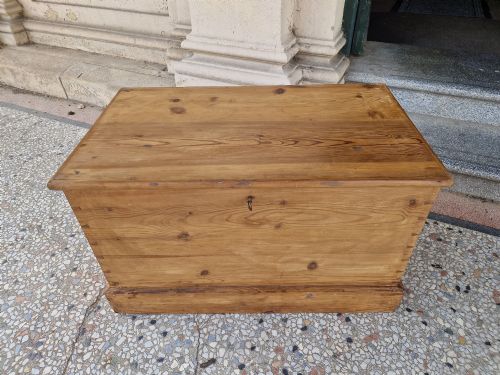


Dovetailed Wooden Chest
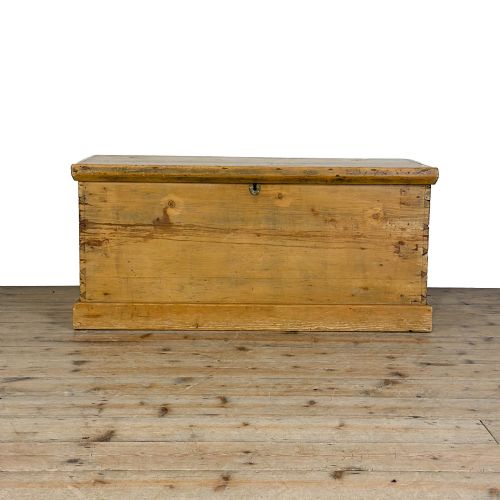
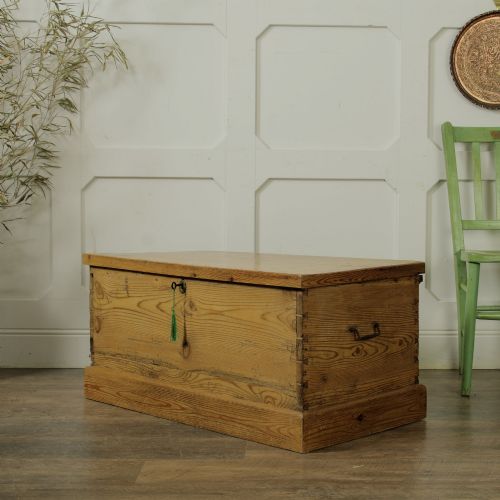
These dovetailed wooden chest pieces are robust utilitarian boxes built to hold blankets, linen or tools.
Dovetailed Wooden Chest
When you search for a dovetailed wooden chest, you encounter sturdy storage boxes originating from periods ranging from the seventeenth century through to the Victorian era. These pieces manifest in various forms including blanket boxes, mule chests, and military campaign trunks designed for travel or domestic storage.
The examples most commonly met on this page are constructed from pine, often featuring side handles and internal drawers for smaller items. You also find specialised pieces such as carpenter toolboxes in elm and exotic camphor wood trunks built for colonial service.
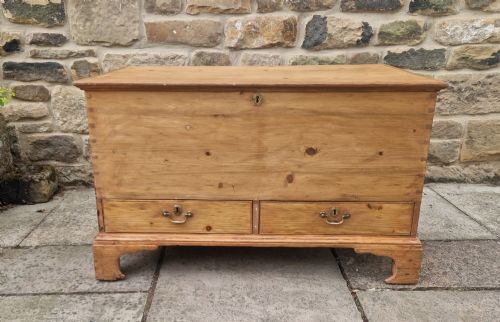
The forms span simple domestic blanket chests with domed tops to fitted Victorian boxes containing multiple small drawers. Each object reflects the practical storage needs of its period, utilising local or imported timbers suited to its intended use.
How they were made
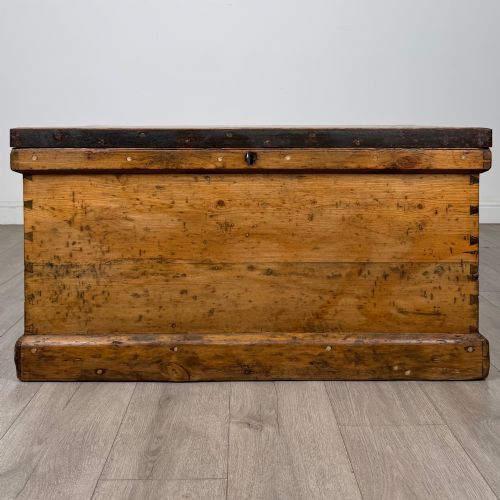
Joiners constructed these boxes using traditional dovetail joints at the corners, interlocking pins and tails to create a rigid frame without relying on modern adhesives. Timber selection depended on the application, ranging from domestic softwoods like pine and pitch pine to durable hardwoods such as teak, elm, and walnut.
Iron and brass hardware, including side handles, hinges, and lock plates, were fitted to secure the lids and facilitate lifting heavy loads. Surfaces were typically left natural, waxed, or stripped, revealing the grain of the wood and the precision of the hand-cut joints.
Dovetailed Wooden Chest Retail Price Guide 2026
Typical asking prices for dovetailed wooden chest among the pieces listed under this phrase on Sellingantiques today, from the lower quarter to the upper quarter. They describe what is for sale here now, not the wider market.
Listings feature pine, pitch pine, teak, elm, camphor wood, and walnut across periods from the seventeenth century to 1900.
What varies in quality
The refinement of the joinery sets apart the standard utility box from the finer workshop or campaign piece. Tighter, more precise dovetail pins demonstrate superior craftsmanship by the maker.
The choice of material and internal arrangement also distinguish the range, as boxes featuring secondary internal drawers, locking mechanisms, or dense hardwoods like camphor wood and walnut represent more sophisticated production than basic pine blanket chests.
The Dovetailed Wooden Chest Glossary
- Dovetail
- A corner joint formed by interlocking wedge-shaped fingers, prized for its structural strength and resistance to being pulled apart.
- Mule chest
- A traditional storage chest featuring one or more drawers beneath the main lift-top compartment, combining the functions of a box and a chest of drawers.
- Campaign trunk
- A portable chest built in sections or fitted with carrying handles, designed for military officers on the move during the nineteenth century.
- Pitch pine
- A resinous softwood utilised for its durability and prominent grain pattern, frequently seen in Victorian trunks and chests.
- Domed top
- A curved lid construction that sheds water effectively and provides extra internal clearance for bulky textiles.
Dovetailed Wooden Chest: Frequently Asked Questions
What is a dovetailed wooden chest used for?
These boxes served primarily for storing blankets, household linen, and personal possessions in domestic settings. Specialised versions also held tools for carpenters or travel gear for military officers.
Today, they function well as coffee tables, end-of-bed storage, or discrete containers for living room clutter while adding period character to a room.
How do I date an old chest?
Dating relies on examining the timber species, construction methods, and hardware style. Hand-cut dovetails, forged iron hinges, and secondary woods inside drawers point towards specific historical periods.
Earlier pieces from the seventeenth century display different proportions and joinery techniques compared to mass-produced Victorian or later nineteenth-century examples.
Are these chests heavy?
Weight varies considerably depending on the timber used in construction. Dense tropical hardwoods like teak and camphor wood, along with thick elm toolboxes, add substantial weight.
Pine and pitch pine versions are generally lighter, though large Victorian blanket chests still require two people to lift safely when empty.