

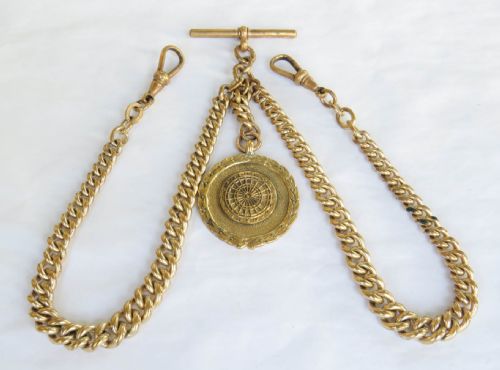


Double Link Gold Chain
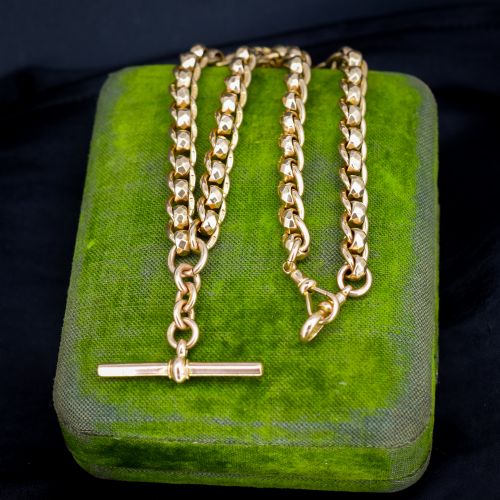
A double link gold chain is a robust adornment worn as a necklace or adapted from a pocket watch chain.
Double Link Gold Chain
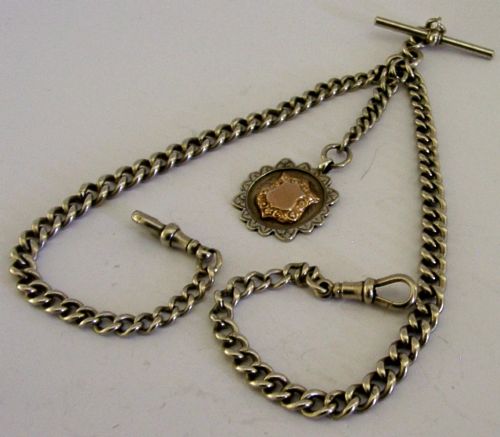
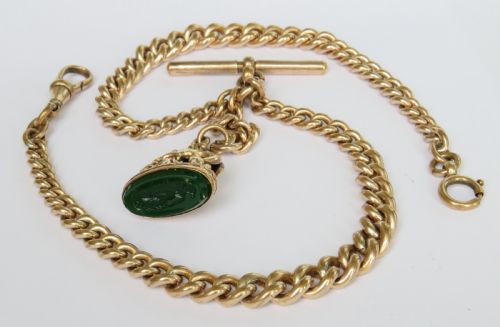
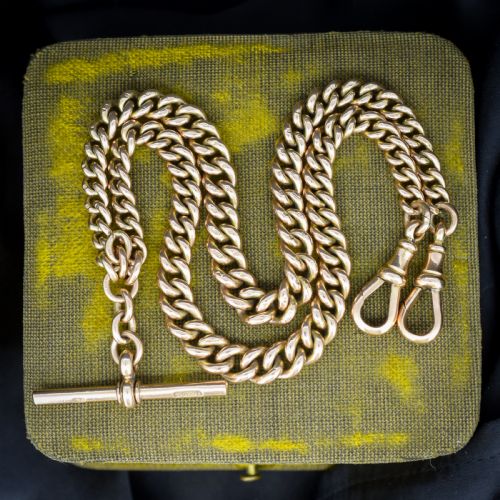
A double link gold chain brings together historical pocket watch attachments and traditional necklaces, often taking the form of an Albert chain designed with dog clips and T-bars. When you search for a double link gold chain, you encounter sturdy watch chains from the Victorian, Edwardian, and Art Deco periods alongside double strand necklaces.
Origins stretch across the nineteenth and early twentieth centuries, including British assay office pieces marked for Chester alongside continental examples. These items survive as versatile neckwear, changing from practical timekeeper holders into substantial modern necklaces.
How they were made
Metals range from solid 9ct, 12ct, 15ct, and 18ct gold to rolled gold and gold plate, giving varying weights from light strands to heavy seventy-gram constructions. Artisans linked curb, fetter, and trombone patterns by hand or machine, attaching swivel clasps, dog clips, and T-bars securely to the ends.
Selected pieces incorporate decorative elements such as pearls, blue enamel, aquamarine, and split pearls set into links or clasps. White and rose gold variations appear alongside traditional yellow gold, demonstrating diverse alloying techniques of the Victorian and Edwardian eras.
Double Link Gold Chain Retail Price Guide 2026
Typical asking prices for double link gold chain among the pieces listed under this phrase on Sellingantiques today, from the lower quarter to the upper quarter. They describe what is for sale here now, not the wider market.
Listings feature items spanning the Georgian period through the 1930s, constructed in 9ct, 12ct, 15ct, and 18ct gold, rolled gold, and gold plate.
What varies in quality
Quality rests upon the weight of the metal and the integrity of the individual links, where solid gold constructions command greater substance than rolled gold or plated alternatives. Substantial gram weights in graduated curb or trombone links signal superior durability and material value.
The presence of original hallmarks, functional dog clips, and intact T-bars elevates a piece, as does the complexity of the link formation. Uniformity in link wear and secure closures distinguish finer workshop outputs from simpler commercial production.
The Double Link Gold Chain Glossary
- Albert chain
- A pocket watch chain designed to be secured through a waistcoat buttonhole by a T-bar. These chains often feature dog clips at either end to hold a watch and pendant.
- Dog clip
- A spring-loaded snap hook attached to watch chains and necklaces. It allows the wearer to fasten securely to loops or other links.
- T-bar
- A short transverse metal bar attached to the centre of a watch chain. It slotted into a waistcoat buttonhole to anchor the chain securely.
- Curb link
- A chain design composed of interlocking links that have been twisted to lie flat. This pattern forms the basis of many traditional watch chains.
- Rolled gold
- A manufacturing method involving a thin layer of solid gold mechanically bonded to a base metal core. It provides the appearance of solid gold at a different scale of substance.
- Trombone link
- A chain link pattern alternating long rectangular links with smaller circular or oval connectors. It is frequently seen in nineteenth-century pocket watch chains.
Double Link Gold Chain: Frequently Asked Questions
How do I wear a watch chain as a necklace?
Many watch chains measure between fourteen and eighteen inches, making them suitable to fasten directly around the neck using the existing dog clips. You can attach the ends together or let a T-bar hang as a decorative pendant drop.
Heavier specimens provide a substantial choker or collar effect, echoing their original Victorian utility on a waistcoat. The built-in clasps make adjustment straightforward without needing a jeweler.
What is the difference between solid gold and rolled gold?
Solid gold chains consist entirely of precious metal alloy throughout each link, indicated by carat stamps such as 9ct or 18ct. These pieces carry significant weight and hold their material value over time.
Rolled gold uses a thick layer of gold bonded to a base metal substrate, offering the visual appearance of solid metal with a lighter overall mass. Both types appear frequently in historical watch chain inventories.
How can I tell the period of a chain?
Dating relies on hallmarks stamped onto individual links, dog clips, or T-bars, which often record assay office symbols and specific active years. Chester hallmarks and specific clasp styles help anchor pieces securely to the Victorian or Edwardian eras.
Link geometry and construction methods also offer clues, as trombone and fetter patterns gained popularity during specific decades of the nineteenth and early twentieth centuries. Comparing weight and colour alloy trends further clarifies the manufacturing period.
What were T-bars used for originally?
The T-bar served as the anchoring toggle for a pocket watch chain, slipping horizontally through a gentleman's waistcoat buttonhole. This kept the timepiece secure in a lower pocket while the chain draped across the front.
Today, the T-bar remains attached as a signature decorative feature when the chain is repurposed as a necklace. It acts as a central focal point hanging below the collar.