




Double Gourd Vase
A double gourd vase brings an ancient silhouette into a room, shaped like a pair of stacked spheres to symbolise prosperity.
Double Gourd Vase
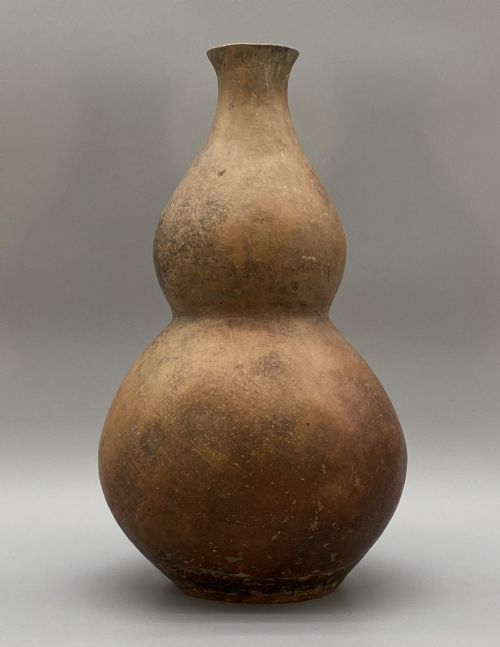
A double gourd vase takes its distinctive figure-eight silhouette from traditional East Asian vessels, scaled down for cabinets or expanded for floor display. When you search for a double gourd vase, you encounter ceramics spanning multiple centuries, from Neolithic earthen vessels to nineteenth-century porcelain exports.
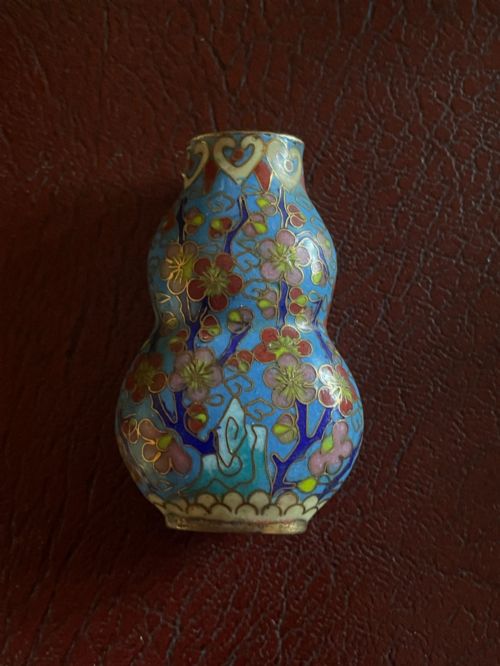
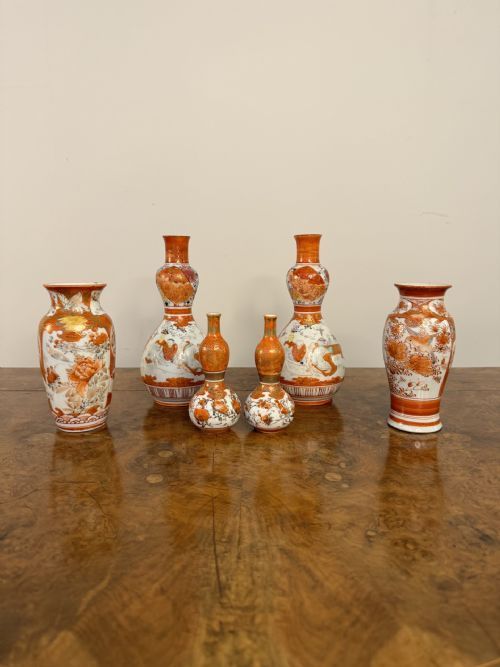
The pieces on this page lean heavily towards nineteenth-century Japanese Imari ware and Chinese blue and white porcelain, alongside European interpretations in faience and earthenware. You will find miniature cloisonne works, large Qing dynasty vessels, and pieces later converted into table lamps.
Forms range from simple blue-glazed porcelain to elaborately patterned Kutani and Dutch earthenware. Each example employs the characteristic constricted waist, dividing the upper bulb from the larger lower sphere.
Materials and construction
Makers shaped these vessels primarily from porcelain, earthenware, and faience, applying cobalt pigment beneath transparent glazes or building intricate designs with enamel and gold leaf. Japanese Imari and Chinese blue and white pieces rely on high-firing techniques to fuse mineral pigments directly to the ceramic body.
Metalwork appears in the form of brass mounts, bronze lamp fittings, and champleve or cloisonne wirework soldered to metal bases. Potters threw larger vessels on wheels or built them in sections before joining the upper and lower bulbs at the waist.
Double Gourd Vase Retail Price Guide 2026
Typical asking prices for double gourd vase among the pieces listed under this phrase on Sellingantiques today, from the lower quarter to the upper quarter. They describe what is for sale here now, not the wider market.
Several bulbous vessels found a second life illuminating Victorian reading desks after being converted into table lamps.
Assessing quality and execution
Quality rests on the crispness of the potting and the precision of the painted or enameled decoration. Superior examples display balanced proportions between the upper and lower bulbs, with smooth, even glazes free of heavy pooling or dry patches.
Finer porcelain pieces achieve a resonant ring and delicate thinness without losing structural integrity, while decorative metal and cloisonne work depends on the tightness of the wire cells and the smooth polish of the enamel infill.
Doulton Lambeth·Meissen·Burmantofts Faience·Wedgwood
The Double Gourd Vase Glossary
- Imari
- A style of Japanese porcelain featuring underglaze blue and overglaze iron red, gold, and supplementary colours. It originated in the Edo period and was widely exported to Europe.
- Cloisonne
- An enamelwork technique where metal wire creates raised partitions on a base, which are then filled with coloured paste and fired. Miniature examples demonstrate immense technical skill.
- Faience
- Tin-glazed earthenware produced across Europe, often associated with decorative pottery styles of the late nineteenth century. It provides an opaque white surface for painted designs.
- Celadon
- A term for ceramics denoting a pale green jade-like glaze. This finish results from iron oxide in the glaze reacting during a reduction firing.
Double Gourd Vase: Frequently Asked Questions
What is a double gourd vase?
A double gourd vase is a container shaped like two stacked spheres, traditionally resembling the dried gourd fruit used for carrying water. The constriction at the middle creates a distinct figure-eight profile.
This form has roots in ancient Chinese and Japanese ceramics, chosen for its auspicious symbolism representing fortune and longevity.
How were these vases used?
These vessels served primarily as decorative ornaments in scholar's studios, reception rooms, and formal European interiors. Their balanced proportions made them focal points on mantelpieces and display cabinets.
Over time, many later examples were adapted into table lamps while retaining their original ceramic bodies.
How do I date an antique vase?
Dating relies on examining the potting technique, glaze characteristics, base marks, and stylistic motifs. Nineteenth-century pieces often reflect specific reign marks or export trade patterns.
European interpretations frequently mimic Asian prototypes while utilising local nineteenth-century faience or porcelain bodies.
How do I care for antique ceramics?
Keep ceramic and porcelain vessels out of direct sunlight to prevent fading on overglaze enamels and gold leaf. Dust gently with a soft dry cloth.
Avoid using water or cleaning agents on pieces with metal mounts or converted lamp fittings to protect the wiring and patination.