
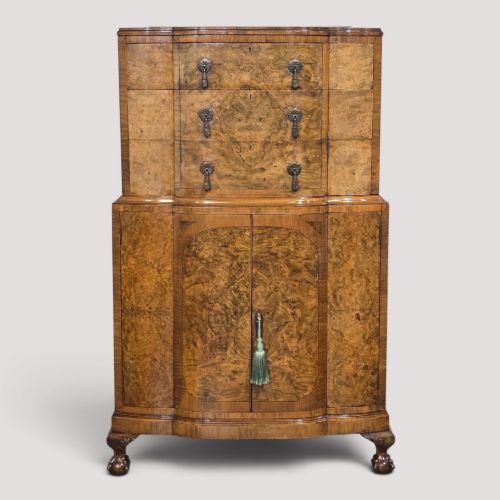
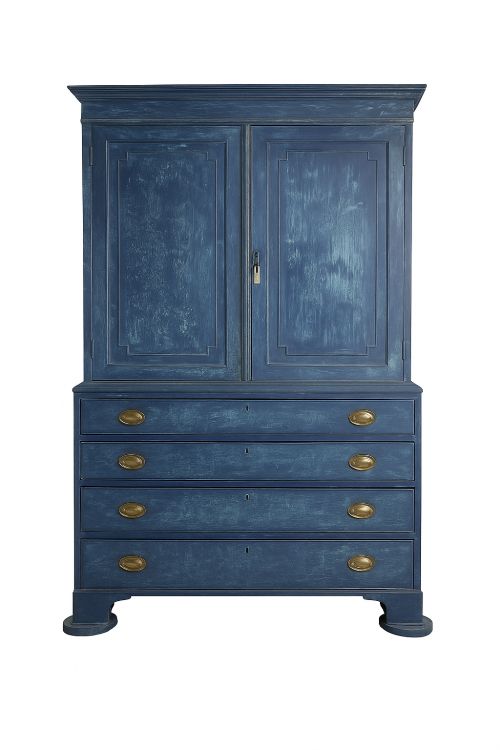


Double Door Chest Drawers
Double door chest drawers unite upper cupboard storage with lower drawer capacity, offering an architectural presence that anchors a traditional room.
Double Door Chest Drawers
When you search for double door chest drawers, you are looking at substantial storage furniture that combines enclosed upper shelving or hanging space with lower sets of drawers. These pieces range from Georgian cabinets on chests to Victorian linen presses, tallboys, and combination wardrobes.
The versions you are most likely to meet on this page span the eighteenth, nineteenth, and twentieth centuries. They appear in regional pine, figured timbers like mahogany and walnut, and occasionally with painted finishes.
Such forms evolved to store linens, clothing, and household goods before fitted wardrobes became standard in British homes. Their dual construction requires a sturdy base section of drawers to support the heavy upper cabinet doors.
Construction and materials
Cabinet makers built these pieces using solid timbers like pine and mahogany, often applying decorative veneers such as flame mahogany or burr walnut to the primary surfaces. Secondary woods lined the interior drawers, while brass hardware secured the doors and pulled the drawers.
Construction techniques combined traditional joinery for the carcase with panelled doors to prevent warping over time. Waxed, polished, or painted finishes protected the wood and highlighted the natural grain patterns of the timber.
Listings feature periods spanning from the eighteenth century through the Regency and Victorian eras up to the nineteen-fifties.
Assessing quality
Quality in these double door chest drawers rests upon the choice of timber and the precision of the cabinet work. Pieces featuring figured veneers like burr walnut or flame mahogany sit higher in the range than utility pine examples.
Proportion and architectural detail separate finer workshops from standard production. Well-executed cornices, original brass handles, and tightly fitted drawer dovetails indicate superior craftsmanship.
The Double Door Chest Drawers Glossary
- Linen Press
- A tall storage piece featuring upper double doors enclosing shelves, set above a lower base of horizontal drawers. It was traditionally used to store household linens flat.
- Tallboy
- A tall chest of drawers split into two sections, often with a double door cabinet sitting atop a wider drawer base. This configuration maximises vertical storage capacity.
- Veneer
- A thin layer of decorative wood, such as burr walnut or flame mahogany, applied to a stable secondary timber carcase. It creates rich visual patterns across large flat surfaces.
- Dovetail
- A traditional interlocking joint used to construct sturdy drawer corners. Hand-cut dovetails are a hallmark of older, finer cabinet making.
Double Door Chest Drawers: Frequently Asked Questions
What is a double door chest drawers?
These pieces are large storage furniture items that combine upper cabinet doors with lower drawer sections. They include linen presses, tallboys, and cabinets on chests.
Such furniture provided essential storage for clothes and linens in traditional homes before built-in wardrobes existed.
How were linen presses used?
Linen presses stored folded table linen, sheets, and garments on internal sliding shelves behind the upper double doors. The lower drawers held smaller items.
Keeping textiles flat and enclosed protected them from dust and dampness in historic British houses.
How do I date a cabinet?
Dating relies on identifying the timber species, construction methods, and stylistic details such as cornices and bracket feet. Georgian and Regency pieces show different proportions to Victorian examples.
Drawer construction also helps, as hand-cut joints differ from later machine-made manufacturing methods.
Are these pieces heavy?
These items are exceptionally heavy and substantial, constructed from dense hardwoods or thick pine timbers. Many separate into an upper cabinet and lower drawer base for moving.
Wall anchoring is often recommended for safety once the furniture is positioned in a room.