

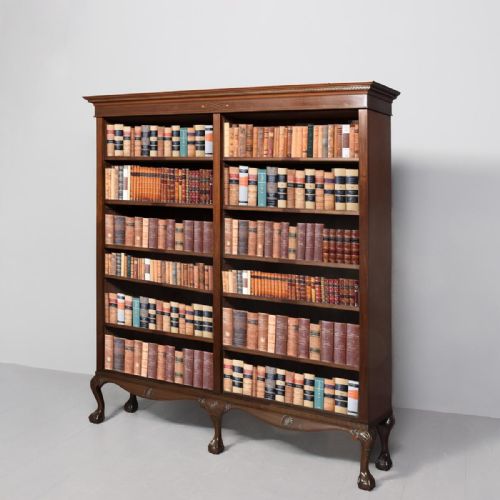


Double Bay Bookshelf
These double bay bookshelf examples offer substantial storage in mahogany, oak, rosewood and walnut, bringing classic library proportions straight into a modern study.
Double Bay Bookshelf
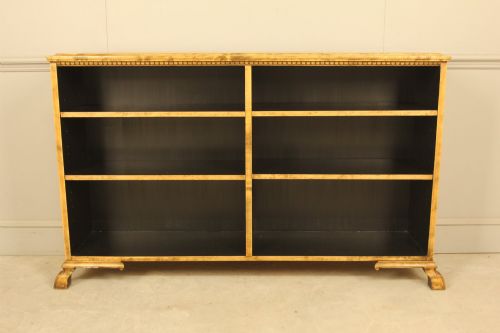
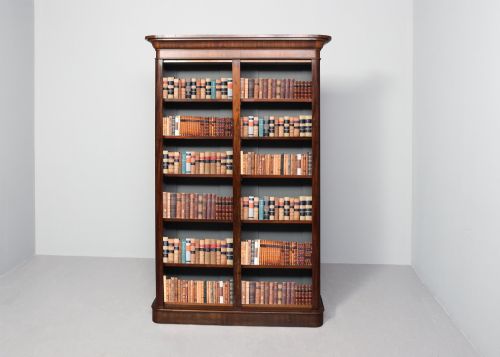
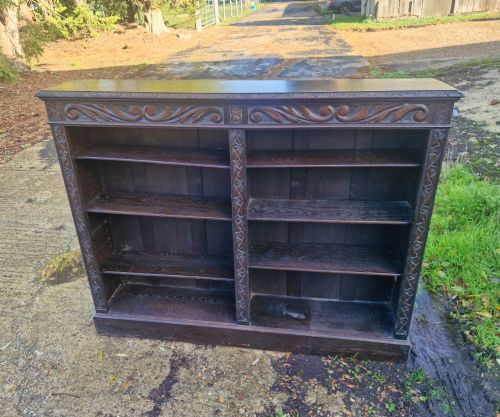
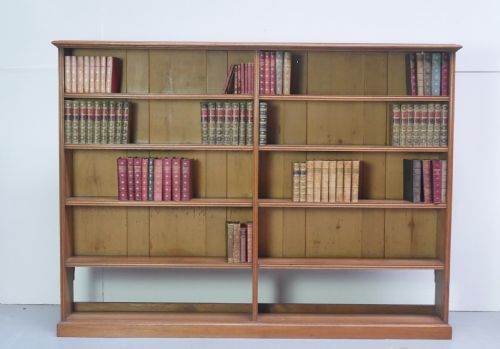
A double bay bookshelf provides twin sections of open shelving housed within a single substantial frame, designed to hold significant collections of volumes. These pieces appear across Victorian, Edwardian and early twentieth century periods, reflecting varied domestic demands for large scale book storage.
The format relies on generous proportions, frequently utilising plinth bases or open fronts that keep heavy volumes accessible. Most variants seen here present open library shelving, occasionally featuring adjustable internal boards to accommodate different sizes of books.
Materials and construction
Cabinet makers relied primarily on timbers such as mahogany, oak and rosewood, applying satinwood or intricate wood inlay for decorative contrast on select surfaces. Burr walnut also appears, providing rich grain patterns across larger architectural frames.
Joinery methods focused on stability to support heavy rows of books, incorporating sturdy plinths and structured uprights to divide the two bays. Shelves were frequently engineered to be adjustable, resting on timber supports within the twin compartments.
Double Bay Bookshelf Retail Price Guide 2026
Typical asking prices for double bay bookshelf among the pieces listed under this phrase on Sellingantiques today, from the lower quarter to the upper quarter. They describe what is for sale here now, not the wider market.
Current listings span from the mid nineteenth century through the 1930s, featuring woods such as mahogany, oak, rosewood and burr walnut.
Assessing quality
Distinction in these pieces rests upon the selection of timber figures and the restraint of decorative inlay. Examples utilising burr walnut or figured mahogany display deeper visual character across the double bay facade.
Refinement shows in the execution of the plinth base and the integration of adjustable shelving mechanisms. Well proportioned cornices and clean joins elevate standard utility furniture into accomplished cabinet work.
Waring and Gillows
The Double Bay Bookshelf Glossary
- Plinth base
- A solid flat-bottomed foundation supporting the heavy upright frame of the bookcase. This provides stable weight distribution across floor surfaces.
- Adjustable shelves
- Internal boards resting on movable supports that allow custom height spacing between tiers. This system accommodates volumes of varying heights within the bays.
- Open bookcase
- A front-facing storage unit without doors, exposing the book spines directly to the room. It prioritises immediate access over enclosed preservation.
- Wood inlay
- Decorative pieces of contrasting timber fitted into the primary surface grain to create geometric or floral patterns. Sheraton Revival pieces frequently employ this technique.
Double Bay Bookshelf: Frequently Asked Questions
What is a double bay bookshelf?
A double bay bookshelf is a large storage unit divided vertically into two distinct sections for holding books. These units provide extended horizontal shelf space within a unified architectural frame.
They appear primarily in hardwood timbers such as mahogany and oak, designed to anchor large private libraries or studies.
How were these bookcases used?
These bookcases were built for domestic libraries, studies and formal living rooms to organise extensive private collections. The open front design allowed scholars and readers immediate access to frequently referenced volumes.
Adjustable shelving enabled owners to rearrange the internal layout as their collection of books grew and changed in size.
How do I style a large wooden bookcase?
Position the bookcase against a substantial wall in a room with adequate clearance to let the timber grain and proportions stand out. Balance heavy volumes with decorative objects or small collections to keep the open shelves visually engaging.
Ensure the room humidity remains stable to protect the antique hardwood and prevent timber movement in the large side panels.
How do I identify Victorian and Edwardian periods?
Victorian pieces often display darker, heavier timbers like rosewood and dense mahogany with robust plinth foundations. They lean towards formal, substantial designs suited to nineteenth century interiors.
Edwardian examples tend to introduce lighter woods, satinwood accents and Sheraton Revival influences, reflecting a shift towards brighter domestic spaces.