

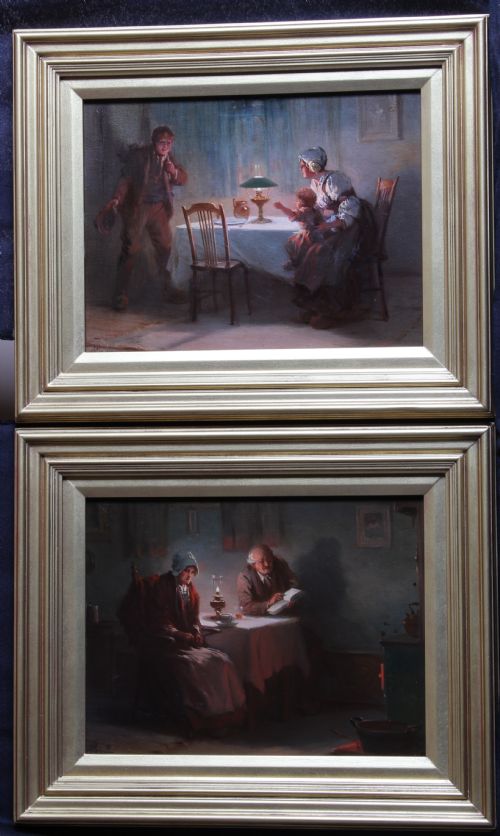


Domestic Scene Oil Painting
A domestic scene oil painting captures quiet interiors and family moments, offering a window into historical daily life that collectors treasure for its narrative warmth.
Domestic Scene Oil Painting
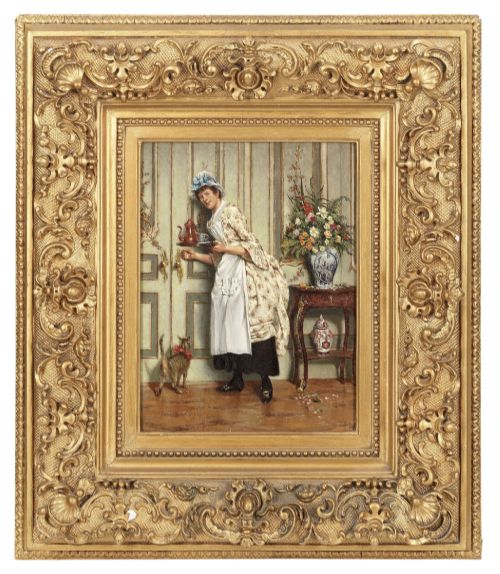
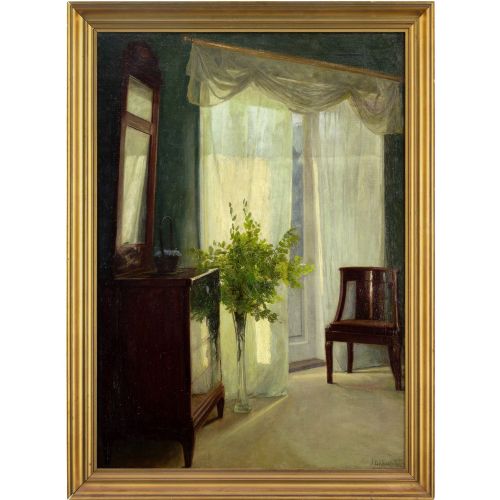
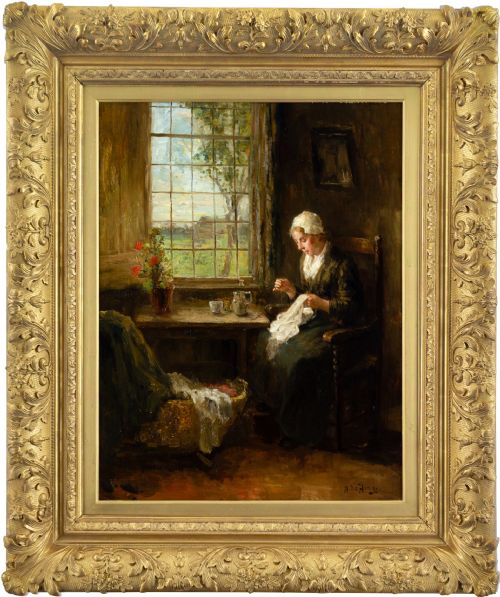
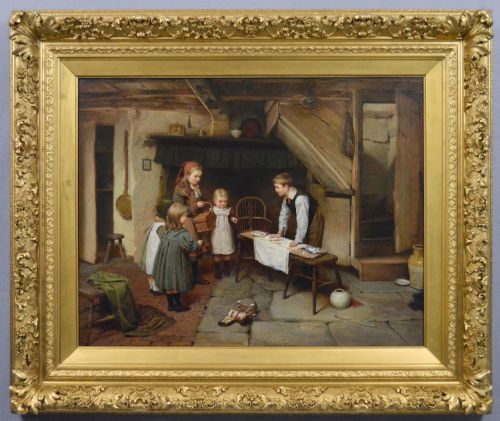
A domestic scene oil painting depicts everyday life inside cottages, country houses and period interiors, focusing on figures engaged in quiet household tasks or family moments. These works capture intimate domestic narratives rather than grand historical events.
The pieces on this page span from the nineteenth century into the twentieth century, reflecting Victorian genre painting, Impressionist treatments, Scandinavian Realism and the Hague School. Subjects frequently involve mothers and children, tea times, fireside chats and spinning maids.
Most examples originate from British and European hands, employing traditional canvas, panel or copper supports framed in period gesso and giltwood. Buyers encounter both signed works by known nineteenth-century artists and evocative unsigned interior studies.
Assessing quality and execution
Quality rests in the handling of light and the psychological conviction of the figures, where masterly brushwork brings a quiet room to life. Superior examples manage interior illumination convincingly, whether sunlight striking a floor or hearth glow on faces.
The preservation of the original paint surface and the harmony of the framing influence the standing of a piece. Stronger works retain their original varnish depth and show confident draftsmanship in complex interior perspective.
Listings span from the mid nineteenth century into the twentieth century, featuring oil on canvas, wood panel and copper supports framed in giltwood.
Stephen Samuel Lewin·John Lübschitz·Bernard De Hoog·Harry Brooker·Alexander Rosell·James Kyd·George Smith·William Henry Knight·Théophile Emmanuel Duverger·Rolinda Sharples·Pauline Delacroix Garnier·Alfred Provis·Jonathan Pratt·Pierre-Louis Bouchard·Charles Lewis
The Domestic Scene Oil Painting Glossary
- Genre painting
- Art depicting scenes from ordinary life, typically involving domestic interiors and everyday people rather than religious or historical subjects. These works provide valuable social history through their detailed recording of period costumes and home furnishings.
- Oil on panel
- A painting executed on a flat wooden support rather than canvas, offering a rigid surface that often preserves fine detail exceptionally well. Panels were widely used across European schools throughout the nineteenth century.
- Giltwood
- Wood that has been decorated with a thin layer of gold leaf or gold paint, frequently seen on Victorian picture frames. This finish adds warmth and reflects ambient light around the artwork.
- Gesso
- A plaster-like mixture applied to wooden panels or frame mouldings to create a smooth surface for gilding and ornamentation. It provides the structured foundation for intricate nineteenth-century frame relief work.
- Impressionist
- A style involving relatively small, thin yet visible brush strokes and an emphasis on accurate depiction of light in its changing qualities. Works in this manner prioritise atmospheric capture over rigid academic finish.
Domestic Scene Oil Painting: Frequently Asked Questions
What is a domestic scene oil painting?
A domestic scene oil painting is a work of fine art focusing on everyday indoor life, such as family gatherings, cottage interiors or quiet personal moments.
These paintings record the clothing, furniture and social routines of past eras through the medium of oil on canvas or panel.
How should I hang and light these paintings?
Display these works away from direct sunlight and high humidity to protect the oil paint and sensitive wooden frames.
Soft picture lights or warm ambient room lighting helps bring out the subtle interior shadows and golden tones characteristic of nineteenth-century canvases.
Are these paintings signed by the artist?
Many listings feature original signatures, while others represent period works attributed to specific artistic manners or schools.
Signatures, exhibition labels on the reverse and artist biographies help establish the origin and historical context of each piece.
What periods do these paintings come from?
The works on this page primarily date from the nineteenth century through the early decades of the twentieth century.
Styles range from traditional Victorian genre painting and French realism to impressionist interpretations and the Hague School.