

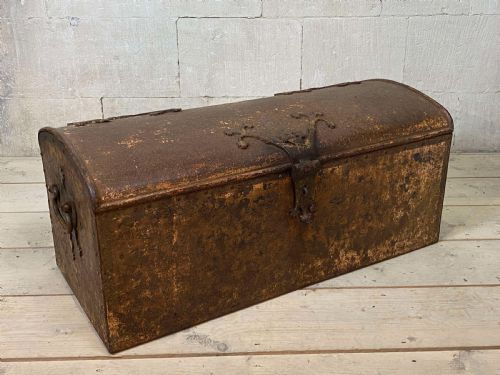
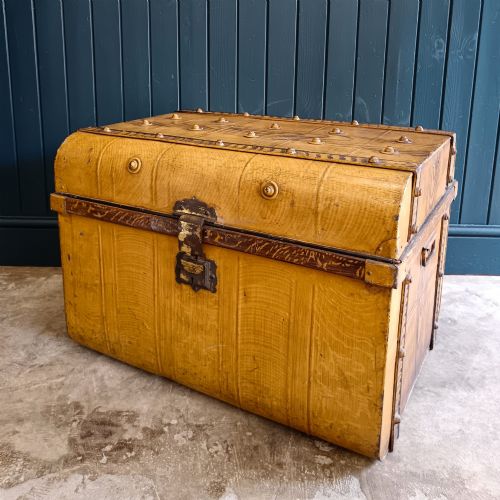


Domed Metal Chest
These domed metal chest examples bring rugged practicality and period character to any room, offering robust storage disguised as history.
Domed Metal Chest
When you search for a domed metal chest, you encounter sturdy utilitarian vessels designed for travel, safekeeping, and domestic utility across past centuries. The items available here span from robust nineteenth-century steamer trunks to earlier eighteenth-century Scandinavian coffers, reflecting a lineage of heavy-duty transport and domestic storage.
You are most likely to meet painted pine, oak, or sheet metal variations dating from the nineteenth century. These range from large travelling trunks linked to shipping lines like Cunard to smaller decorative boxes finished with painted surfaces or brass fittings.
Materials and construction
Makers built these pieces using structural timbers such as oak and pine, frequently reinforcing the framework with sheet metal, iron straps, and brass hardware to withstand heavy travel. Painted finishes, faux-wood effects, and tin cladding protected the underlying materials while providing decorative appeal.
The characteristic curved lid construction required skilled carpentry to shape the wooden frames before metal plates and bands were riveted or nailed into place for extra durability.
Domed Metal Chest Retail Price Guide 2026
Typical asking prices for domed metal chest among the pieces listed under this phrase on Sellingantiques today, from the lower quarter to the upper quarter. They describe what is for sale here now, not the wider market.
The listings here demonstrate a strong representation of nineteenth-century pieces, incorporating oak, pine, sheet metal, and iron.
Understanding quality
Quality rests in the integrity of the original construction, the survival of authentic painted surfaces, and the robustness of the metal reinforcements. Pieces that retain their original brass or iron hardware without extensive modern replacements sit firmly at the higher end of the range.
Finer examples display careful attention to joinery within the wooden carcase, alongside sophisticated decorative flourishes such as Baroque Revival carving or well-preserved Art Nouveau painted motifs rather than purely utilitarian assembly.
The Domed Metal Chest Glossary
- Coffer
- A heavy wooden chest, often iron-bound, traditionally used for storing valuables. It represents the sturdier, earlier end of domestic storage forms.
- Steamer trunk
- A low-profile travel trunk designed to fit in a steamship cabin. These pieces typically feature reinforced corners and flat or curved metal-clad lids.
- Baroque Revival
- A nineteenth-century style drawing inspiration from the ornate, dramatic forms of the seventeenth-century Baroque period. It introduces heavier carved ornamentation to structural oak pieces.
- Art Nouveau
- An international style of the late nineteenth and early twentieth centuries characterised by organic, flowing lines. On smaller caskets, it appears through painted floral or natural motifs.
- Sheet metal
- Thinly rolled metal plates utilised to sheath wooden trunks for weatherproofing and travel durability. It forms the primary protective skin on many nineteenth-century examples.
Domed Metal Chest: Frequently Asked Questions
What were domed metal chests used for?
These pieces served primarily as travelling luggage for international journeys or as secure domestic receptacles for valuable household goods. Their robust construction protected contents from moisture, dust, and rough handling during transit.
Over time, many transitioned from utilitarian travel gear into decorative storage furniture used within domestic living spaces.
How do I date a domed metal chest?
Dating relies upon examining construction methods, timber types, and the specific style of metal reinforcement or surface decoration. Eighteenth-century examples often feature heavy oak frames and hand-forged ironwork, whereas nineteenth-century pieces frequently incorporate sheet metal, pine, and factory-produced brass fittings.
Design influences provide further clues, as seen in the distinct curves of Baroque Revival or the floral motifs of Art Nouveau items.
How should I clean a painted metal trunk?
Conservation requires gentle dusting with a dry, soft cloth to protect vulnerable painted surfaces and aged metal patinas. Avoid abrasive cleaners, harsh chemicals, or excessive moisture that might lift historic paint layers or encourage corrosion on iron components.
Applying a light microcrystalline wax can help preserve exposed timber and metal surfaces against atmospheric changes.
Where do I place a domed trunk at home?
Their substantial presence makes them effective as coffee tables in living rooms, providing hidden storage while anchoring the seating area. Alternatively, they function well at the foot of a bed for spare blankets or in hallways as distinctive storage.
Ensure adequate clearance around the curved lid so it can open fully without striking walls or surrounding furniture.