

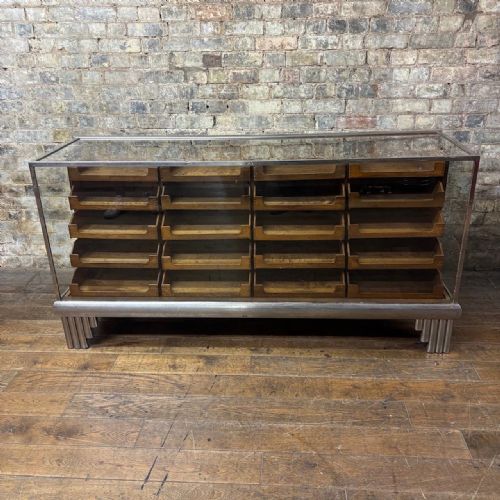


Display Counter Unit
A display counter unit organises stock for trade, bringing period retail joinery and heavy glazing straight into a modern interior.
Display Counter Unit
A display counter unit serves as both furniture and showcase, designed originally for commercial trade and shop interiors. When exploring a display counter unit today, one encounters heavy timber frames fitted with extensive glass panels for maximum visibility.
The selection on this page draws from the Victorian era, the Edwardian period, and the 1920s and 1930s commercial decades. Haberdashery counters, multi-drawer shop fittings, and drapers counters form the core of what turns up here.
Oak, pine, and mahogany provide the structural framework for these pieces, often paired with brass, chrome, or iron hardware. Whether searching for a painted Hungarian shop fitting or a brass-framed counter, the emphasis remains on robust utility and display capability.
How they were made
Makers constructed these commercial carcasses using durable timbers like oak, mahogany, and pine to withstand daily retail traffic. Joinery was built for longevity, utilising heavy frames to support large expanses of plate glass.
Metal components such as brass, chrome, and iron appeared on framing, handles, and fittings, adding structural rigidity and industrial detail. Paint finishes, whether original white or aged surfaces, sealed the softwoods and defined the aesthetic of the shop floor.
Display Counter Unit Retail Price Guide 2026
Typical asking prices for display counter unit among the pieces listed under this phrase on Sellingantiques today, from the lower quarter to the upper quarter. They describe what is for sale here now, not the wider market.
What varies in quality
The refinement of the timber framework and the integrity of the original glazing set the standard for these commercial pieces. Superior examples exhibit sophisticated hardware details, such as brass framing or specialised drawer configurations, rather than plain utility construction.
Originality of surface finish dictates the character of the piece, with untouched painted or polished timber holding greater interest than modern alterations. The scale and proportion of the counter relative to its intended domestic or commercial setting also influence its overall desirability.
Dudley & Co·Saml. Elliott & Sons
The Display Counter Unit Glossary
- Haberdashery counter
- A shop counter traditionally fitted with numerous shallow drawers or glass display compartments for small dry goods. These units make exceptional storage furniture in contemporary homes.
- Shop fitting
- A permanent or semi-permanent fixture built specifically for commercial retail premises. They range from multi-drawer wall units to freestanding glazed counters.
- Plate glass
- A heavy, high-quality sheet glass manufactured with flat, parallel surfaces. It provides clear, distortion-free viewing for merchandise within the display unit.
- Drapers counter
- A long merchant table or counter utilised in the textile trade for measuring and cutting cloth. They offer expansive timber work surfaces.
Display Counter Unit: Frequently Asked Questions
What is a display counter unit used for?
These units were built to showcase merchandise to customers in nineteenth and twentieth-century shops while keeping stock secure behind glass or within drawers.
Today, collectors use them in homes and retail spaces as kitchen islands, storage dressers, or statement display tables.
How do I date an antique display counter?
Dating relies on observing the timber types, construction methods, and hardware styles associated with periods like the Victorian era or the 1930s.
Commercial pieces often feature maker plaques, specific lock types, or decorative motifs characteristic of early twentieth-century shop architecture.
Are these counters suitable for modern kitchens?
Their robust timber frames and practical proportions make them exceptionally well-suited for use as freestanding kitchen islands or sideboards.
Glass-fronted sections and numerous drawers provide functional storage for tableware, dry goods, or collections.
What woods were used for shop counters?
Cabinetmakers primarily utilised sturdy hardwoods like oak and mahogany for high-end counters that required a polished or refined appearance.
Pine and other softwoods appeared frequently in utility shop fittings, drapers counters, and multi-drawer haberdashery units, sometimes finished with paint.