



Dinner Table Gong
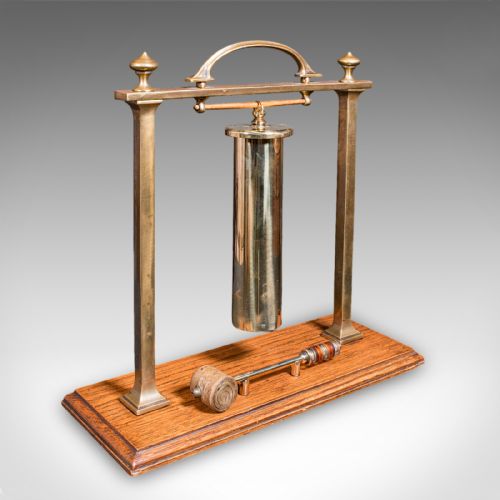
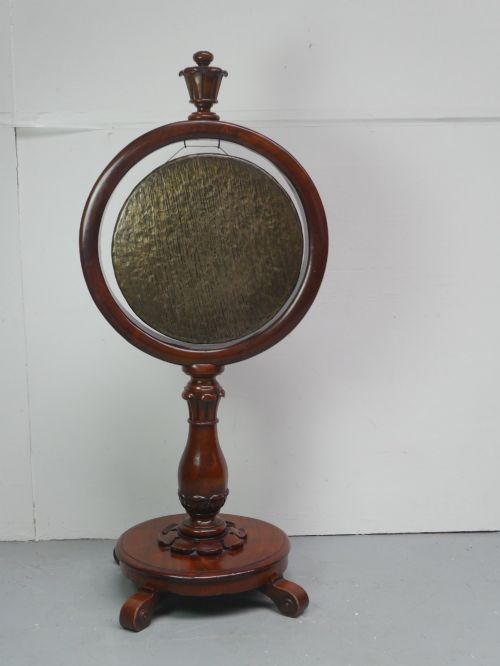
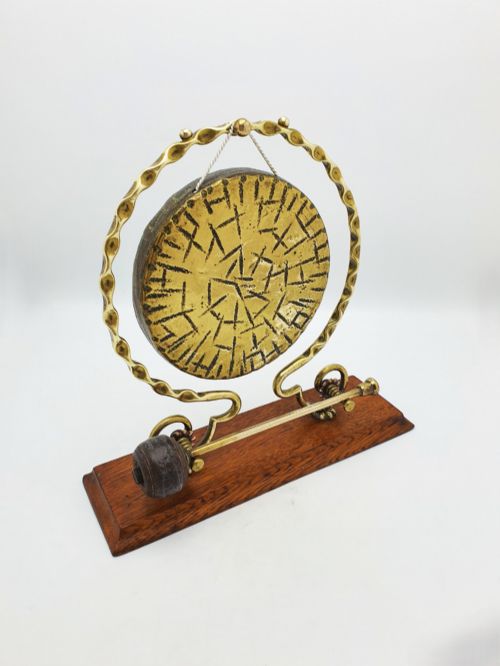
A dinner table gong summons household or guests to mealtime, combining resonant brass or bronze with carved wooden frames to command the room.
Dinner Table Gong
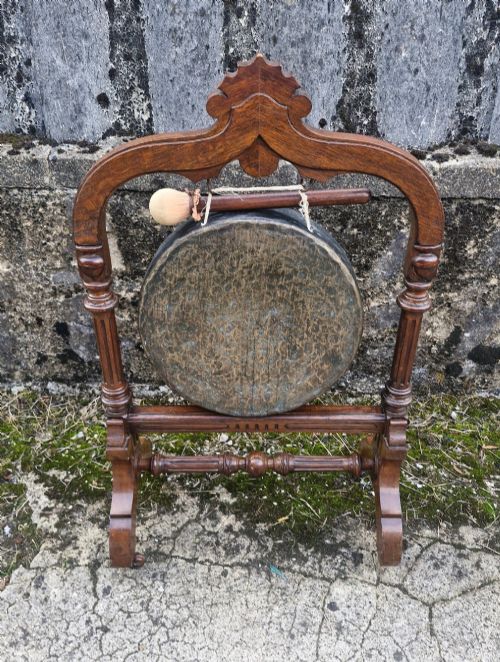
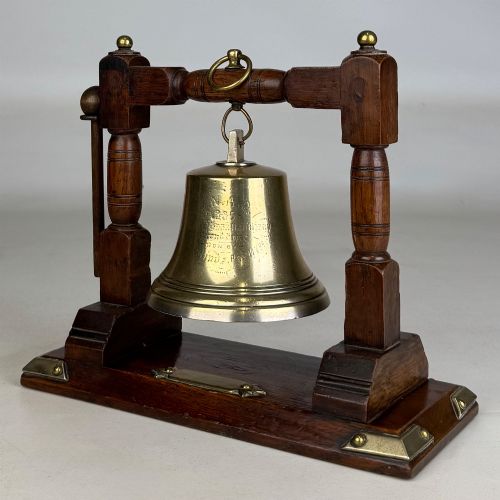
A dinner table gong brings together a suspended metal plate or bowl with a striking mallet, designed to sound clearly across a house. When you search for a dinner table gong, you encounter freestanding oak or walnut frames, mounted horns, and portable tabletop bells spanning the Victorian and Edwardian eras.
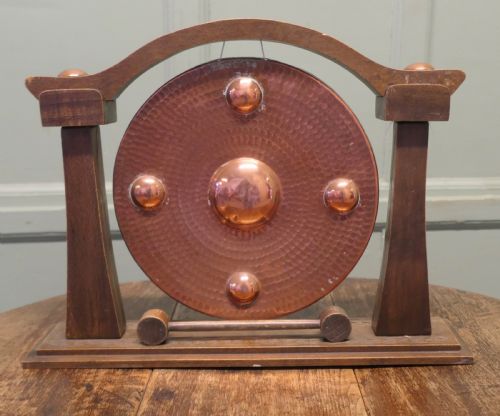
The most common form on this page pairs a brass or copper disc with a carved wooden stand, frequently resting on a hall table or sideboard. These pieces originate from domestic British settings alongside international workshops, incorporating Chinese export, Anglo-Indian, and Japanese aesthetic influences.
Variations range from compact tabletop bells to large framed assemblies involving cattle horn, silver plate, and cast iron. Each example reflects the domestic rituals of the nineteenth and early twentieth centuries, functioning as both a practical signalling device and a decorative centrepiece.
Materials and construction
Makers constructed the hanging apparatus predominantly from solid timbers such as oak, walnut, mango wood, and carved black forest wood. These frames frequently feature hand carving, turned supports, and fitted bases designed to absorb or project the resonance of the strike.
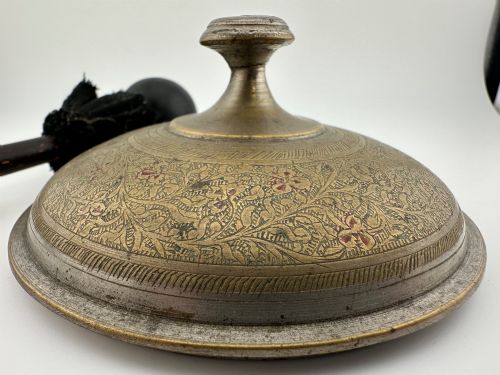
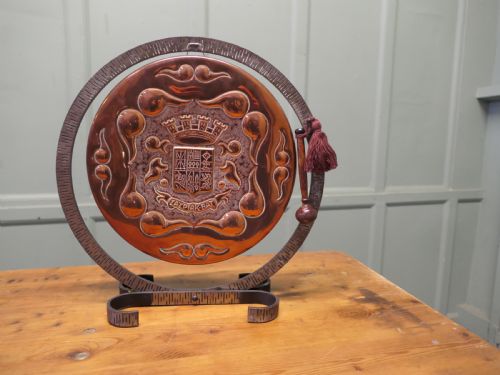
The suspended gongs themselves utilise brass, copper, bronze, and silver plate, shaped through hand hammering, engraving, and casting. Accompanying strikers often combine wooden handles with cord, felt, or metal striking heads to modify the acoustic tone.
Natural materials also feature prominently in the construction, notably cattle horn and cow horn mounted within wooden or metal frameworks. These organic elements are shaped and polished to create curved hanging horns that double as acoustic resonators.
Dinner Table Gong Retail Price Guide 2026
Typical asking prices for dinner table gong among the pieces listed under this phrase on Sellingantiques today, from the lower quarter to the upper quarter. They describe what is for sale here now, not the wider market.
A carved Black Forest monkey holds court from eighteen-ninety, proving that Victorian domestic life welcomed a touch of jungle theatre.
Craftsmanship and distinction
Quality rests in the acoustic resonance of the metal and the structural integrity of the frame. Superior examples combine a well-hammered, resonant brass or bronze disc with tightly joined, stable timber stands that support the weight without wobble.
Carving detail dictates the distinction at the upper end of the range, visible in deep relief work on oak frames or intricate ornamentation on Chinese export and Black Forest models. The integration of unusual materials, such as silver plate and mounted horn, elevates the ambition of the piece.
The Dinner Table Gong Glossary
- Silver Plate
- A thin layer of silver applied to a base metal core. It provides a bright finish seen on select Victorian and aesthetic movement gongs.
- Japonisme
- The influence of Japanese art on European design during the late nineteenth century. This aesthetic appears in decorative motifs on frames and stands.
- Anglo-Indian
- Furniture and decorative objects made in India by local artisans for British patrons during the colonial period. These pieces often feature dense carving.
- Black Forest
- Carved wood decorative items produced in the Swiss and German mountain regions. These works frequently incorporate naturalistic animal and foliage motifs.
Dinner Table Gong: Frequently Asked Questions
How do you play a dinner table gong?
You hold the wooden striker by its handle and strike the centre of the suspended metal disc or bowl with a firm, controlled motion. This produces a clear tone designed to carry through domestic rooms.
Allow the metal to vibrate freely without touching the edges with your hand, as dampening the rim reduces the resonance and volume of the sound.
Where were dinner gongs placed in a house?
These gongs traditionally sat on hall tables, sideboards, or designated stands near dining rooms and reception spaces. Their position allowed the host to signal the start of meals or afternoon tea.
They also functioned as veranda supper bells or general household summons devices, requiring a stable surface to support the weight of the frame and hanging metal.
What metals are used for dinner gongs?
The hanging discs and bells primarily utilise brass, copper, bronze, and silver plate. Each metal produces a distinct tonal quality when struck with a wooden or felt mallet.
Cast iron and engraved brass also appear frequently, alongside imported oriental metalwork sourced through nineteenth-century trade and export channels.
How do you identify an Edwardian gong?
Edwardian pieces typically date from around 1900 to 1910, showing lighter oak frames, refined brass engraving, and influences from the Arts and Crafts movement. They often reflect simplified domestic styling compared to earlier Victorian designs.
Look for construction details, joinery methods, and hardware styles consistent with early twentieth-century British cabinet making and imported oriental novelties.