

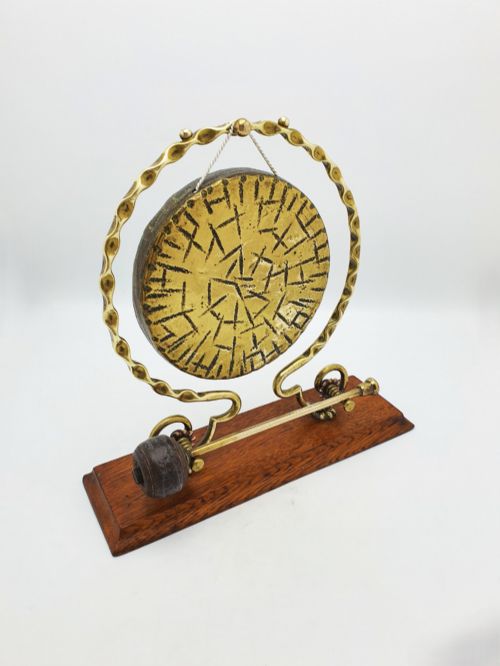


Dinner Bell Chime
These dinner bell chime pieces assemble brass and bronze bells, gongs, and strikers on wooden stands to summon households from the Victorian era onward.
Dinner Bell Chime
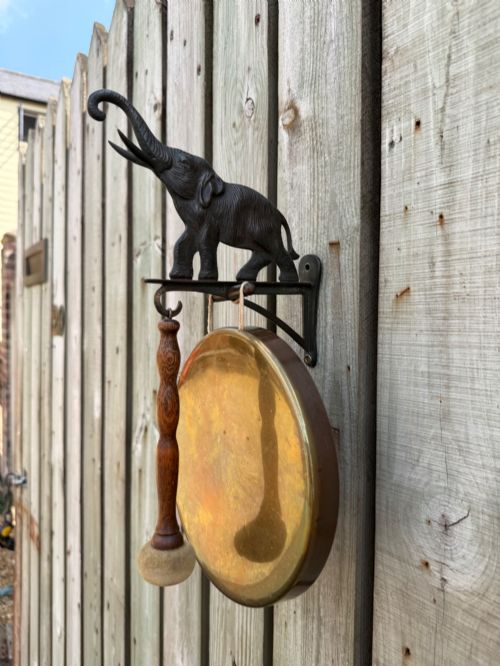
When you search for a dinner bell chime, you encounter striking instruments designed to call residents to meals from the Victorian period through the nineteen thirties. These items range from simple tabletop gongs to elaborate wooden frameworks holding multiple musical bells.
The selections on this page centre on Victorian and Edwardian examples alongside pieces from nineteen hundred to nineteen twenty. Formats vary from small handheld schoolmaster bells to large carved oak and mango wood wall gongs.
Origin styles stretch across British domestic designs into international aesthetics including Japonisme, Chinoiserie, Art Nouveau, and Anglo-Indian colonial influences. Most pieces pair resonant metal bells or gongs with sturdy wooden mounting bases and matching strikers.
How they were made
Maker construction relies heavily on combinations of cast brass, bronze, and iron suspended by cords or leather straps from solid timber frames. Woods utilised across the pieces include oak, walnut, hardwood, and carved mango wood.
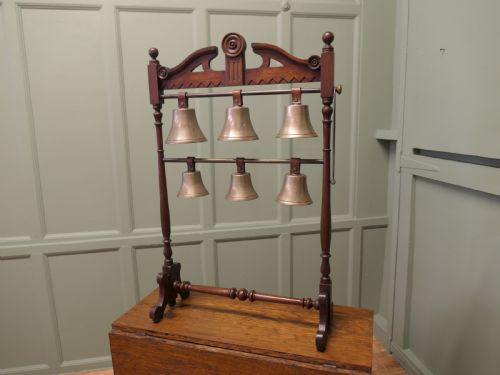
Metal components undergo casting and tuning to produce specific musical tones, particularly multi-bell setups like the walnut rack of six tuned musical brass bells. Wooden stands feature hand carving, turned supports, and pegged joinery suited to daily domestic use.
Dinner Bell Chime Retail Price Guide 2026
Typical asking prices for dinner bell chime among the pieces listed under this phrase on Sellingantiques today, from the lower quarter to the upper quarter. They describe what is for sale here now, not the wider market.
Listings feature periods from the nineteenth century through nineteen thirty, utilising brass, bronze, oak, cord, hardwood, leather, cast iron, and wood.
What varies in quality
Quality differences emerge in the acoustic resonance of the metal and the complexity of the timber framework. Finely cast bronze and brass produce clear, sustained notes compared to simpler iron or base metal alternatives.
The standard of carving and joinery on the oak, walnut, and mango wood stands separates standard utility items from decorative showpieces. Detail work such as carved oriental motifs, specialised striking mechanisms, and integrated cord or leather hangers elevate individual pieces.
The Dinner Bell Chime Glossary
- Table Gong
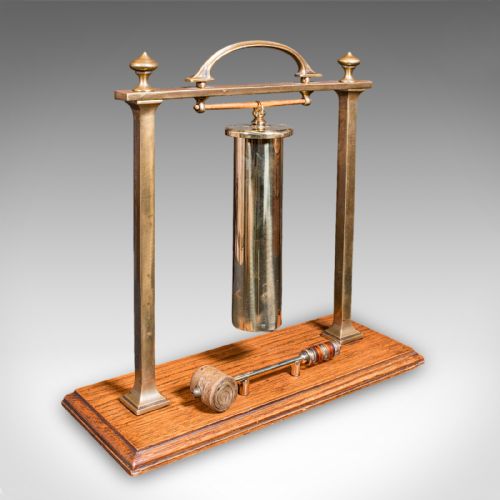
- A freestanding or base-mounted striking instrument designed for placement on a surface rather than hanging on a wall. These assemblies typically combine a metal disc with a dedicated striker.
- Dinner Gong
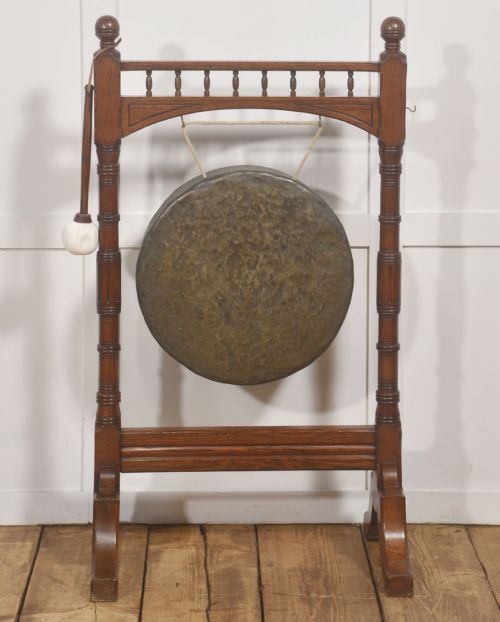
- A large resonant disc or bowl used in country houses and large residences to announce meals. They are frequently framed in carved oak or exotic hardwoods.
- Japonisme
- A style reflecting nineteenth-century European fascination with Japanese art and design. Pieces in this aesthetic often incorporate Eastern motifs into domestic British furnishings.
- Chinoiserie
- European decorative style inspired by Chinese artistic traditions and export goods. These items frequently feature intricate hand carving and exotic wood selections.
Dinner Bell Chime: Frequently Asked Questions
How do you strike a dinner gong?
Most pieces include a dedicated handheld striker featuring a padded or wooden head designed to draw the best resonance from the metal.
Striking the centre of the bronze or brass disc produces the intended sustaining chime without straining the suspension cord.
What woods were used for stands?
Framing materials primarily consist of British oak and walnut alongside exotic hardwoods like mango wood.
Carpenters frequently utilised turned wooden supports and carved backing boards to secure the hanging bells.
Are multiple bell chimes common?
Multi-bell arrangements exist alongside single gongs, offering varying musical notes from tuned brass bells mounted on wooden racks.
These configurations allow for more complex musical tones than a standard single-strike disc.
How do I date an Edwardian gong?
Edwardian pieces usually display characteristics from the early twentieth century, spanning styles from simple oak framing to Art Nouveau brasswork.
Design motifs and material combinations help narrow the manufacturing period alongside documented construction methods.