



Dining Room Wine Cooler
A dining room wine cooler is a sturdy vessel built to chill bottles at table, offering both practical service and grand presence for period interiors.
Dining Room Wine Cooler
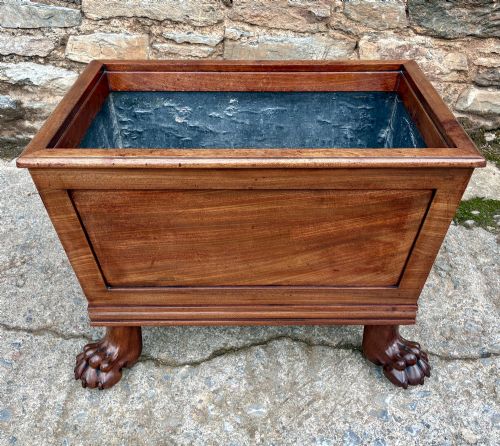
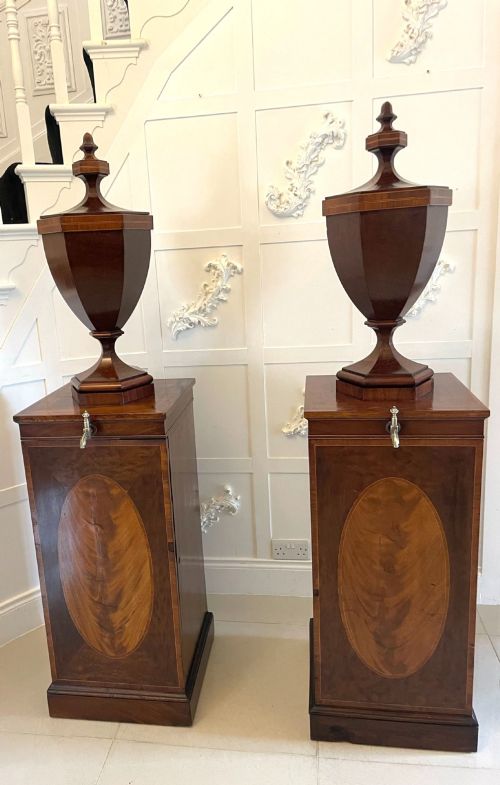
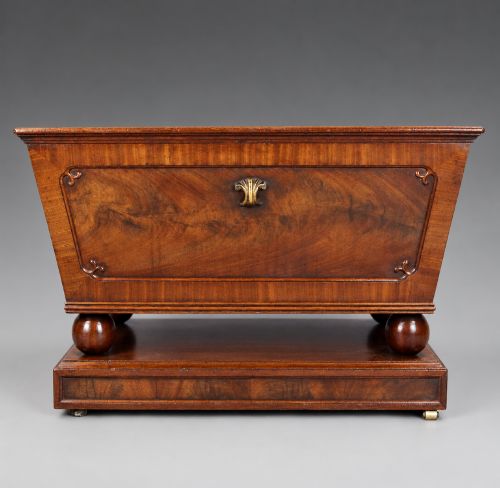
A dining room wine cooler is a substantial receptacle designed to hold bottles and ice during meals, taking forms such as sarcophagus shapes, cellarettes, buckets, and pedestals with urns. The version you are most likely to meet on this page is a mahogany piece from the Georgian or Regency periods, often featuring boxwood inlay or carved details.
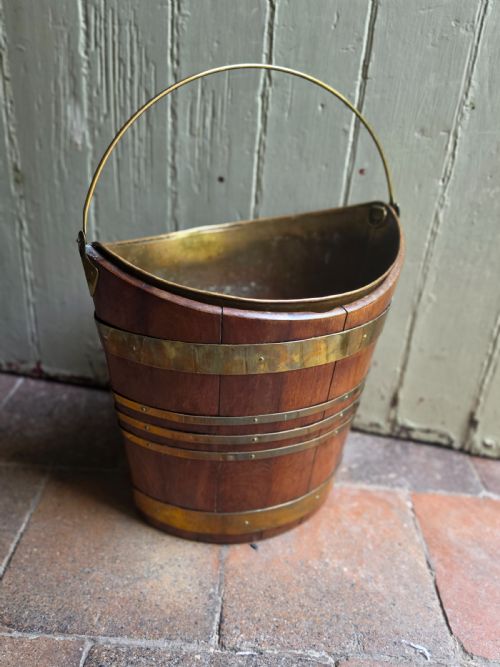
Makers across the eighteenth and nineteenth centuries built these vessels to stand on the floor beneath a sideboard or to sit freestanding within the room. Alongside traditional cellarettes, the listings include plate buckets and bottle stands serving a similar function in the dining space.
The materials and styles span Georgian, Regency, William IV, and Victorian eras, showing how dining customs demanded secure and elegant bottle storage. Walnut and ebonised wood also appear among the predominantly mahogany forms, reflecting changing tastes across the nineteenth century.
Materials and construction
Mahogany forms the primary body of these pieces, often selected as flame mahogany or figured walnut to display rich grain patterns across large surfaces. Boxwood inlay provides linear contrast, while carved elements define the neoclassical and revival styles of the Georgian and Regency periods.
Interior linings utilise zinc and metal to hold ice and water without damaging the surrounding timber structure. Brass fittings such as lion mask handles, paw feet, and banding secure the heavy wooden assemblies and assist with lifting the vessels.
Dining Room Wine Cooler Retail Price Guide 2026
Typical asking prices for dining room wine cooler among the pieces listed under this phrase on Sellingantiques today, from the lower quarter to the upper quarter. They describe what is for sale here now, not the wider market.
Some nineteenth century cellarettes doubled as casual plant stands, letting stately wine vessels retire gracefully as indoor jardinieres.
Judging the work
Quality rests upon the selection of timber figures, such as dense flame mahogany or figured walnut, matched carefully across the lid and sides. The crispness of carved mouldings, boxwood inlay, and brass mountings separates standard production from exceptional cabinet work.
Structural integrity depends on how well the internal zinc or metal linings survive alongside sturdy framing that can support the weight of ice and filled bottles. Refined proportions in sarcophagus curves or pedestal urns distinguish superior Georgian and Regency design.
The Dining Room Wine Cooler Glossary
- Cellarette
- A lockable container used for storing wine bottles in the dining room. These timber boxes often feature fitted interior divisions.
- Sarcophagus
- A monumental chest shape with a pitched lid, heavily favoured during the Regency period for large wine coolers. The form draws inspiration from ancient stone coffins.
- Flame mahogany
- A veneer cut from the fork of the mahogany tree, producing a distinctive flickering flame pattern. Cabinet makers used this to create dramatic visual movement on lids and facades.
- Pedestal and urn
- A matching set consisting of a tall column supporting a covered urn used for chilling or serving. This neoclassical arrangement stood beside eighteenth century sideboards.
- Plate bucket
- A deep cylindrical wooden bucket banded with brass, designed for holding dining plates or bottles near the table. These items share construction methods with traditional cellarettes.
Dining Room Wine Cooler: Frequently Asked Questions
What is a cellarette?
A cellarette is a dedicated timber box or chest designed to hold wine bottles securely beneath or beside the dining table. They frequently include internal partitions to keep bottles separated.
Historically, these boxes were often fitted with locks to prevent domestic staff from accessing the cellar stock unsupervised.
How were these coolers used?
Wine coolers stood on the floor near the dining table, packed with ice and water to chill bottles before serving. They provided a practical station for hosts during long meals.
Larger sarcophagus shaped vessels held multiple bottles at once, while bucket forms accommodated smaller quantities close to individual diners.
How do I spot a Regency piece?
Regency wine coolers often feature bold sarcophagus silhouettes, classical brass paw feet, and lion mask ring handles. The timber is frequently dark mahogany with minimal carving.
Proportions during this period tend to be heavy and architectural, drawing directly on ancient Roman and Greek design motifs.
What timber was used?
Mahogany is the dominant timber across almost all examples, appearing as solid wood or as figured and flame mahogany veneers. Walnut and ebonised wood also occur in nineteenth century items.
Boxwood inlay frequently accents the mahogany surfaces on Georgian and revival pieces, adding fine linear detail.