






Dining Room Dumbwaiter
A dining room dumbwaiter is a tiered serving stand designed to hold dishes close to the table during meals.
Dining Room Dumbwaiter
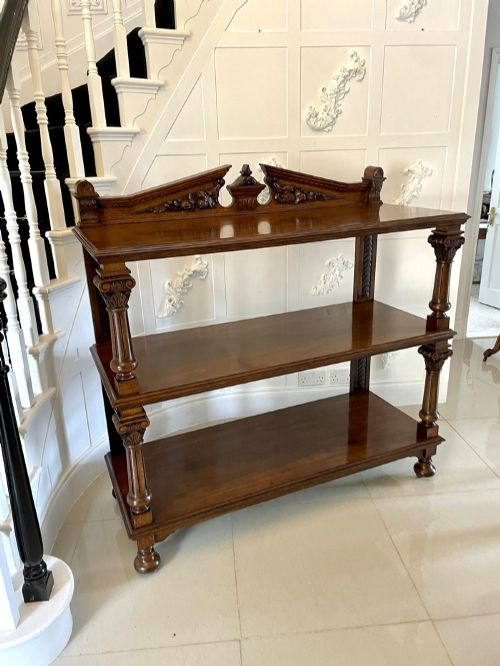
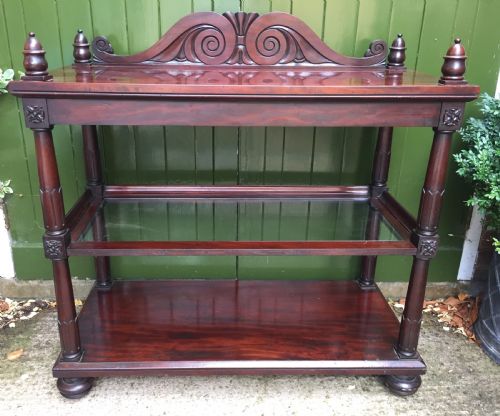
When you search for dining room dumbwaiter, you enter a field dominated by multi-tiered mahogany stands and metamorphic buffets. These tiered pieces served functional roles in the dining room before modern service took over.
The pieces listed on this page span the Georgian, Regency, William IV, and Victorian eras, alongside specific dates from 1850 to 1880. Mahogany is the primary timber, supported by occasional examples in oak and walnut.
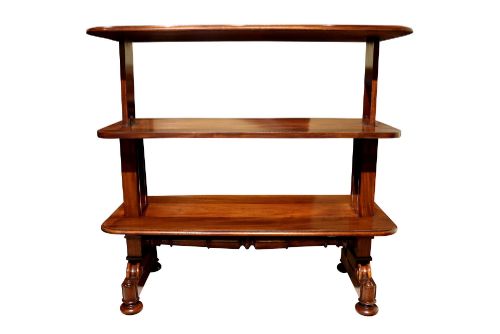
You will encounter three-tier stands, rise-and-fall mechanisms, and serving tables that double as dumbwaiters. These forms reflect the changing demands of nineteenth-century dining spaces.
Materials and construction methods
Makers utilised solid timbers and veneers, predominantly mahogany with select examples in walnut and oak, shaping the tiers and columns with carved details. Brass fittings appear on mechanical components like rise-and-fall tiers.
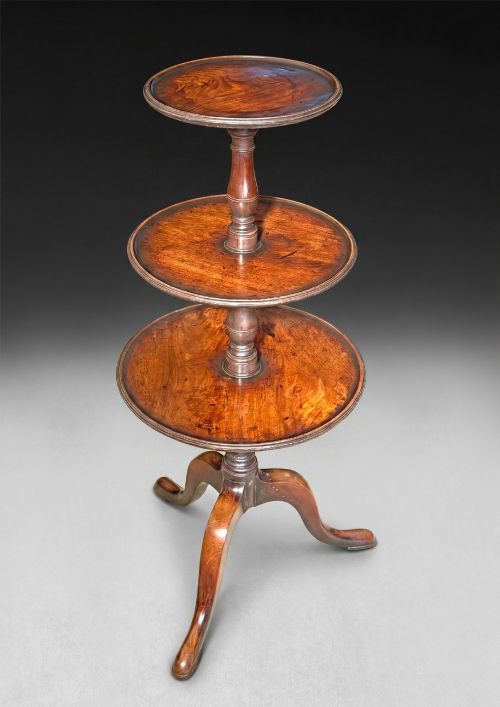
Joinery techniques link central turned or carved columns to stepped revolving or fixed circular tiers. Metamorphic designs incorporate sliding or lifting mechanisms operated by wooden stems and brass catches.
Dining Room Dumbwaiter Retail Price Guide 2026
Typical asking prices for dining room dumbwaiter among the pieces listed under this phrase on Sellingantiques today, from the lower quarter to the upper quarter. They describe what is for sale here now, not the wider market.
Some nineteenth-century diners preferred furniture that could rise, fall, and rotate entirely out of the way of awkward conversation.
Judging quality in dining room dumbwaiters
The standard of timber selection dictates the visual impact of a piece, particularly in fiddleback mahogany varieties where the grain pattern demands expert book-matching. Fine turning on the central pillar and crispness of carved mouldings separate standard production from superior workshops.
Mechanical execution distinguishes basic fixed-tier stands from complex rise-and-fall buffets and metamorphic designs. Smooth operation of the lifting mechanism without binding indicates precise historical fitting.
The Dining Room Dumbwaiter Glossary
- Dumb waiter
- A tiered stand used in dining rooms for holding food and tableware without servant assistance. These structures usually feature graduated circular shelves rotating around a central column.
- Metamorphic buffet
- A multi-functional piece that transforms between a serving table and a tiered dumbwaiter stand. These designs utilise hinges or sliding brackets to alter their height and configuration.
- Rise and fall
- A mechanical feature allowing tiers to be adjusted vertically on a central shaft. This mechanism often uses balanced counterweights or brass pins to hold shelves in position.
- Fiddleback mahogany
- A figured timber variety showing a wavy grain resembling the back of a violin. Cabinetmakers selected this cut for its intense chatoyant reflection under candlelight.
- Etagere
- A piece of furniture consisting of a set of open shelves for displaying or serving items. These stands share a similar vertical multi-tier construction with dumbwaiters.
Dining Room Dumbwaiter: Frequently Asked Questions
What is a dumbwaiter used for?
A dining room dumbwaiter served as an auxiliary table during meals to hold extra dishes, wine, and cutlery. This allowed diners to help themselves without servants present in the room.
The tiered shelves kept heavy serving platters off the main dining table while remaining within arm's reach.
How do I date a mahogany dumbwaiter?
Dating relies on stylistic shifts across the Georgian, Regency, and Victorian periods visible in the turnings and timber choices. George III examples often display restrained classical lines, whereas Victorian pieces incorporate heavier proportions and elaborate carving.
Mechanical additions like rise-and-fall mechanisms became more complex by the 1830s under William IV.
Are these pieces stable with multiple tiers?
The structural stability depends on a heavy central pillar and substantial tripod or tetrapod base. Lower tiers are secured firmly to prevent tipping when loaded with tableware.
Careful placement on level flooring ensures that revolving shelves operate without wobble.
What is a metamorphic dumbwaiter?
A metamorphic dumbwaiter alters its form to serve different functions in the dining room, shifting from a compact serving table into a tall tiered stand. These pieces utilise clever internal engineering to raise or lower shelves.
Victorian cabinetmakers favoured these hybrid designs for versatile entertaining.