

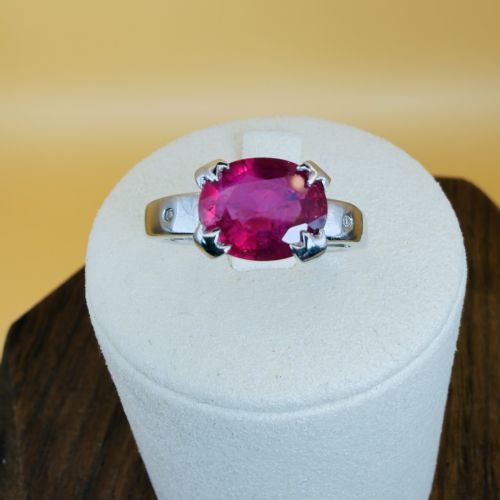


Diamond Shoulder Ruby Ring
A diamond shoulder ruby ring brings together rich red stones and bright accent gems in enduring gold or platinum settings.
Diamond Shoulder Ruby Ring
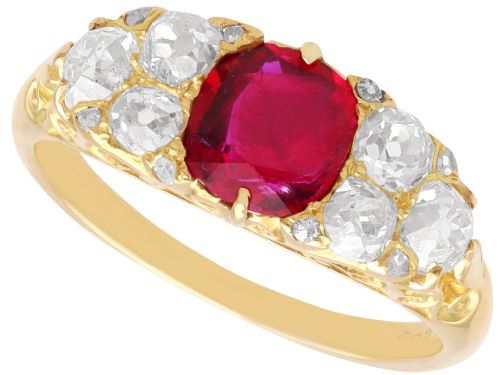
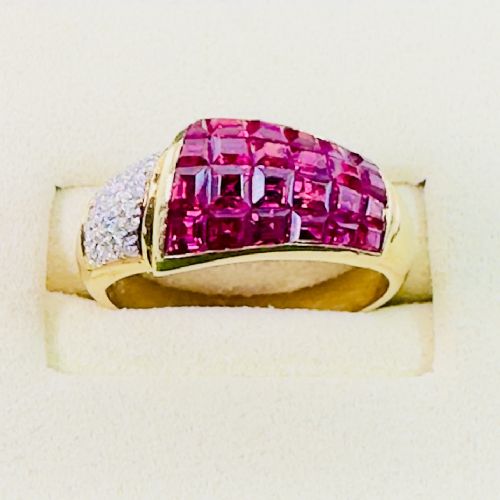
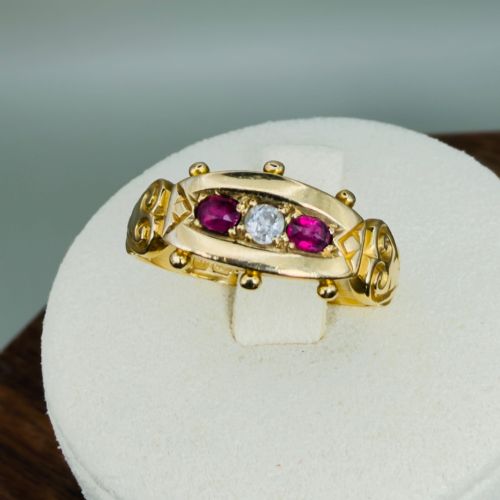
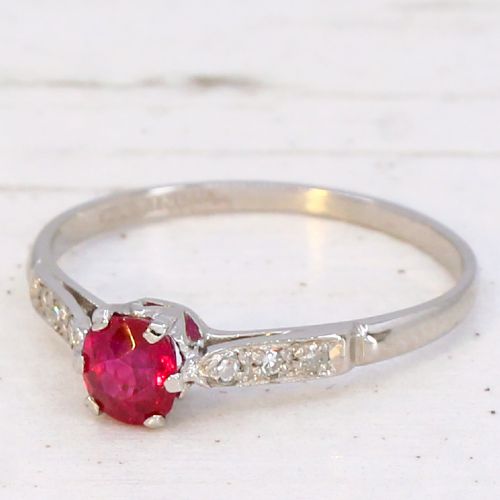
A diamond shoulder ruby ring combines a central red stone with surrounding or flanking white diamonds, mounted on bands of gold or platinum. These pieces span Victorian, Edwardian, Art Deco and mid-century periods, showing the evolution of cluster and trilogy designs.
Origin and era define the character of each ring, moving from intricate Victorian handwork to geometric Art Deco lines and robust mid-century mountings. The enduring appeal lies in this interplay of coloured gemstone centres and diamond-accented shoulders.
How they were made
Goldsmiths utilised 18ct yellow gold, 18ct white gold, 9ct gold and platinum to construct the mounts, securing central rubies alongside brilliant, princess, oval, baguette or cut diamonds. Metalwork ranges from substantial cast bands to delicate Edwardian settings.
Stones are set using claw, bezel or cluster arrangements designed to maximise light entry through both the central ruby and the supporting diamond shoulders. Gemstone origins such as Burma feature in specific vintage iterations.
Diamond Shoulder Ruby Ring Retail Price Guide 2026
Typical asking prices for diamond shoulder ruby ring among the pieces listed under this phrase on Sellingantiques today, from the lower quarter to the upper quarter. They describe what is for sale here now, not the wider market.
Listings span periods from Victorian and Edwardian eras through Art Deco to the 1950s and 1960s.
What varies in quality
Quality separates by the depth and saturation of the ruby colour, the clarity and cut of the accompanying diamonds, and the integrity of the precious metal mount. Natural unheated stones and origins like Burma command particular attention from collectors.
The precision of the setting work and the preservation of original hallmarks or maker marks influence the standing of a piece. Substantial gold weights and well-balanced proportions mark out the finest examples across all periods.
The Diamond Shoulder Ruby Ring Glossary
- Trilogy ring
- A ring featuring three principal stones, typically a central gem flanked by two matching side stones. This style often represents the past, present and future.
- Cluster ring
- A design where a central gemstone is surrounded by a tight grouping of smaller accent stones, usually diamonds. This arrangement maximises overall visual impact and sparkle.
- Shoulder
- The upper portion of the ring band as it approaches the central setting. In these pieces, shoulders frequently host channel-set or pavé diamonds.
- Platinum
- A dense, durable and naturally white precious metal utilised for fine jewellery settings. It provides secure claws for holding diamonds and rubies.
- Old cut
- A diamond cutting style predecessor to the modern brilliant, characterised by a smaller table, higher crown and open culet. These stones appear frequently in antique pieces.
Diamond Shoulder Ruby Ring: Frequently Asked Questions
How do I care for a ruby ring?
Rubies are a hard gemstone, rating nine on the Mohs scale, making them durable for regular wear. Clean them gently using warm soapy water and a soft brush, avoiding harsh chemical cleaners.
Store the ring separately from other jewellery to prevent diamonds from scratching the gold mount or softer stones. Periodic checks by a jeweller ensure the claws holding the ruby and shoulder diamonds remain secure.
What is a trilogy ring setting?
A trilogy setting displays three stones in a row across the finger, traditionally signifying past, present and future. In these pieces, a central ruby is typically flanked by two diamonds.
This classic configuration allows the red hue of the ruby to contrast directly with the white sparkle of the side stones. The style spans multiple eras, appearing in Edwardian and later periods.
How can I tell the period of a ring?
Dating relies on stylistic clues, metal types, cutting techniques and official hallmarks stamped inside the band. Victorian pieces often feature heavy yellow gold work, while Edwardian examples favour delicate platinum-topped gold.
Art Deco rings showcase geometric symmetry and sharp lines, whereas mid-century designs introduce heavier cluster forms and white gold. Examining the cut of the diamonds also provides a reliable guide to the era of manufacture.
Are Burmese rubies different?
Burmese rubies originate from the Mogok region in Myanmar and are historically prized for a distinctive natural fluorescence and deep red coloration. These stones appear in vintage dress rings from the mid-twentieth century.
Gemological certificates often accompany unheated Burmese stones to verify their geographic origin and lack of enhancement. This provenance contributes significantly to the character and identity of the ring.