



Diamond Halo Necklace
A diamond halo necklace frames a central stone with smaller gems, bringing together periods from Victorian work to mid-century modern design.
Diamond Halo Necklace
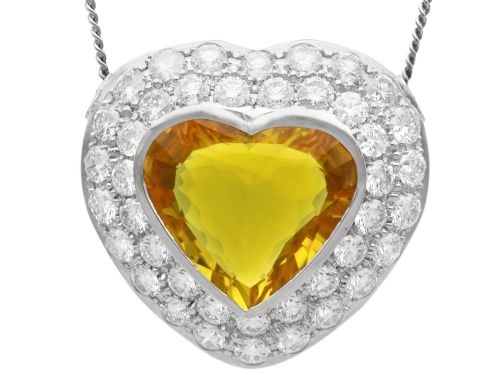
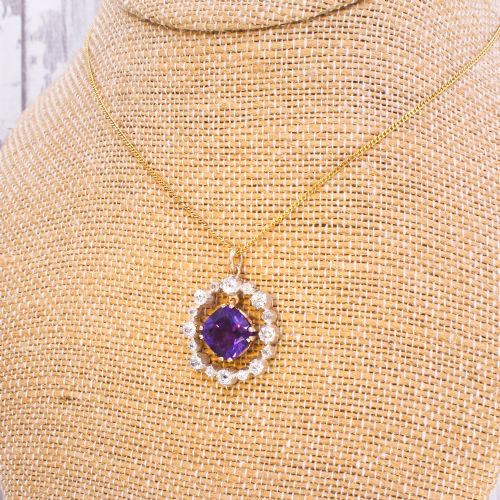
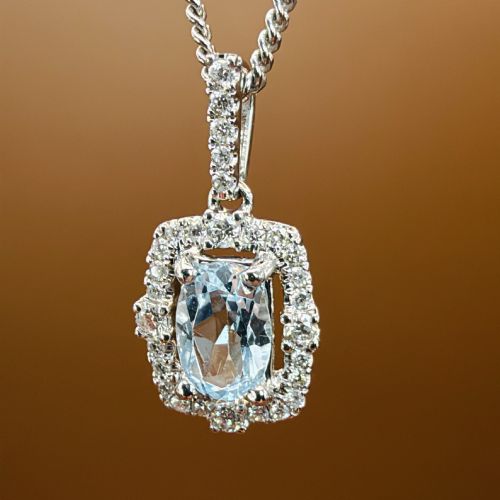
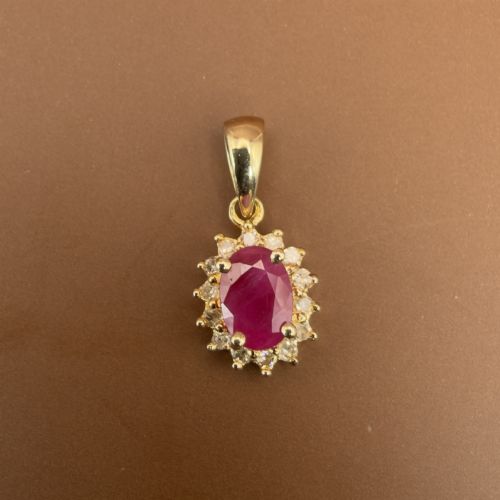
A diamond halo necklace centres on a prominent gemstone or diamond surrounded by a ring of smaller accent stones, creating a brilliant frame that catches the light from every angle. When you search for a diamond halo necklace, you encounter cluster pendants, chokers, and drop necklaces ranging from Victorian pieces to mid-century creations.
The central stones vary widely across the selection, featuring vivid amethysts, aquamarines, emeralds, sapphires, rubies, and opals alongside solitaire diamonds. Settings span yellow gold, 18ct white gold, platinum, and silver, reflecting the shifting metal preferences of the twentieth century.
How they were made
Goldsmiths utilised platinum and various carats of yellow and white gold to construct secure settings for both central gems and surrounding stone clusters. Early pieces often combined silver and gold, while later mid-century works relied heavily on platinum and uniform gold alloys.
Gemstone cutting techniques evolved across the periods represented, moving from older rose and old mine cuts to precise oval, square, and calibre cuts. Jewellers set the surrounding diamonds meticulously by hand to maintain an unbroken circle of brilliance around the focal stone.
Diamond Halo Necklace Retail Price Guide 2026
Typical asking prices for diamond halo necklace among the pieces listed under this phrase on Sellingantiques today, from the lower quarter to the upper quarter. They describe what is for sale here now, not the wider market.
Carved tourmaline horse heads make unexpected guest appearances inside diamond halos.
What varies in quality
The calibre of a diamond halo necklace depends on the saturation and clarity of the central gemstone, whether it is an emerald, sapphire, aquamarine, or diamond. Superior examples feature stones with strong, natural colour and minimal inclusions that match the precision of the surrounding diamond work.
Construction standards also set pieces apart, visible in the symmetry of the halo setting and the delicate proportions between the central stone and its frame. Hand-finished details in the metalwork and the uniformity of the small surrounding diamonds distinguish finer workshop output from standard production.
Chaumet
The Diamond Halo Necklace Glossary
- Halo
- A circular or geometric arrangement of small diamonds encircling a larger central gemstone. This technique enhances the perceived size and brilliance of the focal stone.
- Old Cut
- A precursor to the modern brilliant cut, characterised by a smaller table, higher crown, and open culet. These stones display a softer, warm glow under candlelight.
- Calibre Cut
- Gemstones specifically shaped and cut to fit tightly together in a geometric pattern without visible metal separating them. This technique is typical of high-end Art Deco jewellery.
- Cluster
- A grouping of multiple gemstones set closely together to form a single visual unit. In necklace pendants, this arrangement maximises colour and sparkle.
Diamond Halo Necklace: Frequently Asked Questions
How do I date a diamond necklace?
Dating relies on metal types, gemstone cuts, and overall design motifs. Victorian and Edwardian pieces often use silver-topped gold and old cut stones.
Mid-century examples frequently incorporate white gold or platinum with cleaner geometric lines and precision-cut gems.
Can I wear an antique necklace daily?
Many antique and vintage pendant necklaces tolerate regular wear if handled with reasonable care. Sturdy settings in gold or platinum protect the stones during normal daily activities.
Frail Victorian or Edwardian pieces benefit from occasional rather than constant use to preserve their delicate claw work.
What stones appear in these necklaces?
Central stones include diamonds, amethysts, aquamarines, emeralds, sapphires, rubies, opals, and pearls. Surrounding halos consist primarily of diamonds.
Metal choices range from 9ct and 15ct yellow gold to 18ct white gold, platinum, and silver.