





Dessert Knife Set
A dessert knife set brings period elegance to the table, combining polished metal blades with tactile handles of mother of pearl or silver.
Dessert Knife Set
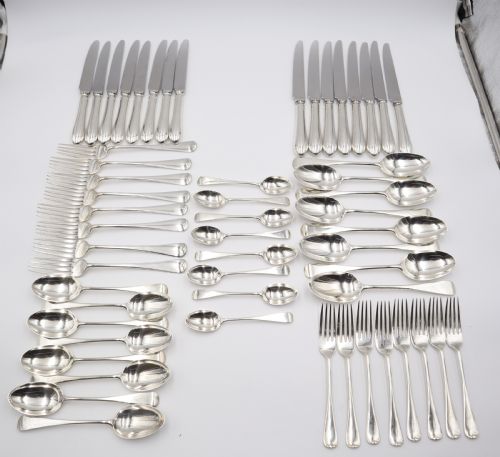
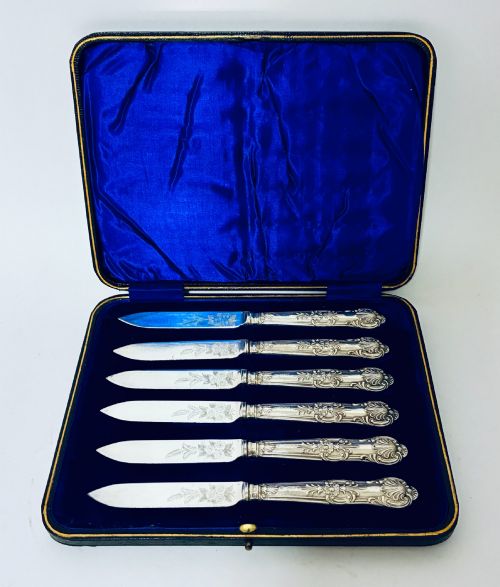
A dessert knife set comprises specialised cutlery designed for the final course of a meal, appearing in forms ranging from cased sets to individual serving pieces. When exploring a dessert knife set, buyers encounter various configurations including boxed services for fruit, cheese, and cake.
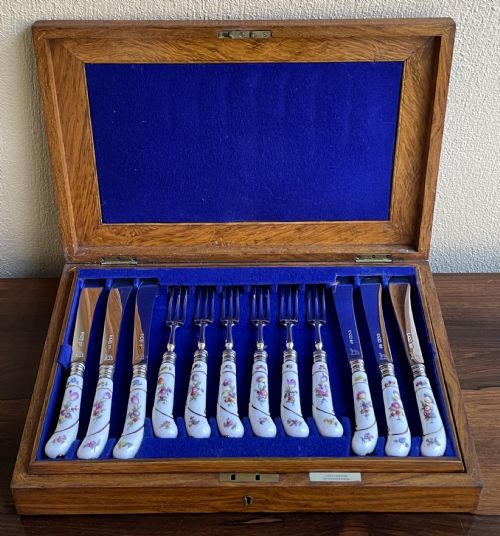
The pieces on this page span several distinct periods, including Victorian, Edwardian, and Art Deco eras, alongside Georgian and 20th-century examples. These sets often arrive in fitted wooden boxes, such as oak canteens, preserving the cutlery for modern use.
How they were made
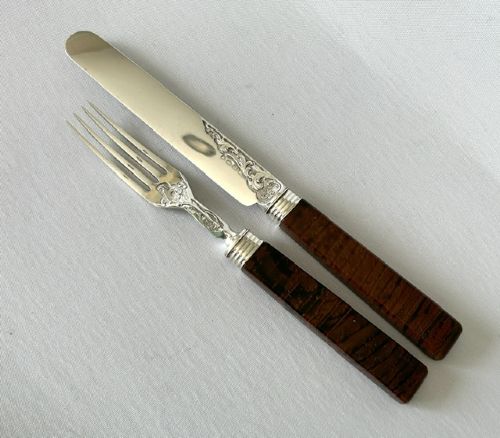
Craftsmen utilised durable materials like steel for cutting edges, pairing them with sterling silver, silver plate, or silver gilt for mountings and ferrules. Handles frequently feature mother of pearl, porcelain, agate, or wood, secured carefully to the tangs.
Production techniques varied across the periods, incorporating traditional silversmithing for Victorian and Georgian items alongside Art Deco manufacturing methods. Fitted velvet-lined interiors within wooden cases protected these delicate instruments during storage and transport.
Dessert Knife Set Retail Price Guide 2026
Typical asking prices for dessert knife set among the pieces listed under this phrase on Sellingantiques today, from the lower quarter to the upper quarter. They describe what is for sale here now, not the wider market.
Listings feature items from the Victorian, Edwardian, and Art Deco periods, utilising materials such as silver, mother of pearl, velvet, and oak.
What varies in quality
Quality in these sets depends on the integrity of the materials, the crispness of the metalwork, and the preservation of the fitted housing. Sets featuring solid sterling silver or intricate silver gilt demonstrate superior craftsmanship compared to simpler plated alternatives.
The condition of organic handle materials like mother of pearl and the presence of original maker marks elevate the desirability of a service. Complete cased sets retaining all original matching components represent the upper tier of the range.
Tiffany·Carrington
The Dessert Knife Set Glossary
- Sterling Silver
- An alloy containing 925 parts of silver per 1000, commonly used for high-quality cutlery handles and blades. This standard ensures durability and lasting value.
- Silver Plate
- A base metal coated with a thin layer of silver through electroplating or older techniques. It provided a brilliant finish at a more accessible cost during the nineteenth and twentieth centuries.
- Mother of Pearl
- The iridescent inner layer of certain mollusc shells, carved into scales for knife handles. Its natural lustre made it a favourite material for Victorian and Edwardian dessert cutlery.
- Canteen
- A fitted box, chest, or cabinet designed specifically to store a set of cutlery securely. These cases often feature individual slots and velvet linings to prevent scratching.
- Fruit Knife
- A small knife specifically intended for peeling and slicing fruit at the table. These often feature specialised blade shapes and decorative handles.
Dessert Knife Set: Frequently Asked Questions
What is a dessert knife set used for?
These sets were traditionally employed for the dessert course, specifically for slicing fruit, cheese, or cake at the end of a formal meal. The smaller scale of the knives suited delicate foodstuffs rather than heavy meats.
Today, they add a refined touch to modern dining tables and remain functional for hosting dinner parties or serving afternoon tea.
How do I clean mother of pearl handles?
Mother of pearl requires gentle cleaning with warm soapy water and a soft cloth to preserve its natural iridescence and prevent damage. Harsh chemicals or abrasive sponges must be avoided entirely.
Hand washing is essential for these pieces, as dishwasher heat and detergents will ruin organic handle materials and weaken the adhesives securing them.
Are these sets safe for daily use?
Most antique and vintage sets can handle gentle daily use if washed by hand immediately after meals. Older steel blades may require careful drying to prevent tarnishing or corrosion.
For precious silver-gilt or delicate porcelain-handled pieces, many owners reserve them for special occasions to preserve their condition over time.
How do I identify a Victorian set?
Victorian sets often feature ornate engraving on the blades, robust silver handles, or carved mother of pearl grips. The presence of hallmarks specific to nineteenth-century British assay offices helps confirm the date.
The style of the fitted oak or velvet-lined boxes also provides strong clues regarding the manufacturing period and original context of the cutlery.