



Desktop Writing Stand
A desktop writing stand keeps your desk organised and ready for correspondence, offering dedicated wells and compartments for ink and pens.
Desktop Writing Stand
A desktop writing stand encompasses practical accessories designed for correspondence, frequently incorporating inkwells, brush pots and compartments within a single compact footprint. These items serve as functional desk furniture and decorative desk accessories from periods such as the Victorian and Edwardian eras.
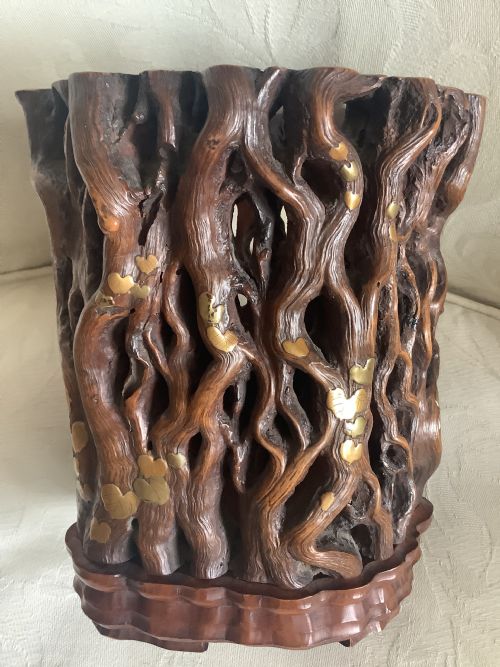
The varieties you encounter on this page range from nineteenth-century hardwood brush pots to fitted desk sets featuring mother of pearl, brass, and ebonised timber. Continental pieces like Dutch Delft faience inkwells and French onyx and ormolu stands also appear alongside traditional English silver and Sheffield plate designs.
Forms vary from traditional inkstands with mounted glass inkwells to novelty items and book box configurations originating around the nineteen-thirties. Each piece reflects the writing habits and desk organisation methods of its specific period.
Materials and construction methods
Makers utilised a diverse selection of materials, combining hardwoods such as coromandel and ebonised timber with decorative inlays like mother of pearl. Metalwork elements frequently involve brass, bronze ormolu, sterling silver and Sheffield plate to mount inkwells and pen rests securely.
Ceramic and glass components form the ink containers and brush pots, incorporating cut glass inserts and tin-glazed earthenware such as Dutch Delft faience. Papier-mâché serves as a moulded foundation for decorated desk sets, while natural stone appears in French onyx marble stands.
Desktop Writing Stand Retail Price Guide 2026
Typical asking prices for desktop writing stand among the pieces listed under this phrase on Sellingantiques today, from the lower quarter to the upper quarter. They describe what is for sale here now, not the wider market.
Materials represented across the inventory include cut glass, brass, mother of pearl, hardwood, sterling silver, and faience.
Assessing quality in writing stands
Quality in a desktop writing stand shows in the selection of materials and the precision of the fitted compartments. Superior examples integrate contrasting timbers, fine metal mounts and hand-finished glass or ceramic inkwells that fit their housings accurately.
The craftsmanship of decorative details, from brass inlays and mother of pearl placement to ormolu casting and ceramic glazing, distinguishes finer pieces. Well-preserved surfaces and intact fitted interiors indicate better care and superior original manufacture.
The Desktop Writing Stand Glossary
- Inkstand
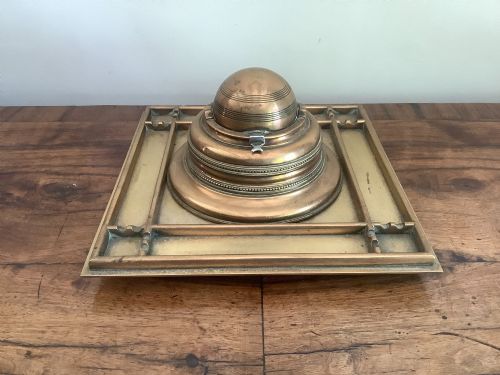
- A desktop stand or tray holding one or more inkwells, often with space for pens and sealing wax. These pieces formed the centrepiece of nineteenth-century correspondence equipment.
- Brush pot
- A cylindrical vessel used in scholars' studies to hold writing brushes or pens. They appear in carved hardwoods and ceramic forms.
- Ormolu
- Finely detailed gilded bronze used for mounts and decorative feet on nineteenth-century desk accessories. The technique adds a metallic sheen to stone and wooden stands.
- Faience
- Tin-glazed earthenware produced across Europe, notably in Dutch Delft workshops. It provides a smooth white surface for painted blue decorative motifs.
Desktop Writing Stand: Frequently Asked Questions
What is a desktop writing stand?
A desktop writing stand is a portable or stationary desk accessory designed to hold writing implements, inkwells, and blotting materials.
These pieces organise correspondence tools and provide a dedicated writing station on a larger desk or table.
How were inkwells used in these stands?
Inkwells held liquid ink centrally within the stand so a writer could dip a quill or steel nib pen without spilling.
Many stands feature glass or ceramic inserts that lift out of their frames for refilling and cleaning.
How do I date a writing stand?
Dating relies on identifying the prevailing styles, materials, and manufacturing techniques recorded in the piece.
Victorian, Edwardian, and Art Deco examples exhibit distinct choices in timber, metalwork, and decorative motifs that signal their era of production.
Where should I place a desk stand?
A desk stand sits on a flat writing surface, table, or bureau where it remains accessible for daily correspondence and display.
Keep wooden and polished stone stands away from direct heat sources to protect their finishes and natural materials.