

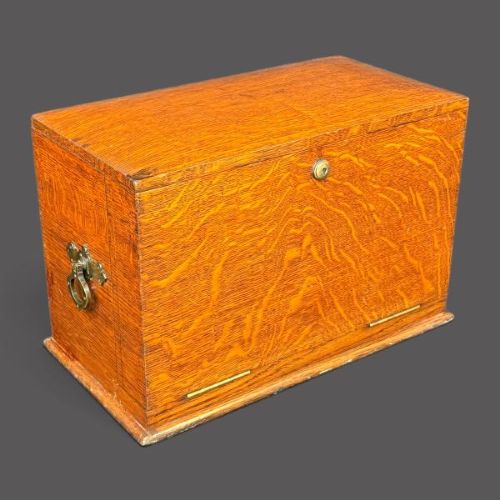
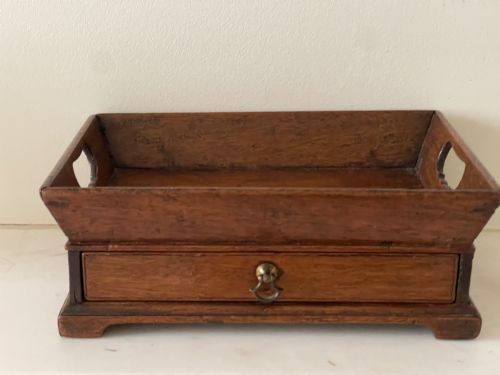
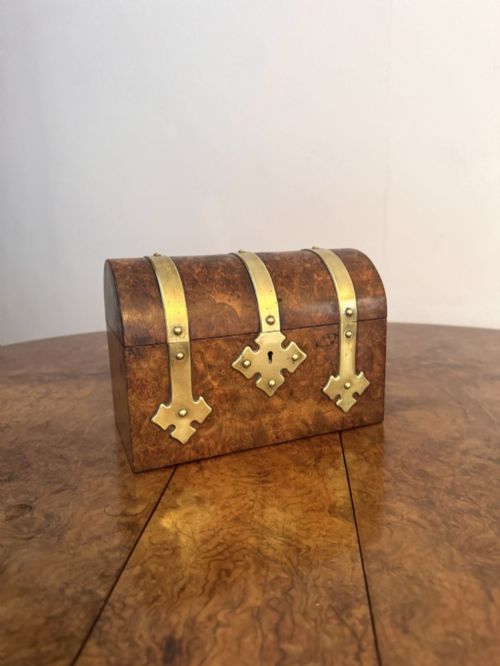
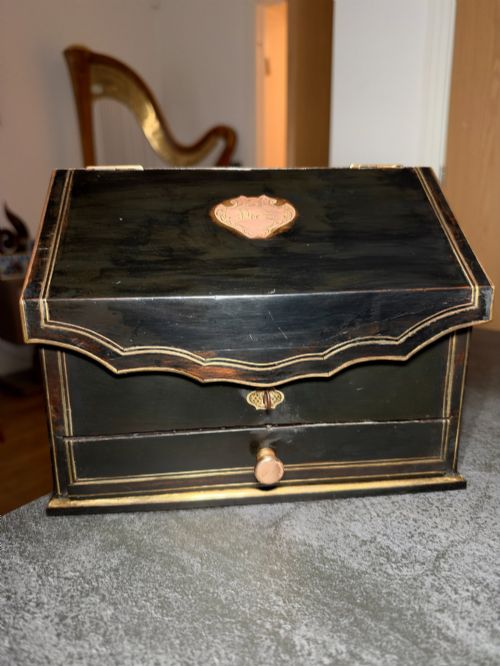


Desktop Writing Box
A desktop writing box is a portable desk or organiser designed to hold correspondence, paper and ink safely on a table.
Desktop Writing Box
A desktop writing box gathers papers, pens and ink in a compact form intended for use on a table or chest rather than a dedicated piece of furniture. These pieces span centuries from the Georgian period through the Victorian era and into the Edwardian years.
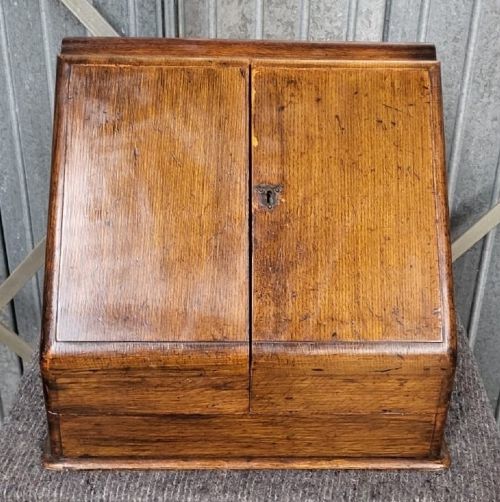
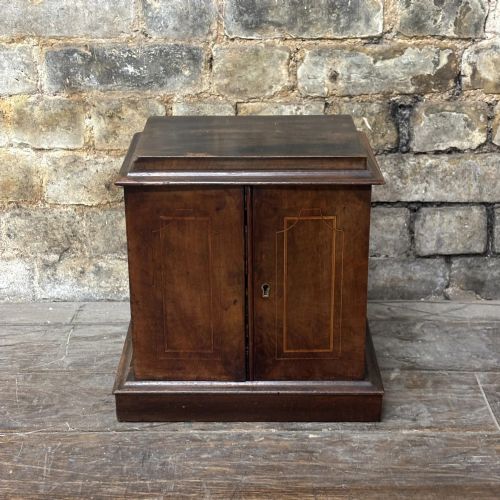
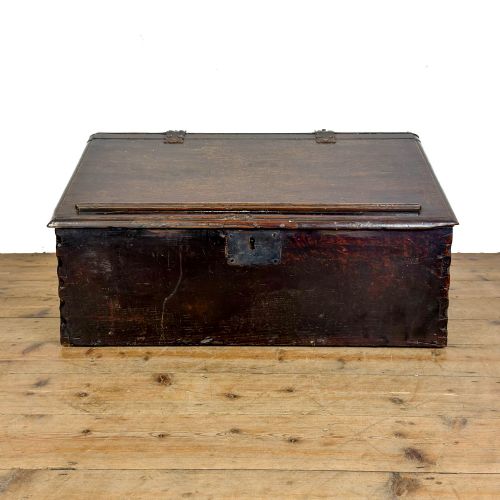
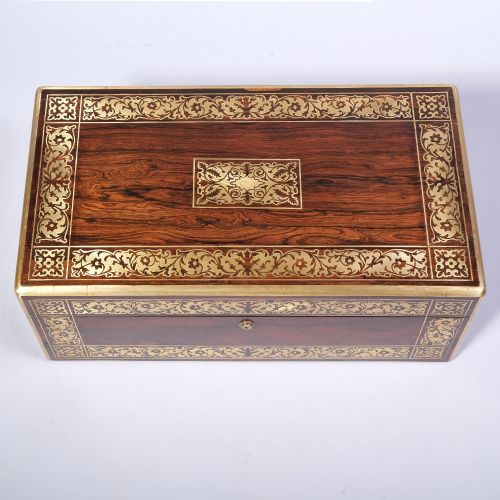
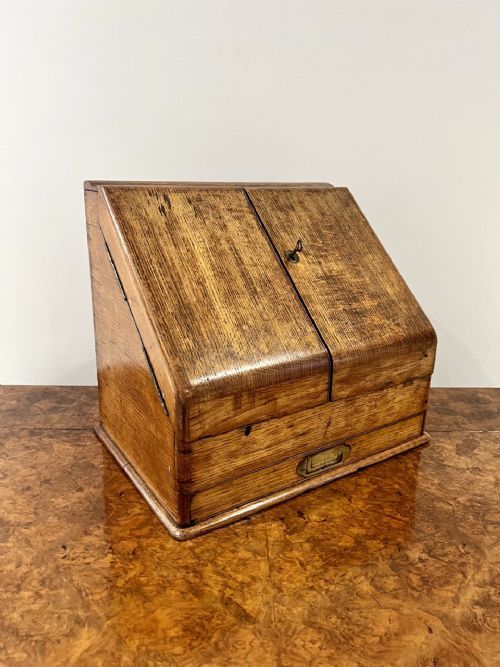
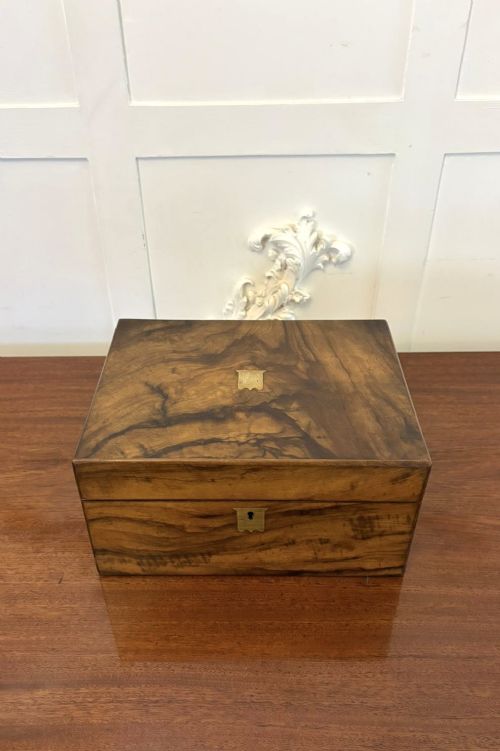
The versions most commonly met on this page take the form of folding writing slopes, stationery cabinets and desk boxes constructed in wood. They range from early oak bible boxes to elaborately fitted walnut cabinets with brass mounts.
Makers produced these containers to organise correspondence and writing materials in domestic studies and offices before the widespread use of manufactured stationery. They combine practical compartments with decorative surfaces suited to a principal room.
How they were made
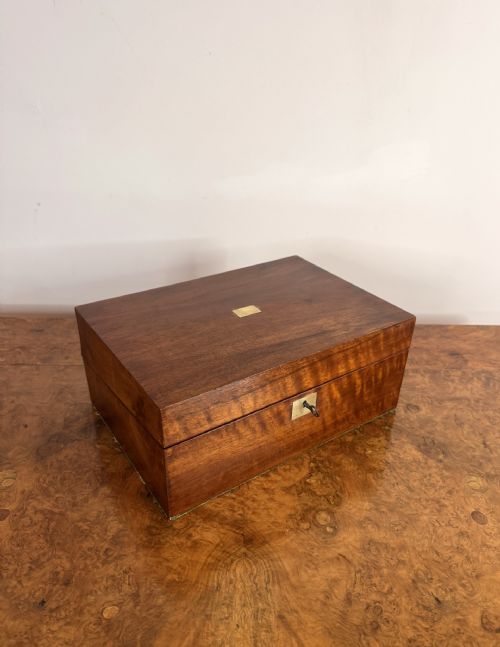
Cabinet makers built these boxes from timbers such as oak, mahogany, walnut and satinwood, often applying veneers to achieve figured grain patterns. They reinforced corners and fitted hinges in brass, whilst interiors frequently incorporated tooled leather writing surfaces.
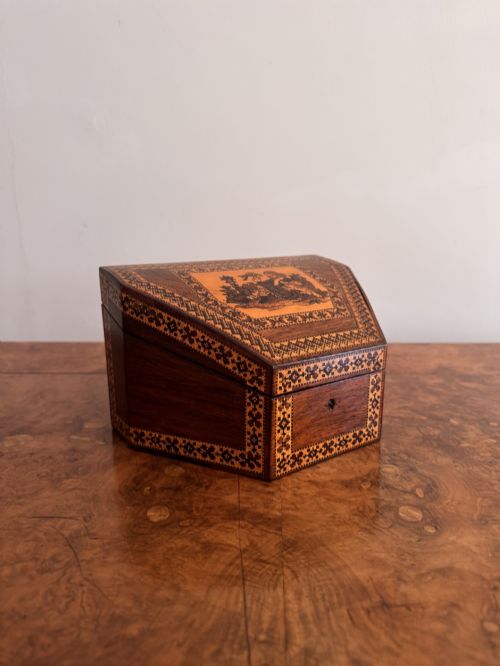
Specialised techniques distinguish particular styles, including Tunbridge ware mosaic decoration, pokerwork, marquetry and inlaid mother-of-pearl or bone details. Artisans also carved relief patterns into wood on Anglo-Indian pieces and applied silver mounts or plating to inkwells and boxes.
Desktop Writing Box Retail Price Guide 2026
Typical asking prices for desktop writing box among the pieces listed under this phrase on Sellingantiques today, from the lower quarter to the upper quarter. They describe what is for sale here now, not the wider market.
Listings feature items from the 18th century through the Edwardian period, constructed in woods like oak, walnut, mahogany and satinwood.
What varies in quality
The standard of a desktop writing box depends on the selection of timber and the precision of the joinery in its internal compartments and secret drawers. Finer examples display carefully matched wood veneers and robust brass hardware that maintains alignment over repeated opening and closing.
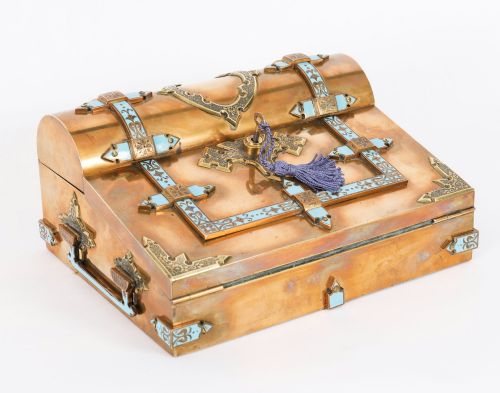
Decoration also separates categories, with exceptional pieces featuring meticulous Tunbridge ware, intricate inlay or integrated silver and glass fittings. Simpler boxes rely on plain timber surfaces and functional hinges rather than decorative detailing.
The Desktop Writing Box Glossary
- Writing slope
- A box with a sloping lid that folds down to provide an angled writing surface lined with leather or velvet. Inside, compartments hold ink, pens and paper.
- Stationery cabinet
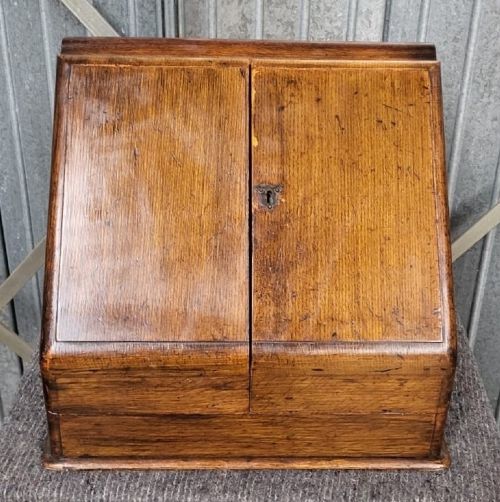
- An upright desk organiser with doors or a falling front designed to hold letters, envelopes and correspondence upright rather than flat.
- Tunbridge ware
- Woodwork decorated with mosaic patterns created by gluing together tiny blocks of differently coloured timbers to form pictorial or geometric designs.
- Pounce pot
- A small perforated container used to sprinkle powdered resin or cuttlefish bone onto paper to prepare the surface for ink.
Desktop Writing Box: Frequently Asked Questions
What is a desktop writing box?
A desktop writing box is a portable container designed to hold writing instruments, paper and ink for use on a table.
These pieces provide compartments for correspondence and often feature a hinged lid that opens into a sloping writing surface.
How were writing slopes used?
Writing slopes served as portable desks where individuals could store paper, write letters and lock away private documents.
The angled lid offered a comfortable writing plane before standard desks with built-in sloping tops became common.
What is the difference between a slope and a cabinet?
A writing slope opens to reveal a slanted writing surface and flat storage compartments, whereas a stationery cabinet stands upright.
Cabinets hold letters and envelopes vertically behind doors or drop-front panels rather than providing a surface to write upon.
How do I date a wooden box?
Dating depends on timber choice, construction methods, hardware styles and decorative techniques characteristic of periods like the Georgian or Victorian eras.
Secondary woods inside drawers and the style of brass hinges offer reliable clues to the decade of manufacture.