



Desktop Weather Barometer
A desktop weather barometer brings precision brass and polished mahogany into your study, tracking atmospheric pressure shifts with nineteenth-century mechanical reliability.
Desktop Weather Barometer
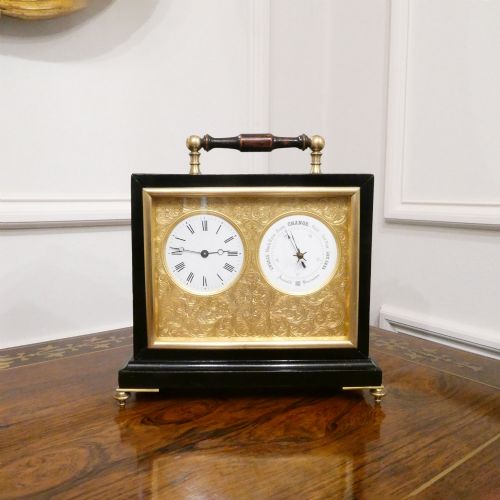
When you search for a desktop weather barometer, you are looking at practical scientific instruments housed in handsome wood cases designed for domestic use. The pieces gathered here range from compact desk compendiums and clock-and-barometer combinations to detailed recording barographs.
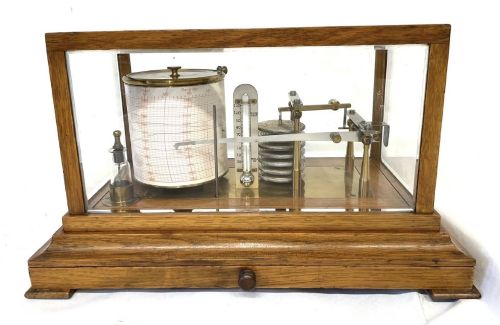
The version you are most likely to meet on this page is the Edwardian or Victorian oak or mahogany cased barograph featuring bevelled glass and a chart drawer. These desk instruments combine aneroid barometer movements with mercury thermometers and rotating drum mechanisms.
Makers such as Negretti & Zambra and Short & Mason dominate the better examples, often pairing rich mahogany or polished oak with silvered metal dials. Alongside these, you will find simpler desk clock and barometer sets from the late nineteenth and early twentieth centuries.
Construction and Materials
Cases rely on dense hardwoods like mahogany and oak, frequently shaped with boxwood inlay, ebonised wood details, or rich marquetry. Timber selection ensured the heavy brass movements stayed rigidly aligned.
Glazing typically involves heavy bevelled glass panes fitted into five-glass cases, protecting the delicate internal linkages while allowing a clear view of the operating mechanism and rotating paper charts.
Desktop Weather Barometer Retail Price Guide 2026
Typical asking prices for desktop weather barometer among the pieces listed under this phrase on Sellingantiques today, from the lower quarter to the upper quarter. They describe what is for sale here now, not the wider market.
Listings feature mahogany, oak, and ebonised wood cases housing aneroid movements, barographs, and desk clocks from the Victorian and Edwardian eras.
Assessing Quality and Execution
The division between standard instruments and superior pieces rests on the precision of the mechanical linkage and the prestige of the maker. Signed brass dials by established London firms indicate higher workshop standards than anonymous retail pieces.
Cabinetwork differentiates the range, separating simple box constructions from refined cases featuring elaborate marquetry inlay, matching wood grains, and heavy bevelled glass panels fitted cleanly into brass frames.
Negretti & Zambra London·Short & Mason London·Depree and Young Ltd Exeter
The Desktop Weather Barometer Glossary
- Barograph
- A self-recording aneroid barometer that traces pressure changes onto a rotating drum holding a paper chart. These instruments usually include an integral thermometer.
- Aneroid Barometer
- A barometer that measures atmospheric pressure through the expansion and contraction of a sealed flexible metal box, avoiding the use of liquid mercury.
- Desk Compendium
- A multi-functional desk accessory combining a barometer, clock, and thermometer within a single unified case.
- Silvered Metal
- A brass or copper dial face treated to acquire a matte silver finish, typically featuring engraved and blackened numerals.
- Marquetry Inlay
- Decorative woodwork where contrasting veneers are fitted into the primary wood case to form geometric or floral patterns.
Desktop Weather Barometer: Frequently Asked Questions
How do barographs work?
Aneroid chambers expand and contract with atmospheric pressure changes, moving a delicate arm tipped with an ink nib across a clockwork-driven paper chart.
This continuous mechanical tracing creates a physical record of weather patterns over the course of a week.
Where should I place a barometer?
Keep your instrument on a stable desk or table away from direct sunlight, radiators, and active draughts. Sudden temperature changes can affect the internal metal components and alter readings.
Domestic models function best in stable indoor environments where they remain undisturbed.
How do I read the chart?
The rotating drum completes one full revolution every seven days, recording rising or falling pressure curves. You compare the current pen position against past traces to anticipate local weather shifts.
Changing weather is indicated when the line slopes sharply upward or downward over several hours.
How do I date these instruments?
Look to the case style, typography on the silvered dial, and construction methods to establish an approximate period. Edwardian pieces often feature lighter oak or inlaid mahogany, while Victorian versions favour darker woods and heavier brass fittings.
Maker signatures and patent dates stamped on the brass bedplate provide further chronological clues.