



Deep Buttoned Arm Chair
A deep buttoned arm chair brings tactile depth and structured comfort to a room through traditional upholstery methods.
Deep Buttoned Arm Chair
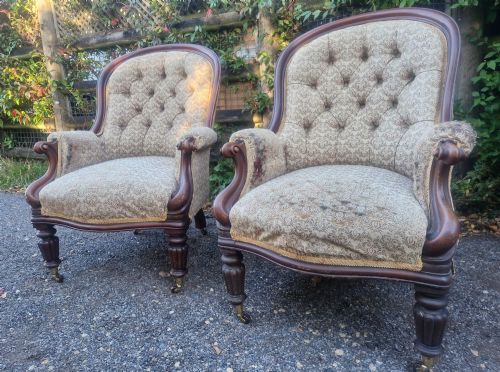
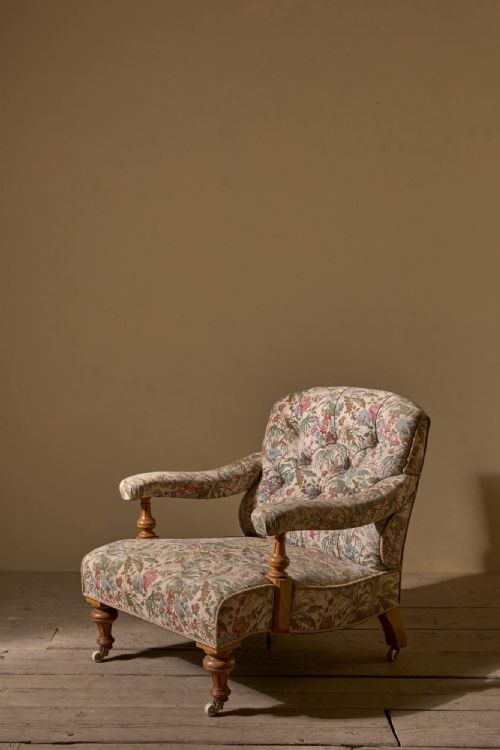
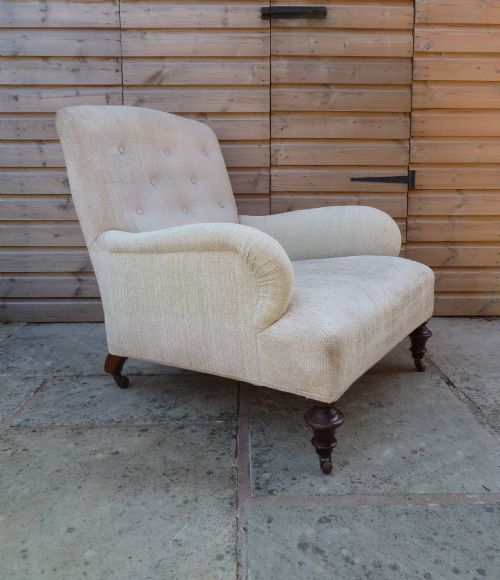
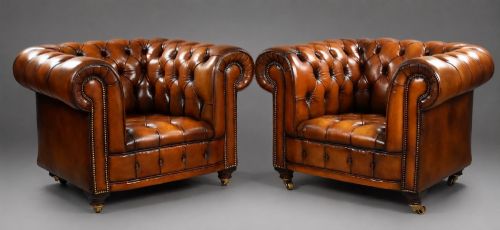
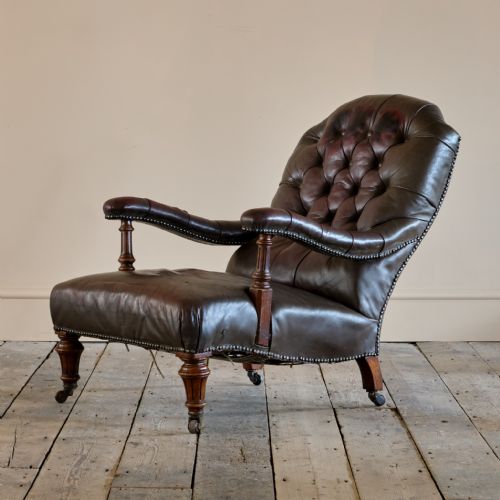
When searching for a deep buttoned arm chair, buyers encounter robust library armchairs, low fireside seating, and generous lounge forms primarily originating from the nineteenth century. Victorian and Edwardian examples dominate the selection, often displaying heavy timber framing beneath tight upholstery.
The phrase encompasses multiple related seating formats, including gentleman's reading chairs, wing backs, and occasional armchairs designed for drawing rooms. Many pieces reflect classic English country house tastes, alongside specific manufacturer styles such as Howard and Sons or Woodstock.
Beyond standard armchairs, related forms like chaise longues and desk chairs occasionally appear, sharing the characteristic tufted upholstery and sprung construction. These items range from compact bedroom seats to substantial library furniture built for heavy daily use.
How they were made
The structural framework relies on dense hardwoods such as mahogany, walnut, and general timber, frequently shaped with turned legs, cabriole supports, or barley twist details. Iron components also appear in specific internal frames or mid-century supports.
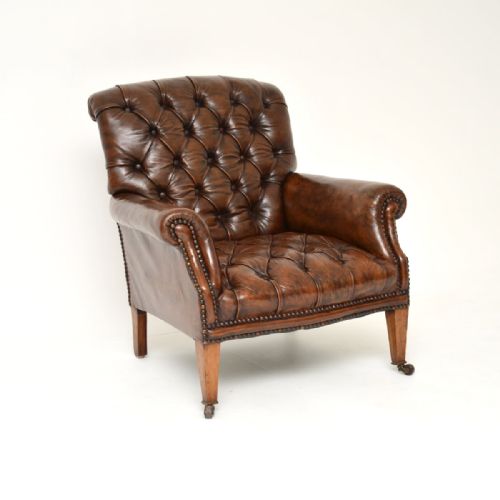
Upholstery techniques define the aesthetic, combining traditional coiled springing with heavy padding secured by fabric, velvet, or hand-dyed leather. Brass tacks and nails often edge the upholstery seams or secure the leather panels to the wooden frame.
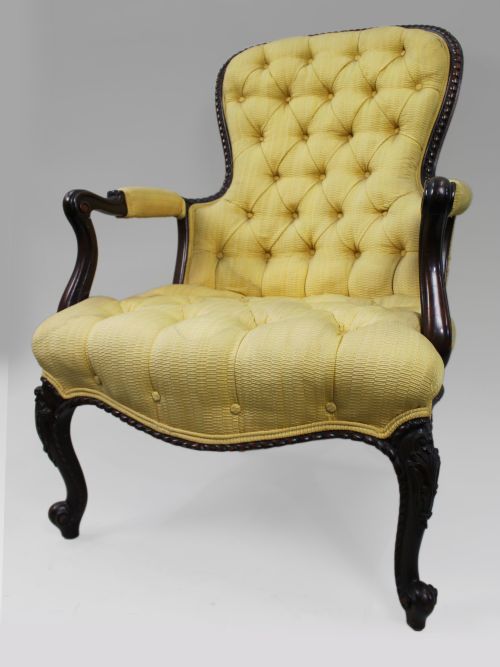
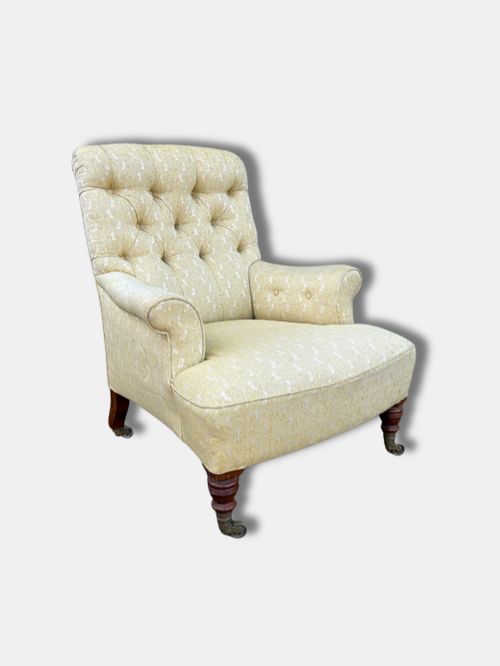
Deep buttoning requires precise placement through the padding layers to create the signature diamond tufted pattern, anchoring the surface material securely to the internal webbing.
Current listings feature pieces spanning the Georgian, Regency, Victorian, and Edwardian periods, utilising mahogany, walnut, leather, and velvet.
What varies in quality
The integrity of the internal wooden frame and the precision of the joinery establish the foundational standard of each chair. Original timber components that remain tight and unaltered command greater regard than pieces with significant structural repairs or replaced legs.
The condition and authenticity of the upholstery materials create a clear distinction across the range. Chairs retaining hand-dyed leather or period fabric show a higher grade of craftsmanship compared to those with unsympathetic modern replacements.
The symmetry and depth of the tufting reveal the maker's skill, where evenly spaced buttons maintain tension across the backrest without distorting the surrounding textile.
Howard and Sons·Gillows
The Deep Buttoned Arm Chair Glossary
- Button back
- A method of upholstery where buttons are pulled deep into the padding to form a geometric grid of tufts. This technique creates a firm, supportive backrest while adding decorative texture.
- Wing back
- An armchair featuring protective side panels attached to the armrests, originally designed to deflect draughts from the sitter. These chairs often feature deep leather upholstery and sturdy wooden frames.
- Cabriole leg
- A furniture leg that curves outward and then tapers inward, finishing in a pad or claw foot. This design is commonly found on mid-Victorian and eighteenth-century inspired seating.
- Barley twist
- A carved wooden furniture detail resembling a twisted rope or barley stalk. It appears frequently on the structural framing and supports of nineteenth-century chairs.
- Spoon back
- A chair back shaped in a concave oval resembling the bowl of a spoon, designed to fit the contours of the human spine. This style is typical of mid-Victorian parlor seating.
Deep Buttoned Arm Chair: Frequently Asked Questions
How do I identify a Victorian armchair?
Victorian armchairs typically feature dense mahogany or walnut frames, often paired with elaborate turned legs or cabriole supports. The upholstery relies on heavy buttoning and coiled spring construction that provides a firm seat.
Examining the underside reveals hand-carved joints and period fixings that distinguish these nineteenth-century pieces from later reproductions.
What is Howard style furniture?
Howard style refers to the distinctive upholstered furniture pioneered by the London firm Howard and Sons during the Victorian era. These chairs are known for deep proportions, low rolled arms, and exceptional internal comfort.
Original pieces often carry stamped markings on the castors or wooden frame underneath the upholstery.
Are leather armchairs difficult to maintain?
Leather armchairs require regular conditioning to keep the hide supple and prevent cracking over time. Natural hand-dyed leather develops a rich patina with use, absorbing oils from daily handling.
Keeping the chairs away from direct sunlight and heat sources preserves the structural integrity of both the leather and the underlying buttoned padding.
What is the difference between a library chair and a fireside chair?
Library chairs are generally larger, heavier seating options designed for extended reading, frequently featuring sturdy mahogany frames and leather upholstery. Fireside chairs tend to be more compact, utilising soft velvet or fabric to offer comfortable seating close to a hearth.
Both types incorporate deep buttoning to support the sitter during prolonged use.