

Deep Armchair
A deep armchair offers generous proportions and low-slung comfort, making it the seat people reach for at the end of the day.
Deep Armchair
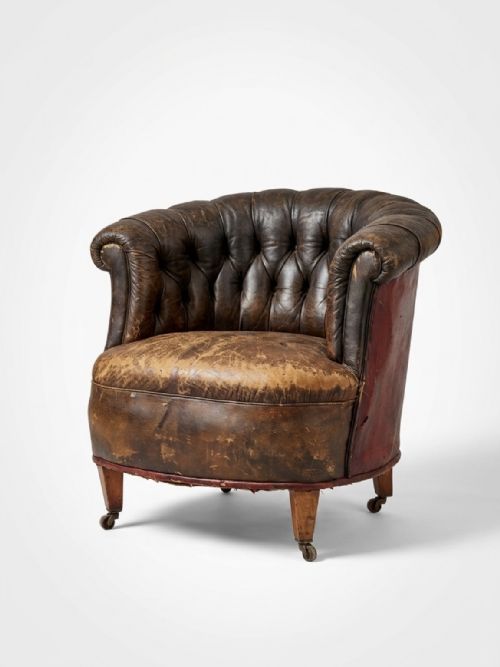
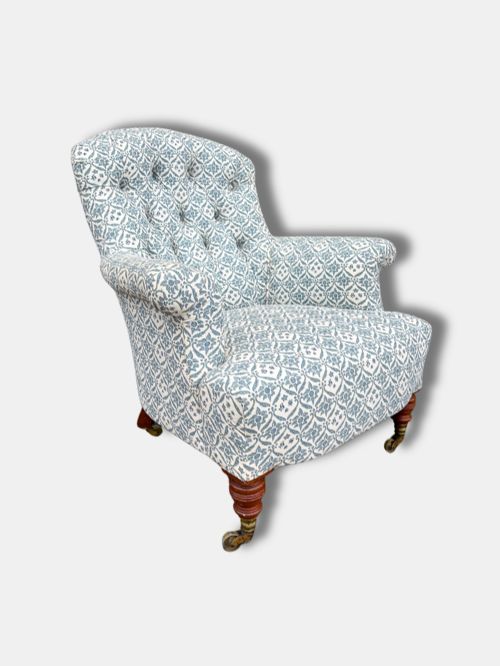
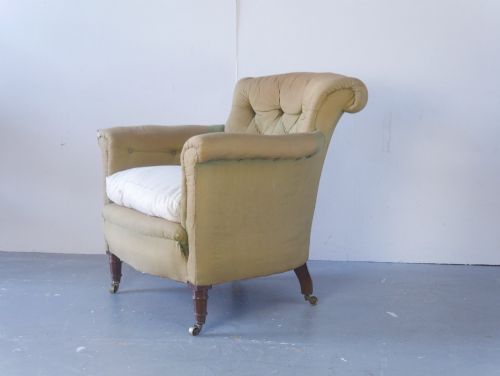
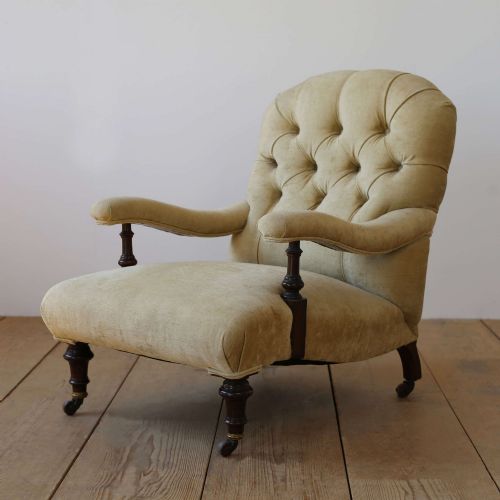
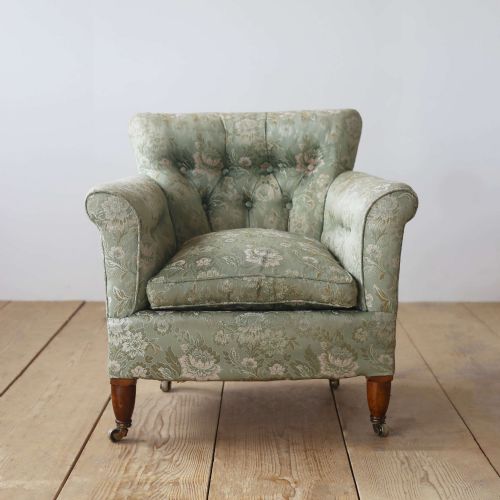
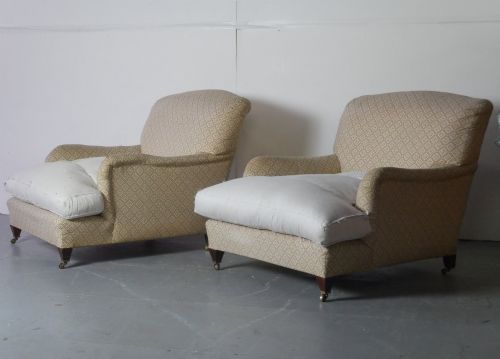
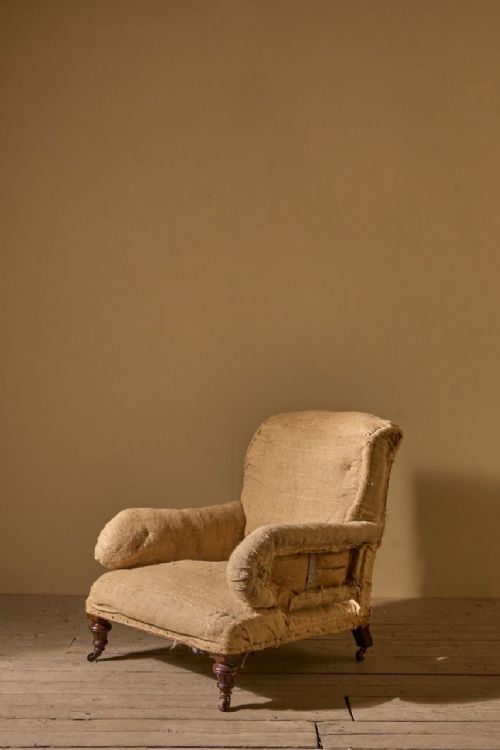
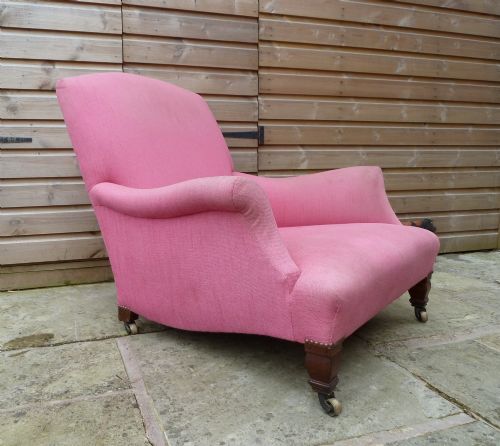
A deep armchair provides a sprawling seat and low-slung comfort designed for long hours of reading or resting. When exploring a deep armchair on this page, the version most frequently encountered is a nineteenth-century or early twentieth-century piece rooted in Victorian, Edwardian, or English Country House traditions.
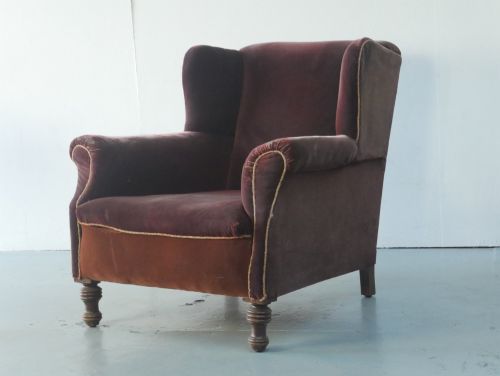
The selection ranges from library armchairs and club chairs to tub chairs and wing chairs. Makers and workshops across the nineteenth and early twentieth centuries built these seats with substantial frames and generous depths to prioritise physical ease over rigid formality.
Materials and construction
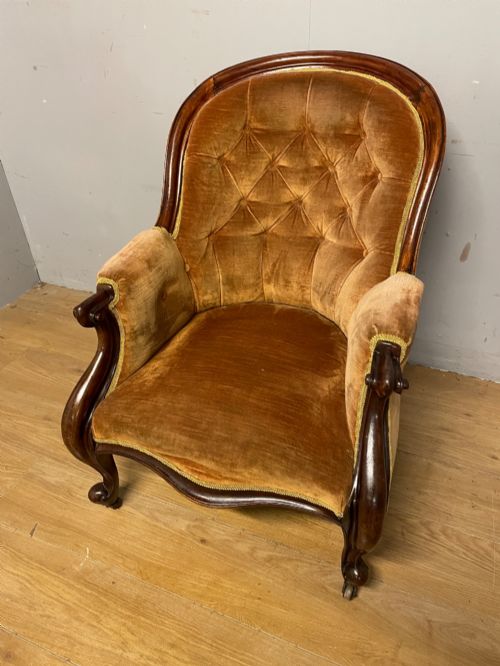
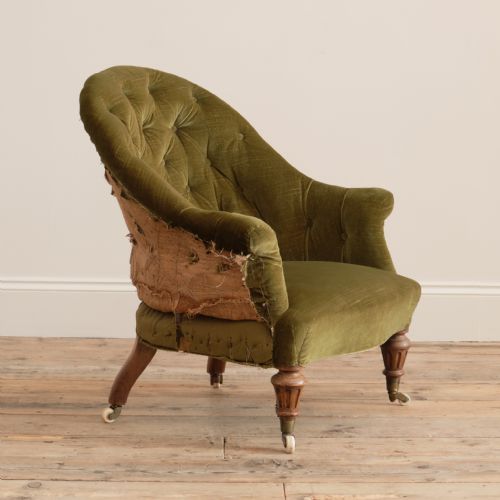
Frames rely on sturdy timbers such as mahogany, oak, walnut, and hardwood, frequently fitted with cast brass castors to aid movement across heavy carpets. Structural ironwork also appears in specific nineteenth-century designs to reinforce the load-bearing elements.
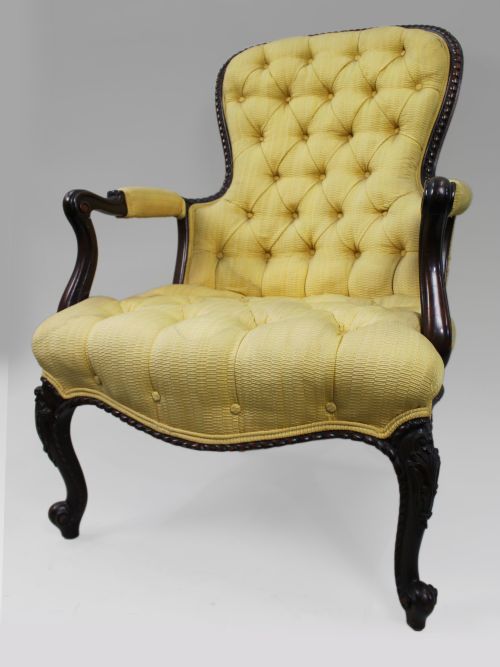
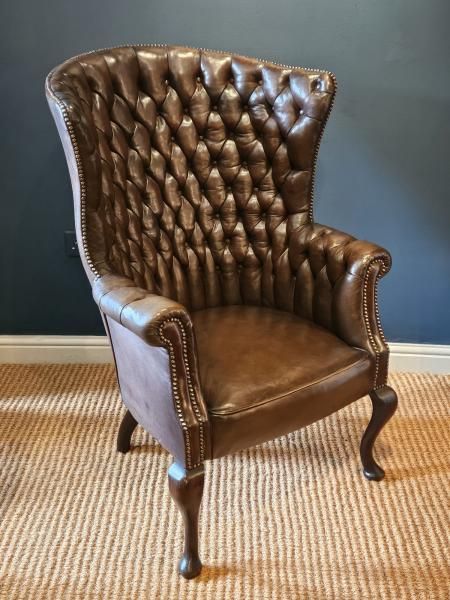
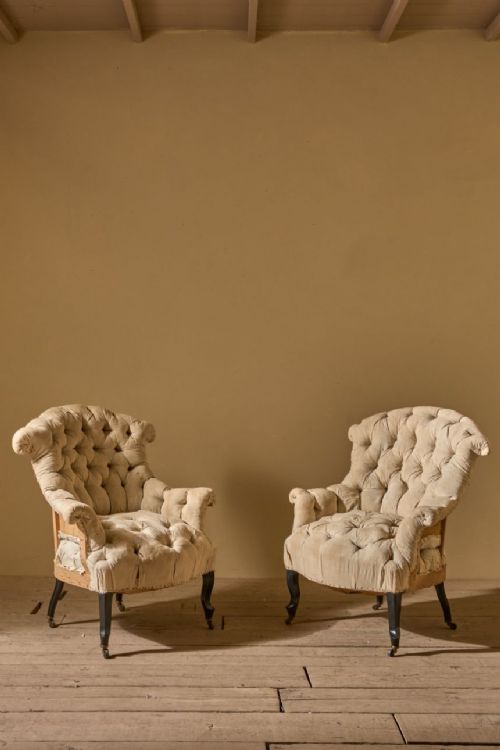
Upholstery relies on leather, velvet, fabric, calico, and rexine, often finished with deep buttoning or split cane panels. Padding incorporates traditional stuffing and feather filling to sustain the characteristic comfort and resilience of each seat.
Brass castors lurk beneath many of these heavy frames, ready to roll a sleepy reader across the rug without warning.
Assessing quality
The distinction between tiers rests on the integrity of the wooden frame and the precision of the joinery beneath the upholstery. A sturdily built hardwood or mahogany foundation prevents the creaking and shifting common in lesser constructions.
Quality also shows in the depth and responsiveness of the stuffing, alongside the handling of materials like leather, velvet, and cane. Finer examples maintain disciplined proportions and enduring support across the seat and back.
Howard And Sons·Whytock And Reid
The Deep Armchair Glossary
- Button back
- A traditional upholstery technique where tufts are pulled deep into the padding and secured with buttons to create a patterned, quilted surface. This method keeps the internal stuffing firmly anchored during daily use.
- Wing back
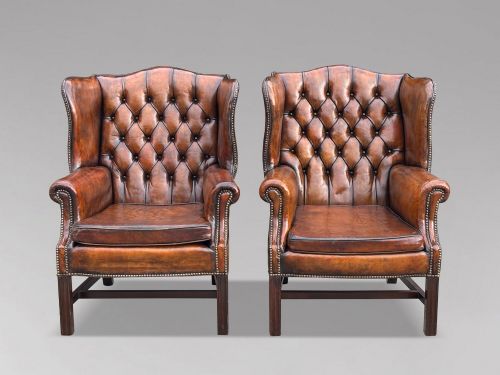
- An armchair featuring protective side panels attached to the armrests, designed originally to shield the sitter from draughts. These wings frame the upper body and define traditional library and club seating.
- Library armchair
- A sturdy, heavily upholstered seat designed for prolonged reading in a study or library. They frequently combine timber frames with leather or fabric coverings to withstand regular handling.
- Club chair
- A low, deep-seated armchair traditionally upholstered in leather and built for relaxed lounging. The style originated in nineteenth-century gentlemen's clubs before spreading to domestic drawing rooms.
- Bergere
- An enclosed or open armchair featuring wooden framing and woven cane panels on the back and sides. This French-inspired form brings a lighter visual weight to period interiors.
Deep Armchair: Frequently Asked Questions
What is a deep armchair?
A deep armchair is a generously proportioned seat built with an extended depth and low profile to maximise physical comfort. These pieces prioritise relaxed posture over upright formality.
They appear across various nineteenth and twentieth-century styles, ranging from leather club chairs to upholstered library seats.
Where were they used?
These armchairs served primarily in studies, libraries, drawing rooms, and country house parlours. Their robust construction suited spaces dedicated to reading, writing, and social gathering.
Today, they function well in living rooms and snugs as primary lounging seats.
How do I date a deep armchair?
Dating relies on examining the timber species, castors, upholstery techniques, and stylistic markers such as Regency curves or Victorian buttoning. Secondary woods and framing methods often point to specific manufacturing decades.
Comparing construction details with documented period examples helps narrow down the era.
How do I care for leather upholstery?
Leather upholstery requires regular dusting and occasional conditioning to prevent the hide from drying out and cracking. Keeping these chairs away from direct heat sources preserves the suppleness of the material.
Gentle cleaning maintains the natural patina accumulated over decades of use.