

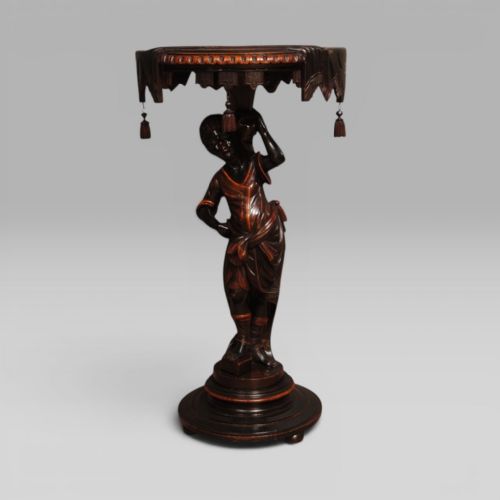


Decorative Wood Pedestal
A decorative wood pedestal lifts a vase, plant or sculpture into the room, bringing height and presence to a neglected corner.
Decorative Wood Pedestal
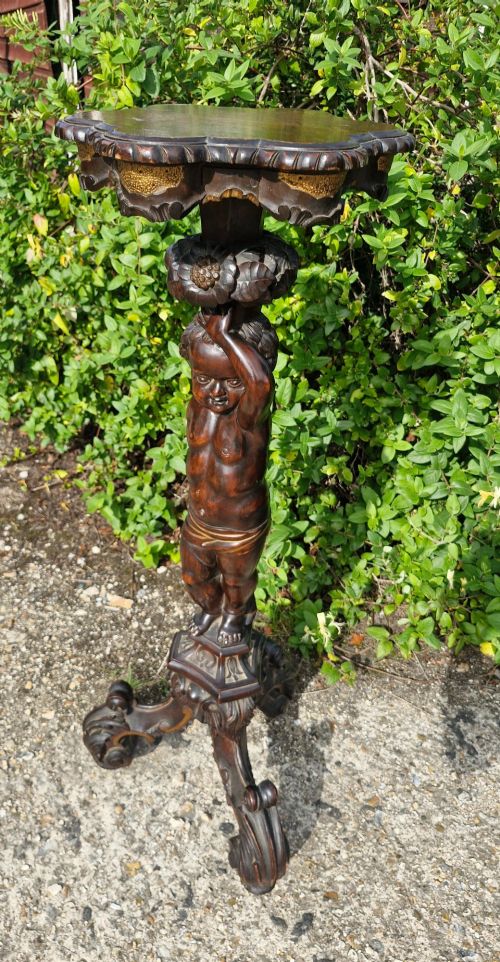
A decorative wood pedestal serves to elevate objects of interest, drawing the eye upwards through height and form. The selection spans the nineteenth century alongside early twentieth century examples, ranging from architectural columns and torcheres to carved figures and plant stands.
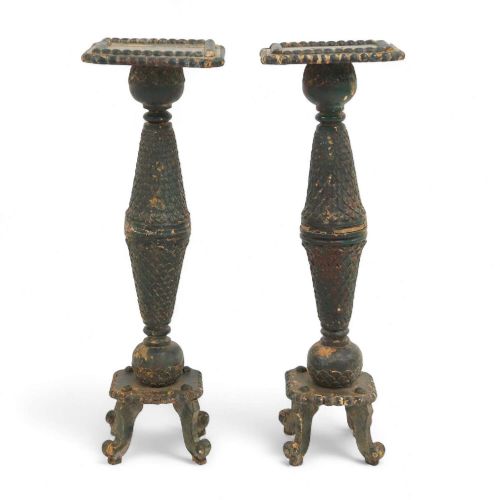
Buyers will encounter various incarnations, from Italian walnut stands and French painted columns to ebonised figures and faux marble finishes. These pieces function as independent sculptural statements or as supports for urns, jardiniere bowls and bronzes.
How they were made
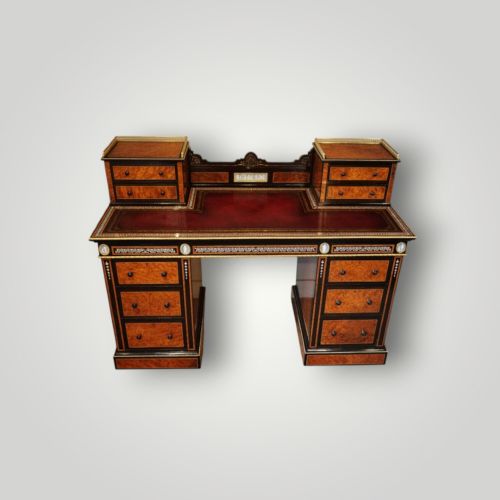
Makers shaped these supports primarily from carved wood, applying gesso and gold leaf or finishes such as polychrome paint and ebonisation to mimic costlier materials. Marquetry and inlay using rosewood, satinwood, thuya and ivory appear alongside carved walnut, oak and mahogany.
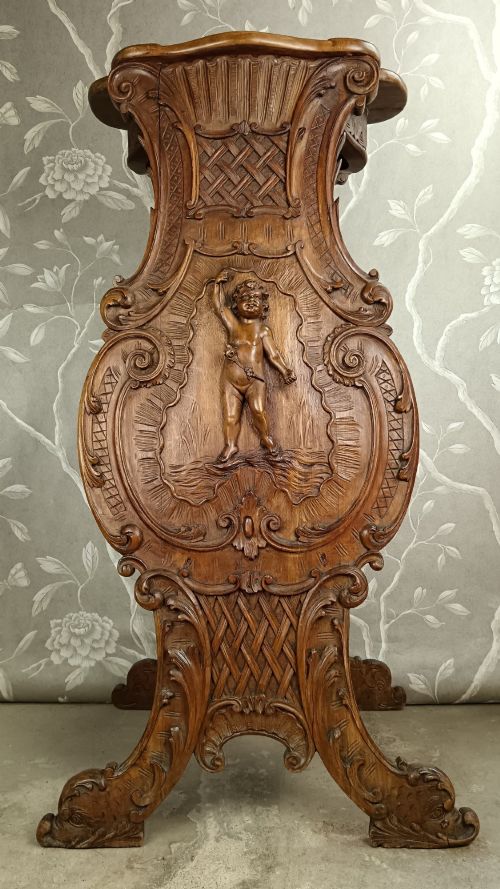
Techniques range from intricate hand-carved figural work and barley twist turnings to faux marble painting and parcel gilding. Metal components and Wedgwood plaques occasionally supplement the timber construction.
Several pieces feature carved figures of gondoliers and elephants holding up the world, proving that even furniture needs a little theatrical drama.
What varies in quality
The standard of a decorative wood pedestal rests upon the depth and vigour of the carving, especially in figural works and acanthus foliage. Crisp definition in wood and gesso separates masterly workshops from routine production.
Surface treatment dictates much of the character, distinguishing original green paint, gilding or ebonisation from later repainting. The integrity of structural joints under heavy weights also marks superior craftsmanship.
Jackson and Graham·Marguerite
The Decorative Wood Pedestal Glossary
- Torchere
- A tall stand or pedestal designed specifically to hold a light, lamp or candle. These pieces often feature slender shafts terminating in circular tops.
- Blackamoor
- A term historically applied to European decorative arts depicting figures from North or Sub-Saharan Africa, frequently carved in wood and finished with polychrome paint or gilding as stands or tables.
- Jardiniere
- An ornamental pot or stand intended for holding plants or flowers. They appear often in nineteenth-century interiors as part of the plant stand and pedestal tradition.
- Gesso
- A plaster-like mixture applied to wood surfaces as a base for paint or gold leaf. It allows artisans to carve intricate relief details before gilding.
- Ebonisation
- A chemical or paint treatment applied to cheaper timbers to imitate ebony. This dark finish gained popularity during the Victorian era for dramatic contrast.
Decorative Wood Pedestal: Frequently Asked Questions
What is the difference between a torchere and a pedestal?
A torchere specifically denotes a tall stand originally built to carry a light source or candle, whereas a pedestal serves a broader supporting role for sculpture, urns or vases.
In practice, antique dealers and makers often used the terms interchangeably for tall, slender furniture designed to elevate objects in a room.
How were antique pedestals used in period homes?
These supports stood in hallways, drawing rooms and libraries to display art, bronzes, clocks or large houseplants. They created focal points in empty corners and introduced varying heights to interior arrangements.
Many functioned as lamp tables or displayed Grand Tour souvenirs brought back from European travels.
How do I care for a painted or gilded wood stand?
Keep wooden stands away from direct sunlight and strong heat sources to prevent the gesso and paint from cracking or flaking. Dust gently with a dry, soft cloth without using liquid polishes that might damage original surfaces.
Ensure heavy items placed on top have protective pads to avoid scratching the painted or polished wood.
How do I identify a nineteenth-century pedestal?
Nineteenth-century examples often display specific regional characteristics, such as Italian walnut carving, Venetian polychromy or Victorian ebonising with inlay. Examination of the timber beneath and construction methods helps confirm the era.
Makers of this period utilised dense hardwoods, hand-applied gesso and traditional joinery rather than modern adhesives.