



Decorative Walnut Table
A decorative walnut table brings warmth and rich grain to a room, offering both surface and presence.
Decorative Walnut Table
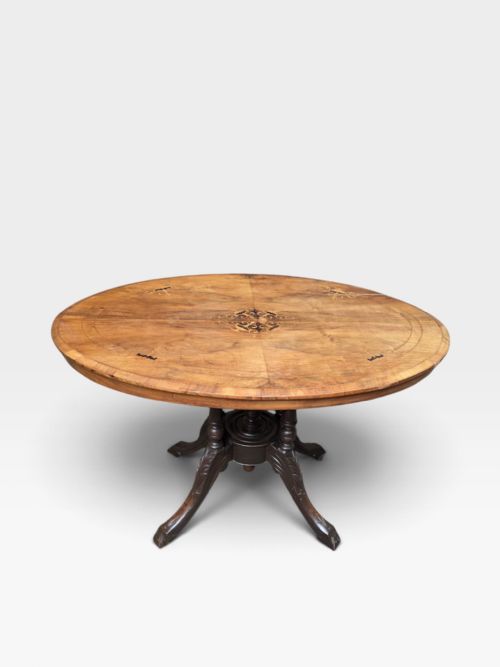
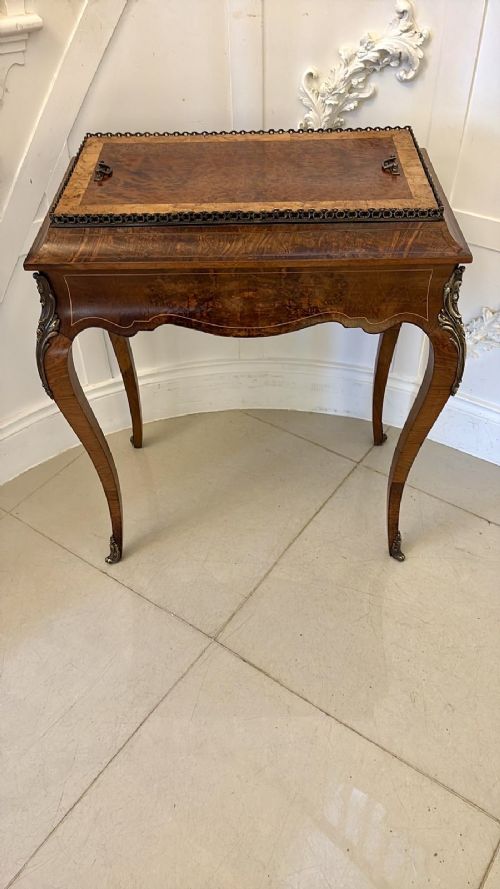
A decorative walnut table spans forms ranging from French Rococo Revival centre tables to 19th century writing desks and side tables. Buyers seeking a decorative walnut table will encounter Victorian marquetry inlaid pieces alongside French Louis XV style planters and console tables.
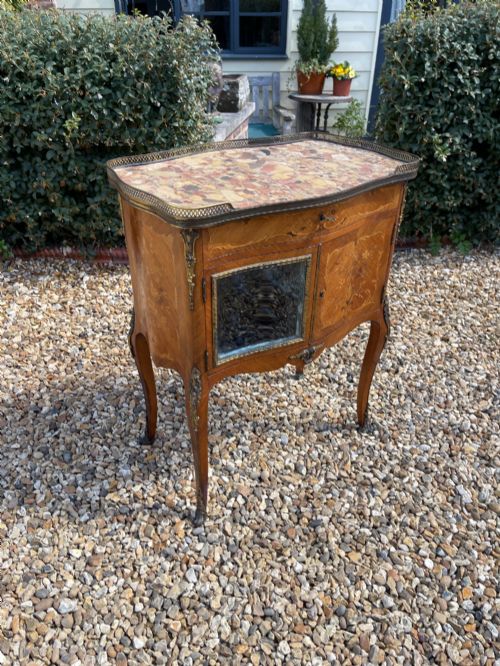
The selection includes 17th century walnut table cabinets and 18th century oyster veneered centre tables alongside 19th century examples. Proportions vary from compact Syrian side tables to large serving tables with marble tops.
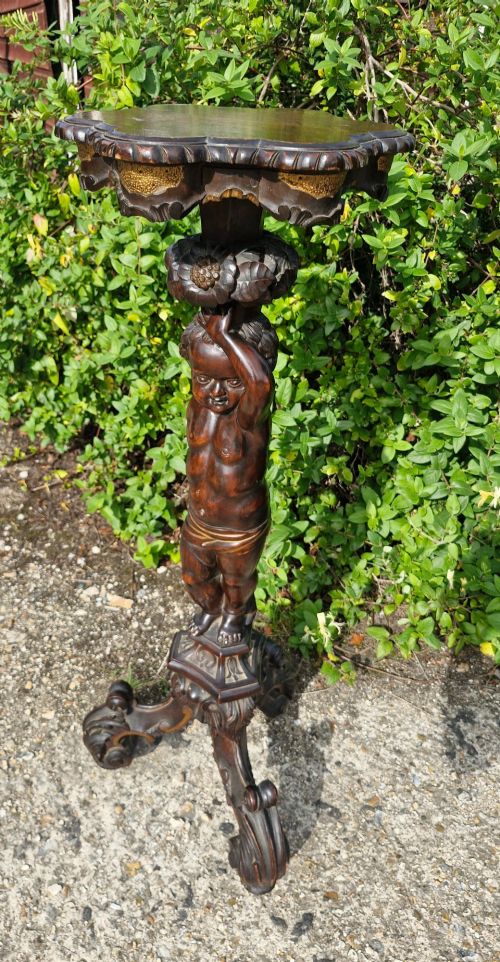
The pieces encompass diverse functions, serving as library tables, pedestals, and writing desks with brass ormolu mounts and boxwood stringing. Victorian and continental workshops produced the majority of forms seen across the periods.
Materials and Construction
Craftsmen utilised solid walnut, burr walnut, and laburnum for surface veneers, laying intricate oyster veneers and marquetry patterns in boxwood and ebonised timber. Structural elements often incorporate secondary hardwoods to support heavier forms.
Decorative mounts in cast brass and ormolu adorn French revival and Victorian pieces, framing panels of figured grain. Marble inserts provide durable upper surfaces on serving tables and console tables.
Joinery techniques include hand-carved elements on Italian stands and Syrian occasional pieces. Marquetry inlay demands precise cutting of contrasting timbers to create floral and geometric motifs across tabletops.
Decorative Walnut Table Retail Price Guide 2026
Typical asking prices for decorative walnut table among the pieces listed under this phrase on Sellingantiques today, from the lower quarter to the upper quarter. They describe what is for sale here now, not the wider market.
Object types span centre tables, side tables, writing desks, and table boxes.
Markers of Distinction
Quality rests upon the selection and bookmatching of the walnut veneer, where rich burr figuring and crisp marquetry indicate superior workshop output. Subtle depth in the grain pattern distinguishes exceptional surfaces from plain timber.
The crispness of hand-carved details and the weight and chasing of ormolu mounts separate standard production from master craftsmanship. Integrated structural integrity in tilt-top mechanisms and writing desk drawers marks high-grade execution.
Maple and Co
The Decorative Walnut Table Glossary
- Burr Walnut
- A veneer taken from the warted excrescences of a walnut tree, prized for its swirling, highly figured grain patterns. It creates a decorative surface used on tabletops and deskfronts.
- Marquetry
- The art of applying pieces of veneer to a structure to form decorative patterns and pictures. Craftsmen use woods like boxwood and ebonised timber to achieve contrasting detail.
- Ormolu
- Gilded bronze mounts applied to furniture edges, corners, and legs. This technique gained prominence in French decorative pieces.
- Oyster Veneer
- Branch wood cut transversely to produce small, circular rings resembling oyster shells. This method creates a distinctive pattern across 17th and 18th century tabletops.
- Console Table
- A table designed to be fixed against a wall, frequently supported by front consoles or legs. These often feature marble tops and elaborate carving.
Decorative Walnut Table: Frequently Asked Questions
How do I care for a walnut surface?
Keep walnut furniture away from direct sunlight and heat sources to prevent the wood from drying out and the veneer from lifting. Dust regularly with a soft, dry cloth and avoid silicone-based polishes.
Apply a traditional beeswax occasionally to nourish the grain and maintain the natural lustre of the timber. Ensure spills are wiped immediately with a damp cloth.
What is the difference between a centre table and a side table?
A centre table is finished on all sides and designed to stand free in the middle of a room, providing access from every angle. These often feature elaborate marquetry or central pedestals.
A side table has a finished front and is intended to stand against a wall or in a corner. They generally serve a more utilitarian or display-oriented purpose in a domestic interior.
How can I tell a 19th-century piece from an 18th-century piece?
Eighteenth-century tables frequently utilise oyster veneering, laburnum, and simpler structural forms without the heavy ornamentation seen later. The timber patination tends to show deeper oxidation over centuries.
Nineteenth-century examples often display revival styles such as French Rococo, heavier brass ormolu mounts, and complex marquetry inlays. Machine assistance in cutting veneers becomes apparent in the later Victorian period.
Where should I place a console table?
A console table fits well against a hallway or living room wall, particularly beneath a mirror or artwork. Their shallow depth allows them to occupy narrow spaces without obstructing movement.
Marble-topped versions suit entrance halls, while burr walnut variations complement reception rooms. They provide a display surface for decorative objects rather than heavy workspace.