



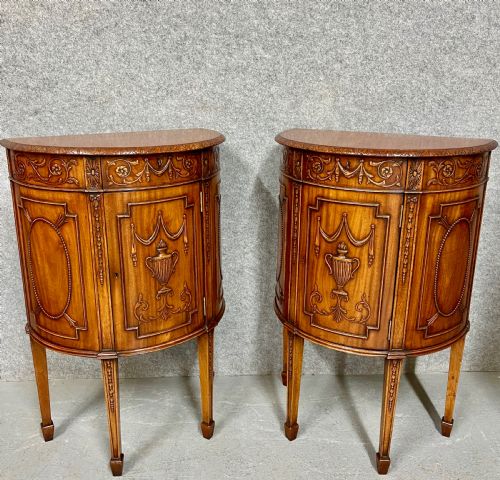


Decorative Table Cabinet
These decorative table cabinet examples span centuries and styles, offering compact storage and distinct character for any room.
Decorative Table Cabinet
A decorative table cabinet is a small-scale storage piece designed to sit upon a desk, chest, or table rather than stand on the floor. When searching for a decorative table cabinet, buyers encounter diverse forms ranging from Japanese black lacquer kodansu to seventeenth-century ebony and walnut constructions.
Origins vary widely across the inventory, touching upon English Georgian pieces, French Empire and Rococo Revival designs, Spanish Baroque influences, and Asian lacquered works. Each piece provides miniature compartments or drawers suited for letters, small valuables, or curiosities.
Materials and construction
Wood forms the primary structural foundation of these pieces, utilising dense timbers such as walnut and ebony alongside lighter carcases prepared for marquetry and paint. Craftspeople applied sophisticated surface treatments including black lacquer, japanning, tortoiseshell, and intricate inlay to achieve striking visual depth.
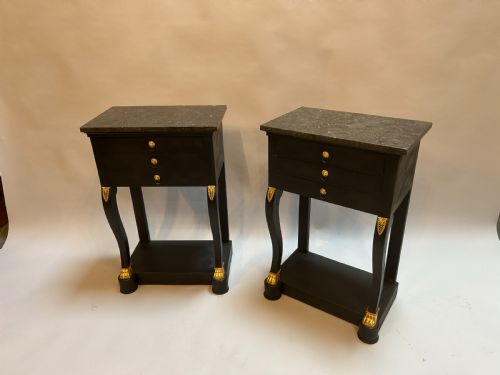
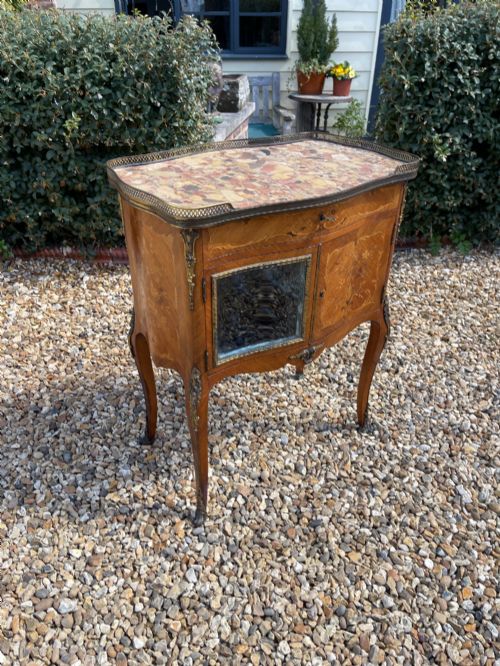
Metal components play a crucial functional and decorative role, particularly through cast brass or ormolu mounts that accent corners, feet, and key escutcheons. Glass and marble also appear in specific iterations, adding contrasting textures to the woodwork and metalwork.
Decorative Table Cabinet Retail Price Guide 2026
Typical asking prices for decorative table cabinet among the pieces listed under this phrase on Sellingantiques today, from the lower quarter to the upper quarter. They describe what is for sale here now, not the wider market.
Periods represented span from the 17th century through the 1920s.
Evaluating quality and execution
Quality rests heavily on the precision of the joinery and the integrity of the surface decoration, whether that involves hand-painted lacquer, tortoiseshell application, or fine marquetry. Superior examples display crisp detailing in brass mounts and harmonious proportions that elevate a functional storage box into a work of art.
The preservation of original finishes and interior fittings distinguishes finer pieces from heavily restored or altered equivalents. Authentic period patination on wood and metal indicates how well a cabinet has survived through its various eras.
John Davenport of Longport·Melissa White
The Decorative Table Cabinet Glossary
- Kodansu
- A small Japanese cabinet featuring multiple internal drawers, often finished in lacquer. These portable storage chests were traditionally used for documents or personal valuables.
- Japanning
- A European imitation of East Asian lacquerwork popular in the eighteenth and nineteenth centuries. The technique involves applying layers of varnish and hardening them through heat.
- Ormolu
- Gilded bronze mounts applied to furniture edges and handles. This decorative metalwork became prominent in French luxury pieces during the eighteenth and nineteenth centuries.
- Marquetry
- The art of applying thin veneers of wood in geometric or pictorial patterns onto a structural carcase. Master craftspeople used contrasting timbers to create detailed surface imagery.
- Canterbury
- A small piece of furniture designed for holding sheet music or books, typically featuring vertical partitions. Variations range from open racks to enclosed cupboards.
Decorative Table Cabinet: Frequently Asked Questions
What fits inside a decorative table cabinet?
These compact pieces typically house small personal items, letters, trinkets, or specialised collections within their internal drawers and compartments.
Because they were made in various sizes and regional traditions, the interior layout changes significantly from one piece to another.
Where should I place a decorative table cabinet?
A table cabinet sits comfortably on top of sturdy surfaces such as a chest of drawers, a large desk, or a dedicated side table.
Placing the piece at a moderate height allows the details of the woodwork, lacquer, or metal mounts to be easily viewed and appreciated.
How do I identify the period of a cabinet?
Dating relies on examining the construction methods, timber choices, and stylistic vocabulary such as French Empire or Georgian motifs.
Comparing the decorative techniques, like japanning or ormolu mounts, helps place the object within its historical manufacturing era.
Are these cabinets purely ornamental?
While highly decorative in appearance, these pieces were built for practical desktop or tabletop storage.
The combination of enclosed doors, lift lids, and small drawers allowed owners to keep valued possessions organised and secure.