





Decorative Stone Bust
These decorative stone bust examples bring carved presence into a room, offering sculpted forms in marble, alabaster and soapstone.
Decorative Stone Bust
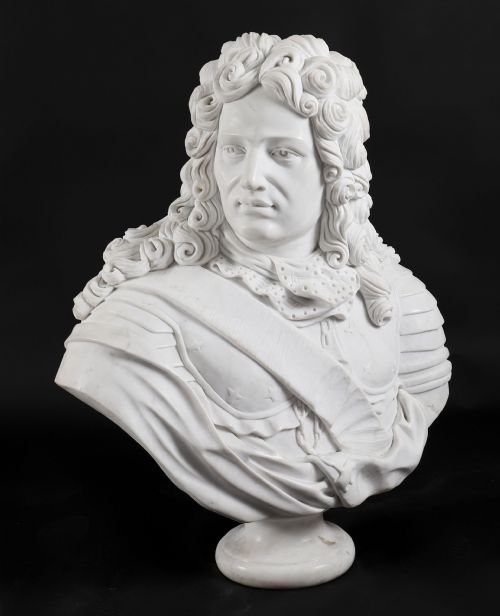
A decorative stone bust captures human and animal subjects in relief and the round, drawing on nineteenth-century and mid-twentieth-century traditions. You encounter subjects ranging from noblemen in armour and Victorian gentlemen to Orientalist figures and African carved stone portrait studies.
The selection encompasses diverse stylistic movements including Art Nouveau, Art Deco, Baroque Revival, and Classical Revival. Pieces appear in various formats, spanning tabletop portrait sculptures to garden busts on plinths.
Italian workshops feature prominently alongside African folk art traditions, offering works executed in standard marble, Carrara marble, and alabaster. Buyers find both solo portrait studies and matched pairs reflecting period aesthetics from the late nineteenth century up to nineteen-fifty.
How they were made
Specimen marble construction appears in specialised animal studies, whilst larger portrait sculptures utilise uniform stone blocks mounted on integral plinths or separate stands.
Decorative Stone Bust Retail Price Guide 2026
Typical asking prices for decorative stone bust among the pieces listed under this phrase on Sellingantiques today, from the lower quarter to the upper quarter. They describe what is for sale here now, not the wider market.
An Italian stallion and mare carved from specimen marble prove that even stone horses appreciated a stable.
What varies in quality
The finesse of the carving dictates the distinction between standard production and masterwork sculpture, particularly in the rendering of facial expressions, hair, and armour detail. Softer stones like alabaster yield a translucent quality when handled by skilled hands, whereas coarser stone yields a more opaque appearance.
Signed works by documented sculptors carry greater distinction than anonymous studio pieces. The choice of material also elevates the piece, with fine-grained Carrara marble and multicoloured specimen stones commanding attention over basic limestone or generic stone.
John Wenlock Rollins·Auguste Moreau
The Decorative Stone Bust Glossary
- Alabaster
- A fine-grained, soft stone often used for Victorian portrait sculptures due to its translucency. It allows carvers to achieve delicate facial expressions and smooth drapery.
- Carrara Marble
- A white or blue-grey marble quarried in the city of Carrara in Tuscany, Italy. This material has been favoured by European sculptors for centuries for its purity and fine grain.
- Orientalist
- An artistic style from the nineteenth century depicting themes and figures from Middle Eastern and North African cultures. These works often showcase elaborate traditional garments and headwear.
- Specimen Marble
- A decorative technique utilising various types of coloured marble fitted together to create mosaic or multi-toned studies. Animal carvings frequently employ this method to highlight natural markings.
- Torchere
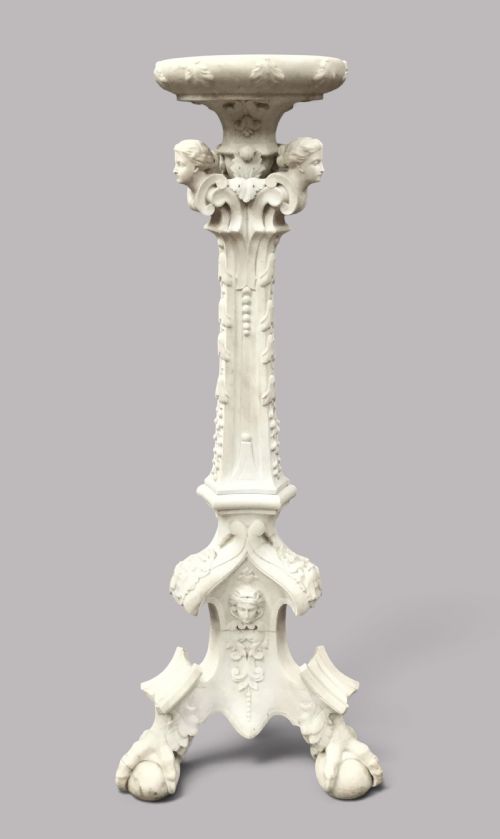
- A tall stand or pedestal designed to support a bust, sculpture, or lamp. These stands often share the stone or stylistic period of the sculpture placed upon them.
Decorative Stone Bust: Frequently Asked Questions
Where should I place a decorative stone bust?
These sculptures suit entrance halls, libraries, and living rooms where they can sit securely on sturdy sideboards, mantels, or dedicated pedestals. Their substantial weight requires stable placement away from high-traffic edges.
Pairing a marble bust with a torchere stand creates a commanding focal point in a corner or alongside a fireplace. Ensure the room's lighting highlights the carved contours and natural grain of the stone.
How do I clean carved stone sculptures?
Dust these pieces regularly using a soft, dry microfibre cloth or a gentle feather duster to prevent particulate buildup in the carved recesses. Avoid harsh chemical cleaners, abrasives, or excessive water, especially on softer stones like alabaster.
If deeper cleaning is necessary, consult a professional conservator rather than applying household detergents. Alabaster is particularly sensitive to moisture and can dissolve or discolour if wet.
How can I tell the period of a stone bust?
Stylistic indicators such as Victorian facial hair, Art Nouveau flowing lines, or Art Deco geometric simplification offer initial dating clues. Signatures, dates, and recorded foundry or studio marks carved into the base provide more precise chronological evidence.
The choice of material and subject matter also aligns with specific eras, such as nineteenth-century Orientalist figures or mid-century Italian classical revivals.