



Decorative Pendant Lamps
These decorative pendant lamps span Victorian, Edwardian, and 1930s idioms, offering brass, glass, and iron suspended illumination for period interiors.
Decorative Pendant Lamps
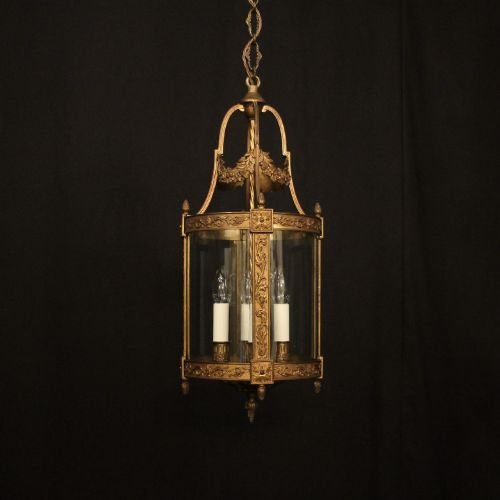
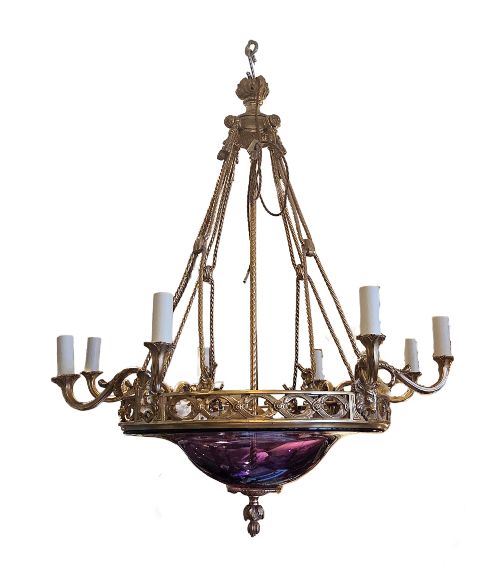
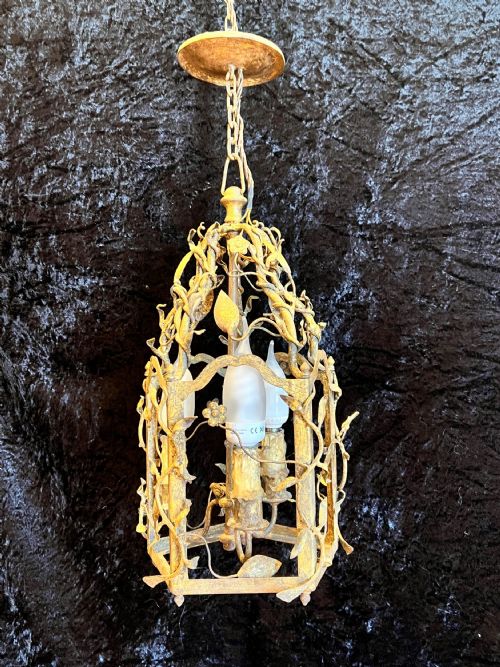
Decorative pendant lamps encompass chandeliers, hanging lanterns, ceiling lights, and hall lanterns suspended from above to illuminate interior spaces. When searching for decorative pendant lamps, collectors encounter diverse forms ranging from French wrought iron lanterns to Edwardian crystal bowls and brass fittings.
The selections available here draw upon Victorian, Edwardian, and early twentieth-century periods, including specific examples from 1900, 1910, 1920, and 1930. Buyers are most likely to meet brass and glass combinations, alongside wrought iron, cut glass, and stained glass interpretations.
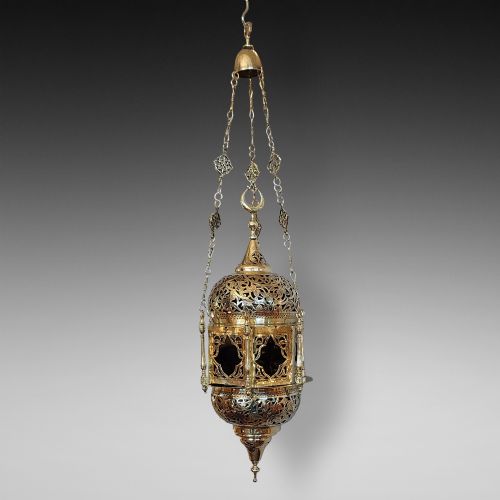
Stylistic influences vary widely across these pieces, incorporating Art Nouveau, Art Deco, Gothic Revival, Moroccan Revival, and French country aesthetics. Each object type serves a distinct architectural purpose, from large hall lanterns to multi-branch chandeliers and ceiling roses.
How they were made
Makers utilised brass, gilt metal, chrome, and cast metal for the structural frames and mountings of these hanging fixtures. Blacksmiths forged robust wrought iron and cast iron for hall lanterns and rustic frames.
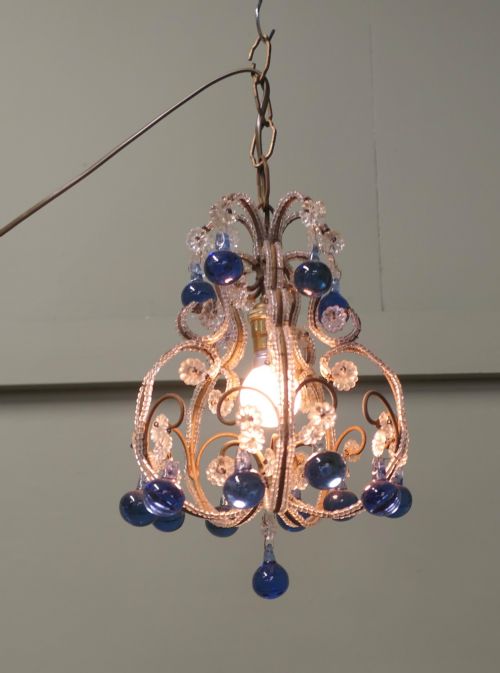
Glass elements required specialised manufacturing techniques, encompassing cut glass, moulded crystal, opaque glass grapes and flowers, and coloured stained glass panels. Toleware components provided painted metal surfaces for French polychrome models.
Assembly methods involved mechanical fastening of metalwork around glass shades, bowls, and crystal drops, often paired with chains or rods for suspension. Many surviving examples integrate electrical rewiring to adapt older frames for modern domestic use.
Decorative Pendant Lamps Retail Price Guide 2026
Typical asking prices for decorative pendant lamps among the pieces listed under this phrase on Sellingantiques today, from the lower quarter to the upper quarter. They describe what is for sale here now, not the wider market.
Listings feature periods from Victorian and Edwardian eras through the 1930s, utilising brass, wrought iron, and cut glass.
What varies in quality
Quality in these hanging fixtures rests upon the crispness of metal casting, the weight of the brass or iron framework, and the hand-finished detail present in wrought iron scrolls or toleware painting. Superior examples exhibit substantial gauge metals rather than pressed sheet alternatives.
The grade of the glass and crystal significantly influences the overall character, where deep hand-cutting, flawless clarity, or rich stained glass coloration separate standard production from finer work. Complete sets of matching crystals or undamaged slip shades elevate the integrity of a piece.
Coherence of the chosen design style, whether Art Nouveau curvilinear brass work or specific Moroccan Revival panels, determines the aesthetic success of the lamp. Preservation of original patination on metals such as gilt bronze, brass, and iron remains vital to visual depth.
The Decorative Pendant Lamps Glossary
- Chandelier
- A branched ceiling-mounted lighting fixture designed to hold multiple lamps or candles. These multi-light structures often incorporate crystal drops and decorative arms.
- Hall Lantern
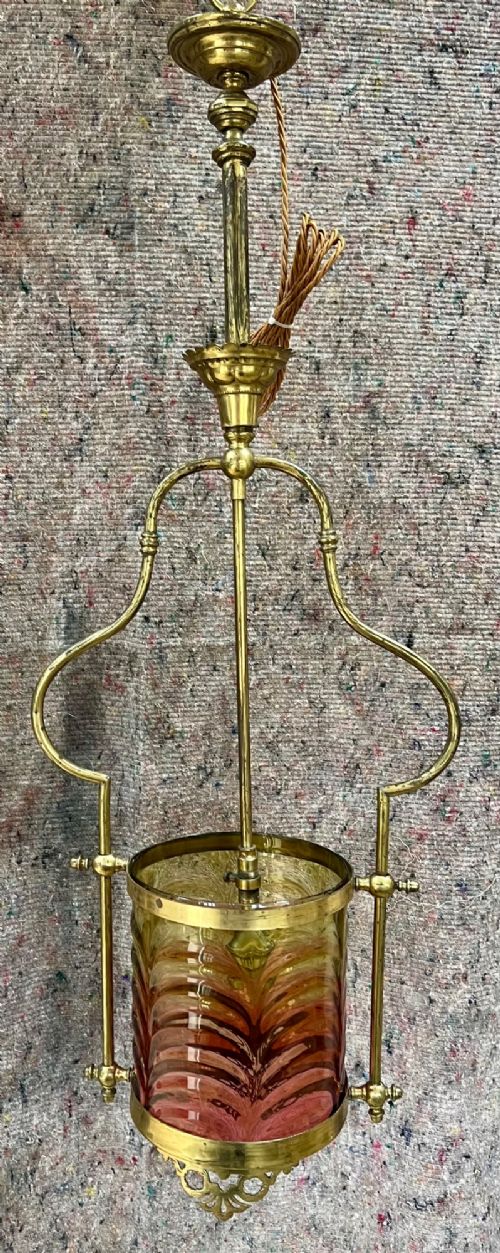
- An enclosed hanging light fixture traditionally placed in entrance halls and corridors. They frequently feature glazed sides within metal frames of brass or wrought iron.
- Toleware
- Painted or lacquered tinplate metalware used historically for decorative household objects. French polychrome examples display applied surface colours.
- Slip Shade
- A moulded glass shade that slides into a metal frame, frequently utilised in Art Deco lighting designs. They diffuse light evenly across the room.
- Ceiling Rose
- An ornamental circular moulding fixed to the ceiling around the point where a pendant light descends. Cast brass examples provide decorative framing for the wiring outlet.
Decorative Pendant Lamps: Frequently Asked Questions
Where should I hang a hall lantern?
Hall lanterns suit entrance corridors, stairwells, and vestibules where overhead clearance allows vertical suspension. Their enclosed frames protect the light source from drafts while casting downward illumination.
Position them centrally in the space to create a welcoming focal point that establishes the period tone of the interior.
How do I identify an Art Deco pendant?
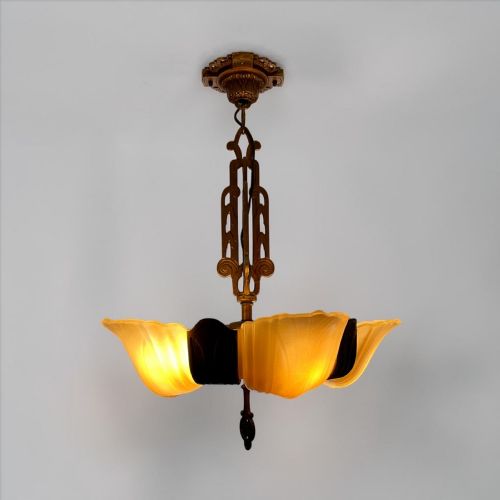
Art Deco pendant lights from the 1930s typically display geometric forms, chrome or cast metal frames, and moulded slip shades. Their lines lean toward streamlined industrial silhouettes rather than ornate Victorian flourishes.
Look for symmetrical patterns and clean metallic finishes characteristic of the interwar period.
What is the difference between a pendant and a chandelier?
Pendant lights generally suspend a single light source or shade from a single cord, chain, or rod. Chandeliers incorporate multiple branches or arms radiating from a central column to hold several bulbs.
Both serve as overhead illumination, but chandeliers offer a more expansive distribution of light across larger rooms.