







Decorative Oval Tray
A decorative oval tray brings timeless utility and craftsmanship to a room, offering surface space shaped in soft curves rather than sharp angles.
Decorative Oval Tray
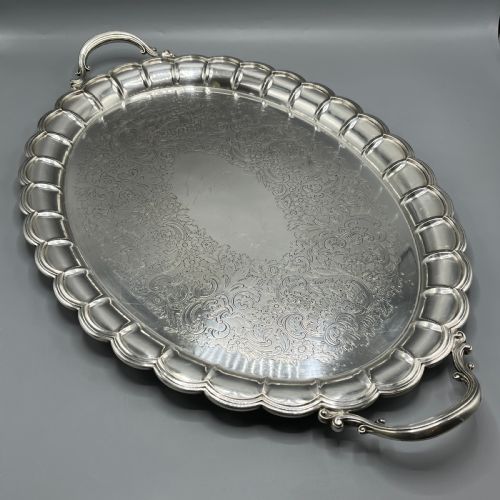
A decorative oval tray bridges the gap between functional service and tabletop display, frequently appearing in forms designed for serving or presentation. These pieces arrive in materials ranging from warm timbers to painted metals and glazed ceramics, spanning centuries of domestic life.
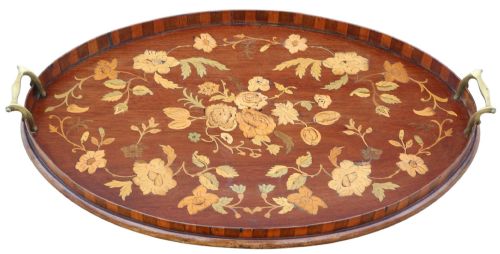
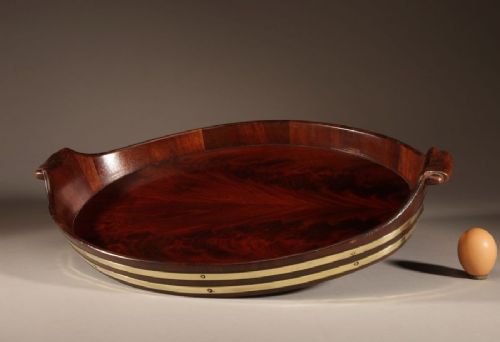
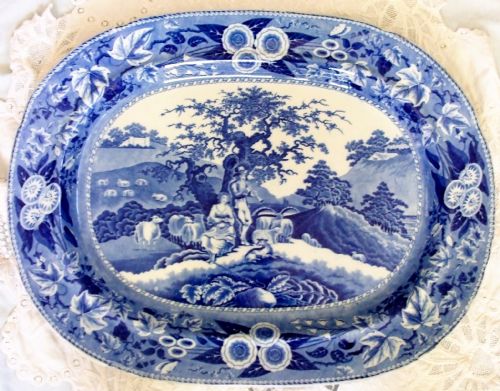
The selection here draws heavily on the nineteenth century alongside early twentieth-century examples, incorporating styles from Georgian restraint to Arts and Crafts vigour. Buyers encounter mahogany servers, brass-galleried pieces, and transfer-printed pottery platters.
Many of these objects serve as centrepieces on occasional tables or sideboards, while others maintain their original purpose for carrying glassware or dishes. The curved outline softens the geometry of a room, providing a balanced frame for whatever rests upon it.
Materials and Construction
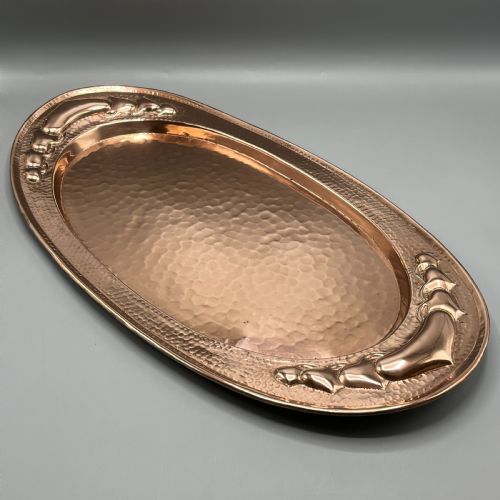
Makers utilised timber such as mahogany and satinwood for wooden trays, often applying intricate inlay or raised wooden galleries to secure items placed within. Brass and copper appeared through casting, hand-hammering, and repousse work, particularly in Arts and Crafts designs.
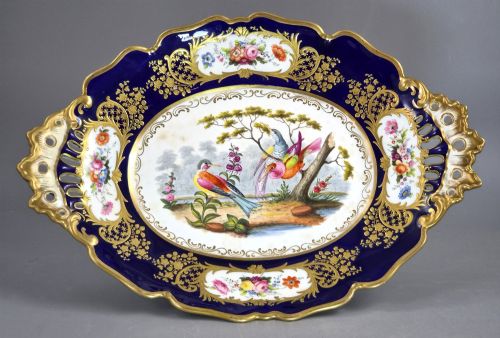
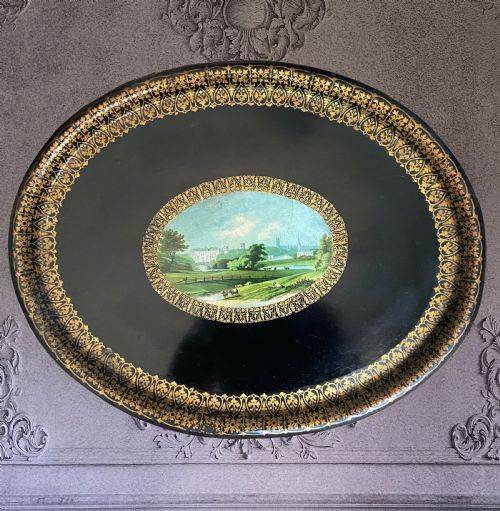
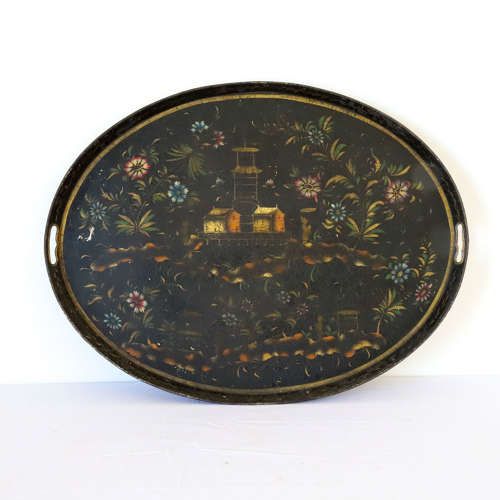
Papier-mâché and toleware provided a sturdy base for lacquered and painted finishes, requiring skilled layering to achieve a durable surface. Porcelain and pottery examples demanded precise moulding and kiln firing, followed by hand-painting or transfer printing with cobalt blue and polychrome pigments.
Decorative Oval Tray Retail Price Guide 2026
Typical asking prices for decorative oval tray among the pieces listed under this phrase on Sellingantiques today, from the lower quarter to the upper quarter. They describe what is for sale here now, not the wider market.
Several trays feature painted birds and piping shepherds, ensuring your afternoon tea comes with a small pastoral audience.
Judging Quality
Quality rests upon the crispness of execution, whether in the precision of wood inlay, the depth of hand-hammered metalwork, or the delicacy of ceramic painting. The integration of structural elements, such as securely fitted brass galleries or solid dovetail joints in timber frames, separates standard utility items from superior workshop output.
The fidelity of the decorative scheme dictates the tier of the piece, distinguishing mass-produced transfer prints from hand-finished artistic endeavours. Materials chosen for the base and mountings reflect the original budget and ambition of the maker.
Coalport·Liberty & Co·Royal Worcester·Christofle Paris·Royal Crown Derby·Clay
The Decorative Oval Tray Glossary
- Gallery
- A raised rim or border around the edge of a tray, often pierced or cast in brass to prevent items from sliding off. These galleries add architectural definition to wooden and metal surfaces.
- Toleware
- Painted or lacquered metalware, typically tin-plated steel, originating in France and Britain during the eighteenth and nineteenth centuries. The technique involves multiple layers of varnish over a dark ground.
- Papier-mâché
- A composite material made of paper pulp or reinforced sheets of paper mixed with glue and pressed into moulds. Once dried and lacquered, it provided a lightweight yet robust foundation for trays.
- Repousse
- A metalworking technique where the artist hammers the metal from the reverse side to form a raised design in relief. This method is prominent on copper Arts and Crafts pieces.
- Coopered
- Constructed from staves of wood joined edge to edge and bound with hoops, a method borrowed from barrel-making. It appears in robust wooden serving trays.
Decorative Oval Tray: Frequently Asked Questions
How were these trays used historically?
Trays served primarily for carrying tea sets, wine glasses, or courses from the kitchen to the parlour or dining room. Larger platters accommodated meats and fish for formal meals.
Beyond service, many functioned as decorative dishes or were mounted on stands to create occasional tables for the drawing room.
How do I care for antique wood and metal?
Wooden surfaces benefit from occasional application of quality wax to nourish the grain and protect the polish from moisture. Metal components require gentle dusting and avoidance of abrasive cleaning agents that might strip historic patination.
Papier-mâché and lacquered trays demand particular caution regarding liquids, as standing water can lift the delicate finish.
How do I distinguish nineteenth-century papier-mâché?
Nineteenth-century papier-mâché feels surprisingly rigid and substantial, constructed from compressed layers rather than paper pulp. The underside often reveals a matte black lacquer ground beneath layers of protective varnish.
Makers frequently applied mother-of-pearl inlay or hand-painted botanical motifs that have settled into the dark surface over decades.
Can I use these trays for daily service?
Many sturdy wooden, brass, and heavy metal trays tolerate careful everyday use for carrying items or organising household objects. Ceramic platters and delicate lacquered pieces suit display or gentle service better to preserve their finishes.
Assessing the structural integrity of handles and joints helps determine whether a piece can handle regular weight.