




Decorative Metal Wall Lights
These decorative metal wall lights bring warmth and character to a room, offering practical illumination alongside period charm.
Decorative Metal Wall Lights
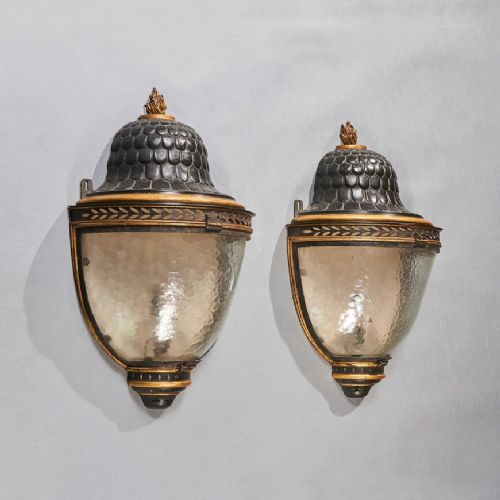
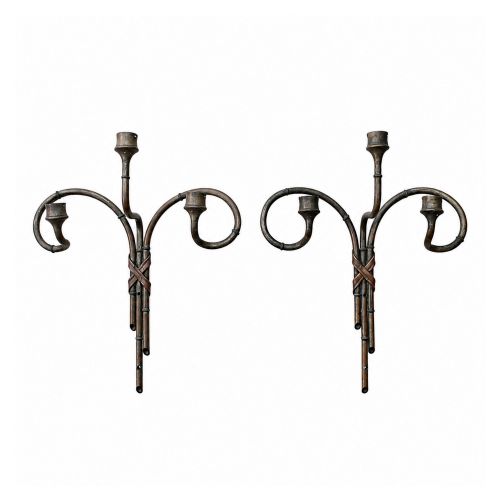
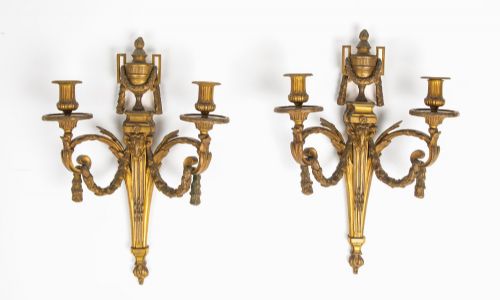
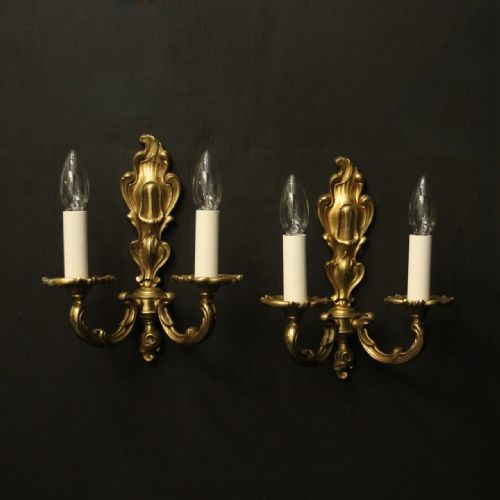
When you search for decorative metal wall lights, you are looking at fixtures designed to mount directly onto vertical surfaces, combining utility with decorative presence. The pieces available here span the Victorian era, the nineteenth century, and the early decades of the twentieth century, including the 1900s, 1920s, and 1930s. Wall sconces, wall lanterns, girandoles, and coaching lamps make up the primary forms you will encounter.
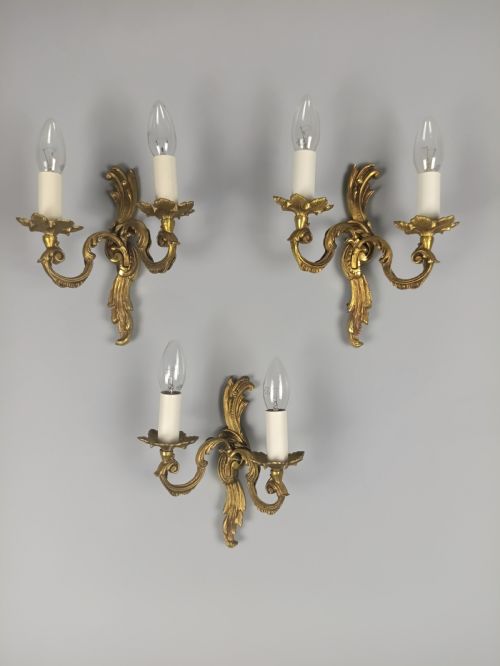
French origins dominate the selection, bringing specific design vocabularies like French Rococo, French Neoclassical, Louis XVI style, and Japonisme into the mix. You will find single-arm, twin-arm, and three-arm configurations designed to hold candles or electric bulbs, often arranged as pairs or sets. Tole peinte, wrought iron, and carriage lamp formats represent the more specialised decorative variations within this group.
Materials and construction
Brass, gilt metal, and ormolu form the backbone of these fixtures, providing the substantial metallic foundations needed for detailed casting and chasing. Gilded brass and parcel gilt treatments add reflective surfaces designed to catch and amplify the light from candles or early electric bulbs. Tole and polychrome fruit finishes introduce painted colour directly onto the metal components.
Cast bronze and wrought iron appear in specific stylistic contexts, offering either smooth neoclassical contours or hammered structural lines. Glass elements integrate with metal frames, particularly in lantern and coaching lamp formats where protective panes surround the light source.
Decorative Metal Wall Lights Retail Price Guide 2026
Typical asking prices for decorative metal wall lights among the pieces listed under this phrase on Sellingantiques today, from the lower quarter to the upper quarter. They describe what is for sale here now, not the wider market.
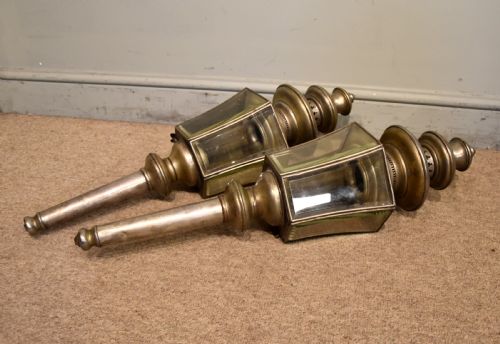
Coaching lamps originally guided horse-drawn carriages through dark nights before finding a second life illuminating indoor hallways.
Distinguishing quality in period lighting
The sophistication of the casting and the crispness of the chased detail separate standard utilitarian fittings from superior decorative examples. Pieces featuring hand-finished elements, such as applied ram's head masks or intricate rococo scrollwork, demonstrate a higher level of artisan involvement during production.
The integrity of the original surface finish, whether aged gilding, painted polychrome, or patinated bronze, defines the visual impact of the fixture. Matching sets and pairs maintain consistent proportions and uniform wear, retaining their original structural harmony better than assembled combinations.
The Decorative Metal Wall Lights Glossary
- Ormolu
- Gilded bronze, where a finely ground gold-mercury amalgam is applied to a bronze base and heated to drive off the mercury. This technique creates a rich, matte golden surface seen on high-end French decorative pieces.
- Tole
- Painted sheet metal, derived from the French term tôpe peinte. It provides a durable surface for colourful, decorative finishes.
- Girandole
- An ornamental branched wall light or sconce fitted with mirrors or polished metal to reflect illumination. These fixtures frequently incorporate multiple arms for candles.
- Coaching lamp
- A weather-resistant lantern originally mounted on horse-drawn carriages to illuminate the road ahead. They utilise heavy glass panes and durable metal housings designed to withstand travel.
- Ram's head mask
- A classical decorative motif shaped like the head of a ram, commonly utilised in neoclassical and Louis XVI style metalwork. This detail adds sculptural relief to backplates and arms.
Decorative Metal Wall Lights: Frequently Asked Questions
How do I wire antique wall lights?
Most period wall fixtures require modern electrical wiring to meet current safety standards, which should be handled by a qualified electrician. They can adapt old backplates to fit standard junction boxes while preserving the exterior metal components.
Internal channels and sockets are updated discreetly to ensure the fixture operates safely without altering the visible historical appearance of the metalwork.
Were these lights originally for candles?
Many nineteenth-century and early twentieth-century wall lights were designed for wax candles before being converted to gas or electricity later in their lifespan. You will often see drip pans or deep bobêches beneath the nozzles, which were built to catch melting wax.
Subsequent adaptations often integrated electrical lampholders into these existing drip pans or candle tubes to maintain the original silhouette.
How do I clean gilded brass safely?
Gilded surfaces require gentle dusting with a soft, dry brush or microfibre cloth to remove surface particles without abrasive contact. Avoid using chemical metal polishes or liquid cleaners, as these can strip away thin layers of gold leaf or parcel gilt.
Preserving the underlying patina relies on minimal intervention and avoiding moisture on delicate painted or gilded areas.
Are these wall lights sold in pairs?
The selection includes both matched pairs and individual pieces, with many French wall sconces and girandoles offered as unified sets. Pairs are particularly sought after for balanced placement flanking a fireplace, mirror, or doorway.
Single pieces also appear, offering focal points for narrower wall spaces where symmetrical arrangement is unnecessary.