

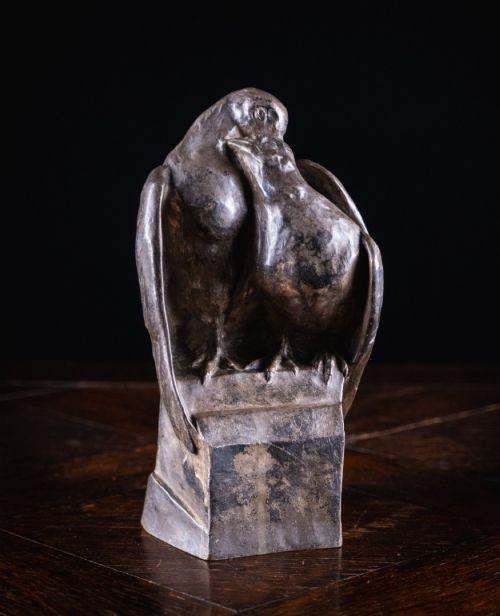
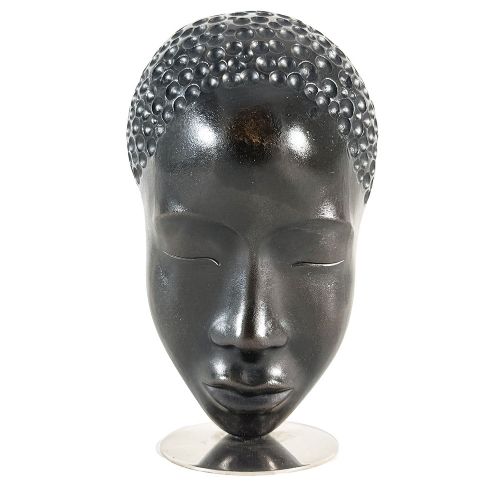
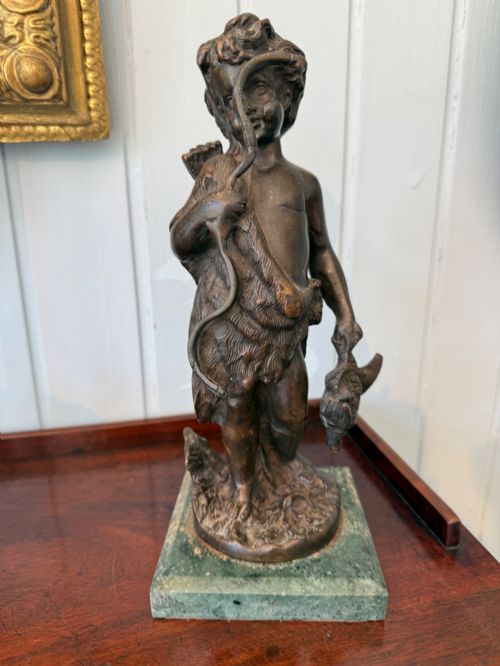
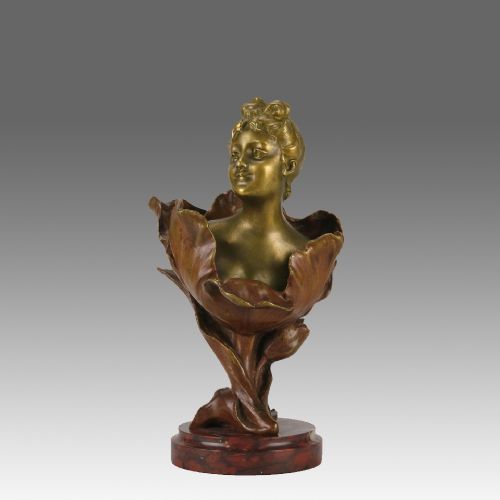


Decorative Metal Figurine
These decorative metal figurine examples span late nineteenth-century romantic subjects to clean-lined Art Deco figures mounted on marble and onyx.
Decorative Metal Figurine
A decorative metal figurine covers small sculptures, bookends, table lamps and desk accessories shaped as human figures, animals and classical subjects. Buyers seek these pieces to bring character and period texture to a room, whether through a sleek Art Deco dancer or an expressive nineteenth-century study.
The most common examples on this page are French spelter figures from the late nineteenth century and Art Deco dancers produced around nineteen thirty. These pieces often feature mounted bases made from marble, alabaster or onyx, elevating the metalwork for display on desks and mantelpieces.
Materials and Techniques
Foundries cast these pieces in bronze, brass or spelter, sometimes applying cold-painted finishes, gilding or silvering to the surface. Spelter served as an accessible alternative to bronze, offering fine detail for figures produced in the Victorian and Art Nouveau periods.
Many sculptures incorporate mixed media, anchoring metal figures onto bases of carved marble, onyx or alabaster. Desk sets and bookends combine structural metal elements with functional brass fittings and decorative enamel touches.
Decorative Metal Figurine Retail Price Guide 2026
Typical asking prices for decorative metal figurine among the pieces listed under this phrase on Sellingantiques today, from the lower quarter to the upper quarter. They describe what is for sale here now, not the wider market.
Listings feature periods from the Victorian era through to nineteen thirty, using materials including bronze, spelter, marble and alabaster.
Evaluating Quality
The choice of base material and the preservation of original patination or gilding also separate standard production items from finer studio works. Makers who signed their sculptures typically achieved higher standards in surface finish and anatomical proportion.
Hagenauer·Henri Godet·Fabergé·Lucien Madrassi·Pierre le Faguays
The Decorative Metal Figurine Glossary
- Spelter
- A zinc alloy commonly used in nineteenth and early twentieth-century manufacturing as a less expensive substitute for bronze. It takes fine detail well but is softer than bronze.
- Animalier
- A nineteenth-century artistic style focusing on the realistic depiction of animals. Sculptors in this tradition studied anatomy closely.
- Patina
- The surface sheen or coloration developed through age or chemical treatment on metal. Original patination is prized by collectors.
- Cold-painted
- A technique where paint is applied to metal without being fired in a kiln. This finish is delicate and easily worn over time.
Decorative Metal Figurine: Frequently Asked Questions
What is spelter?
Spelter is a zinc-based alloy that makers used extensively for decorative sculptures and figures during the Victorian and Art Nouveau eras. It mimics the appearance of bronze but is softer and lighter.
Foundries often painted or bronze-plated spelter pieces to give them a rich metallic finish. Collectors identify spelter by its lighter weight and occasional grey metal showing beneath worn surface coatings.
Are marble bases original?
Many figures from the Art Deco period were designed specifically to be mounted on contrasting bases of marble, onyx or alabaster. These heavy stones provided stability for slender or dynamic poses.
Matching the stone type and fixing method to the period helps confirm authenticity. Replacement bases do appear, so examining the fit between metal and stone is sensible.
How do I spot Art Deco?
Art Deco figures typically feature streamlined shapes, geometric bases and subjects like dancers or stylized animals. The styling moves away from Victorian realism toward bold, simplified forms.
Look for materials like silvered bronze or spelter combined with onyx bases. Signatures from artists working around nineteen thirty frequently accompany these distinctive designs.