






Decorative Metal Ewer
A decorative metal ewer brings sculptural weight and classical proportion to a room, serving as a striking focal point on a mantelpiece or side table.
Decorative Metal Ewer
A decorative metal ewer takes the ancient form of a water-pouring vessel and transforms it into an ornamental display piece. These items appear primarily in Victorian iterations, spanning the eighteenth to the early twentieth centuries, drawing heavily on classical and revivalist vocabularies.
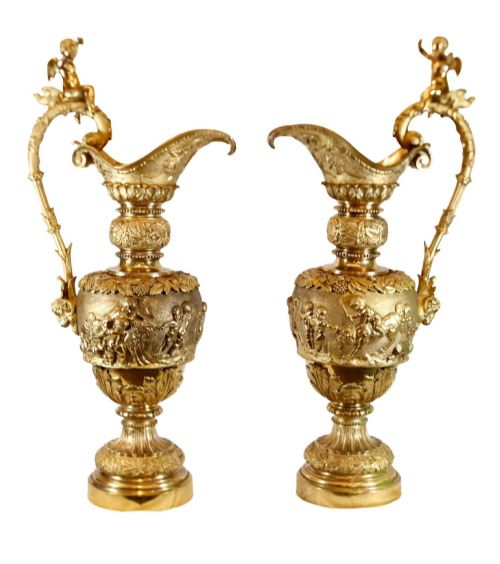
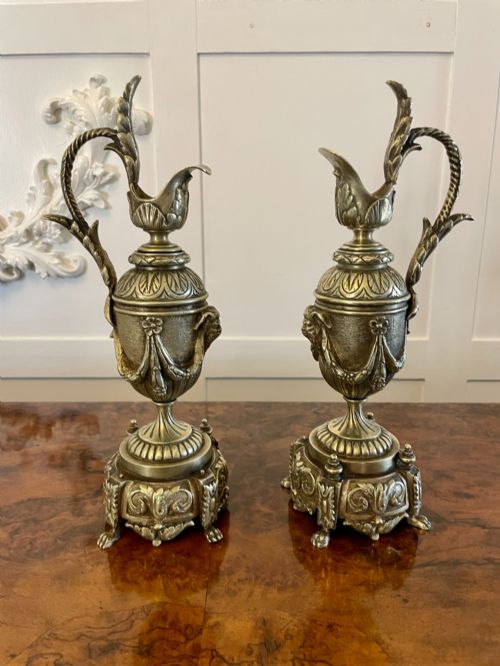
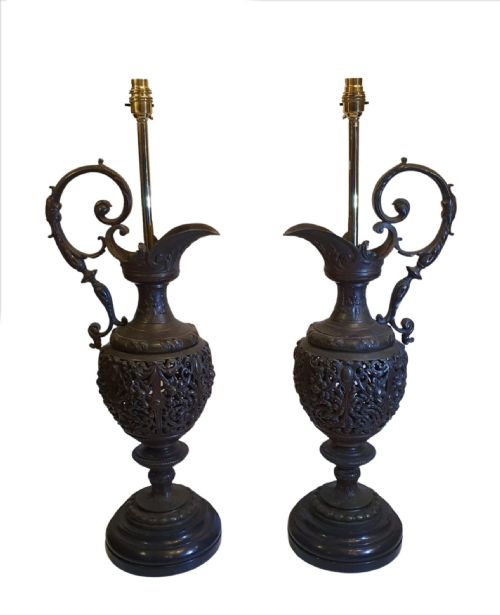
The objects take various functional forms including ewers and pitchers, table lamps, and decorative urns. The version most commonly met on this page is the Victorian bronze or brass ewer, often cast with figurative handles and elaborate surface ornamentation.
Origins stretch across British, French, German, and Italian workshops, reflecting a nineteenth-century fascination with historical revivals. Buyers encounter everything from monumental French gilt jugs to patinated bronze table lamps and Grand Tour souvenirs.
How they were made
Foundry work relied on traditional casting techniques using bronze, brass, copper, and cast metal. Molten metal poured into moulds allowed makers to achieve intricate relief work and three-dimensional figural elements.
Surface finishes involved patination, gilding, and the application of ormolu to create contrast and highlight sculptural details. Some pieces incorporate porcelain or blue glass bodies paired with cast metal mounts and handles.
Decorative Metal Ewer Retail Price Guide 2026
Typical asking prices for decorative metal ewer among the pieces listed under this phrase on Sellingantiques today, from the lower quarter to the upper quarter. They describe what is for sale here now, not the wider market.
Several ewers feature spirited handles shaped as the wine god Bacchus or leaping dolphins.
What varies in quality
Quality rests in the crispness of the casting and the sensitivity of the modelling, particularly around complex figural handles depicting figures such as Bacchus or dolphins. Finer examples display meticulous chasing and finishing by hand after the casting process.
The choice of materials and the depth of patination dictate the visual presence of the object. Heavier gauges of metal and sophisticated combinations of bronze and ormolu distinguish superior decorative items from simpler production.
H F Fearncombe & Co·Georges Van De Voorde
The Decorative Metal Ewer Glossary
- Ormolu
- Gilded bronze, where a layer of gold amalgam is applied to a bronze base. This technique was widely used in French decorative arts to impart a rich golden finish.
- Patinated bronze
- Bronze that has been treated with chemical solutions to produce a specific surface colour and tone. This process highlights the underlying relief and protects the metal.
- Grand Tour
- A cultural journey undertaken by wealthy young Europeans to view classical antiquities. Souvenirs brought back often included small bronze ewers and urns made in Italy.
- Neoclassical
- A style inspired by the art and architecture of ancient Greece and Rome. It emphasises symmetry, proportion, and classical motifs such as acanthus leaves and urns.
- Putto
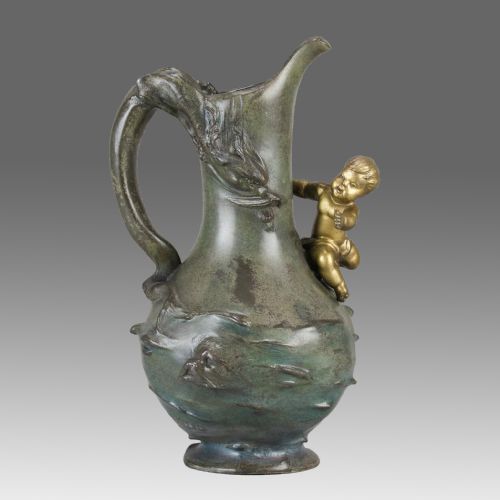
- A figure of a small chubby male child, often winged, found in classical and revivalist art. These figures frequently appear perched on handles or rims of decorative ewers.
Decorative Metal Ewer: Frequently Asked Questions
How were these ewers used historically?
Originally derived from vessels used for washing hands or serving wine at table, nineteenth-century decorative ewers served primarily as interior ornaments. They sat on sideboards, mantelpieces, and display tables as indicators of taste and culture.
Some examples were later adapted into functional objects, including table lamps or decanters, reflecting changing domestic uses.
How do I style a metal ewer at home?
These sculptural objects function well as standalone statement pieces on a console table, mantelpiece, or bookshelf. Their height and varied metallic finishes add verticality and texture to a room.
Pair them with complementary nineteenth-century objects or let them stand alone against a simple backdrop to appreciate their form.
How can I tell the period of an ewer?
Dating relies on identifying stylistic markers, manufacturing techniques, and material combinations recorded in the piece. Victorian and Neoclassical revivals draw on specific historical repertoires from the nineteenth century.
Signatures, foundry marks, and evidence of casting methods help narrow down the production era and origin of the object.