






Decorative Metal Clock
A decorative metal clock brings presence to a room, combining architectural form with mechanical design across Victorian, Edwardian, and earlier periods.
Decorative Metal Clock
When you search for a decorative metal clock, you encounter a variety of forms designed for mantels, desks, walls, and boudoirs. The selection spans the nineteenth century and the early twentieth century, featuring styles from French Rococo and Baroque revivals to Art Deco and Victorian interpretations.
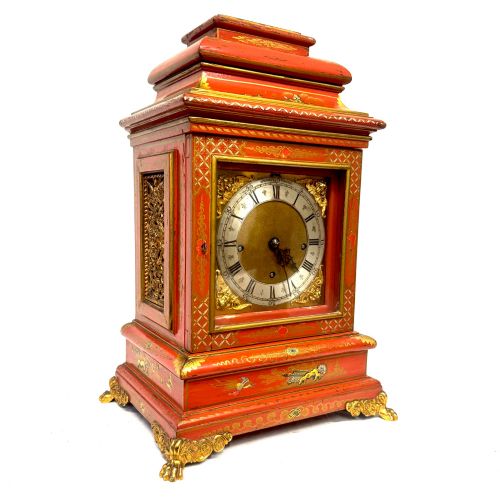
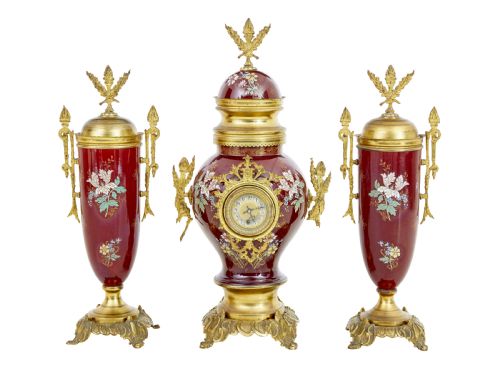
Most pieces you meet here originate from French workshops or British makers, taking shapes such as mantel clocks, cartel wall clocks, and garniture sets with matching candelabra. Cases range from modest gilt metal boudoir pieces to large figural mantel clocks surmounted by classical figures like Diana the Hunter.
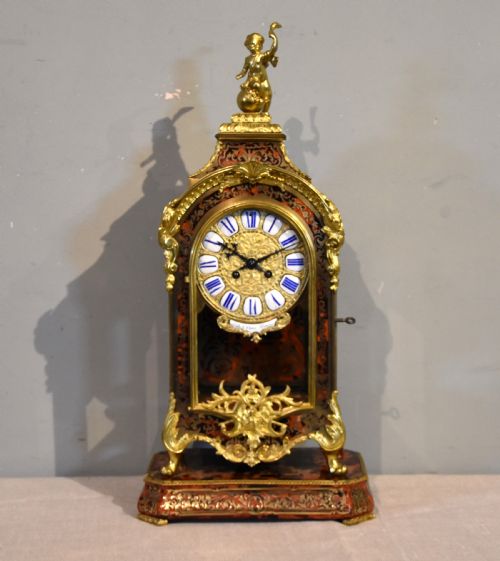
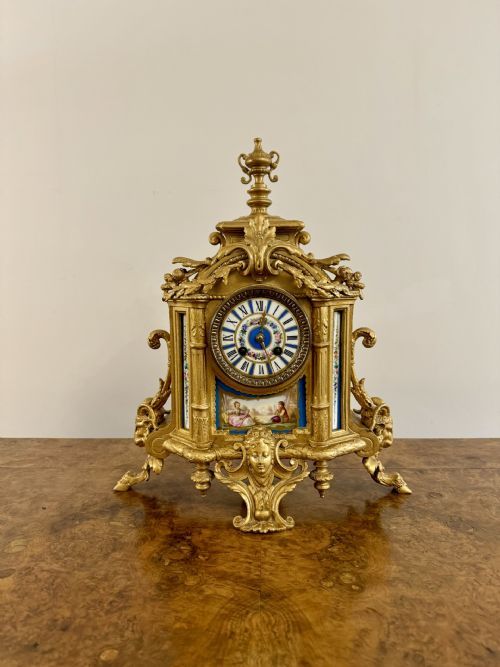
The materials vary widely, incorporating brass, ormolu, gilt bronze, and toleware alongside decorative elements like painted porcelain panels, enamel dials, and glass panels. Whether you prefer the organic curves of Rococo revival or the clean geometry of an Art Deco mystery clock, these objects serve as functional timepieces and striking interior ornaments.
How they were made
The construction of these pieces relies heavily on cast and chased metalwork, utilising brass, bronze, and ormolu to form intricate case structures. Gilt finishes are common, applied through mercury gilding or modern plating techniques to create a lustrous surface that highlights the sculptural details.
Dials and decorative accents frequently incorporate enamel, champlevé work, and painted porcelain panels, showcasing the collaborative skills of metalworkers and ceramic artists. Movements inside range from standard French time-and-strike mechanisms to precision British fusee movements designed for accurate timekeeping.
Ensemble pieces such as garniture sets require matched craftsmanship across the clock and its flanking ornaments, using uniform metal casting and surface decoration. Wall-hanging cartel clocks utilise lightweight metal frames and glazed bezels to secure the movement while maintaining a balanced decorative profile.
Decorative Metal Clock Retail Price Guide 2026
Typical asking prices for decorative metal clock among the pieces listed under this phrase on Sellingantiques today, from the lower quarter to the upper quarter. They describe what is for sale here now, not the wider market.
Listings feature brass, gilt bronze, ormolu, and toleware materials across nineteenth-century and early twentieth-century periods.
What varies in quality
Material integration also dictates value, with superior examples featuring hand-painted porcelain panels or intricate champlevé enamel work rather than printed substitutes. The complexity of the movement matters equally, distinguishing standard spring-driven mechanisms from high-grade fusee movements produced by notable makers.
Proportion and stylistic coherence define the overall success of the piece, as seen in balanced garniture sets and harmonious cartel clocks. Original surface patination and complete matching components elevate an object above pieces that have undergone extensive replacement or modern re-gilding.
P.H Mourey·Bently & Beck London
The Decorative Metal Clock Glossary
- Ormolu
- Gilded bronze, where a finely ground gold-mercury amalgam is applied to a bronze base and heated to drive off the mercury. This technique produces a rich, durable golden finish characteristic of fine French mantel clocks.
- Fusee
- A conical pulley used in mechanical clocks to maintain an even pull on the gear train as the mainspring unwinds. This mechanism is frequently found in quality British timepieces to ensure consistent timekeeping accuracy.
- Garniture set
- A decorative centrepiece clock accompanied by a matching pair of ornaments, such as urns or candelabras. These sets were designed to display symmetrically on a mantelpiece or sideboard.
- Champlevé enamel
- A technique where troughs or cells are sunk into the surface of a metal object and filled with vitreous enamel powder before firing. It appears frequently on the dials and bezels of Edwardian strut and easel clocks.
- Cartel clock
- A wall-mounted clock housed in an ornate metal case, often featuring scrolled or asymmetric rococo motifs. The style originated in France and relies on a secure wall bracket or hanging loop.
Decorative Metal Clock: Frequently Asked Questions
How do I wind a mechanical metal clock?
Wind the clock using the appropriate key inserted into the winding holes on the dial, turning gently until you feel resistance. Take care not to overwind the mainspring, as this can damage the internal mechanism.
For fusee movements or antique escapements, ensure you follow the specific direction required for that calibre. If the clock has been stationary, let it settle on a level surface before setting the time.
Where should I place a mantel clock?
Place your mantel clock on a stable, level surface away from direct sunlight, draughts, and dampness. A sturdy fireplace mantel, sideboard, or console table provides an ideal display location.
Ensure the surface does not vibrate excessively from foot traffic, which can interfere with the pendulum beat. Allow adequate clearance around the piece if it forms part of a larger garniture set.
How do I tell if a clock is French or British?
Examine the movement style and signature, as British pieces often utilise fusee movements and bear London workshop signatures. French clocks more frequently employ circular brass plate movements and stylistic cues like ormolu mounts and porcelain panels.
Stylistic indicators also help, with French pieces leaning towards Rococo and Neoclassical revival designs. Checking the backplate and dial inscriptions usually confirms the origin of manufacture.
What is a clock garniture set?
A clock garniture set consists of a central mantel clock accompanied by two matching side ornaments, typically urns, vases, or candelabras. These ensembles were created to provide a unified decorative scheme for grand interior spaces.
Manufacturers matched the materials, such as gilt bronze or painted porcelain, across all three pieces to ensure visual harmony. They remain popular for creating a balanced focal point on large mantels.