




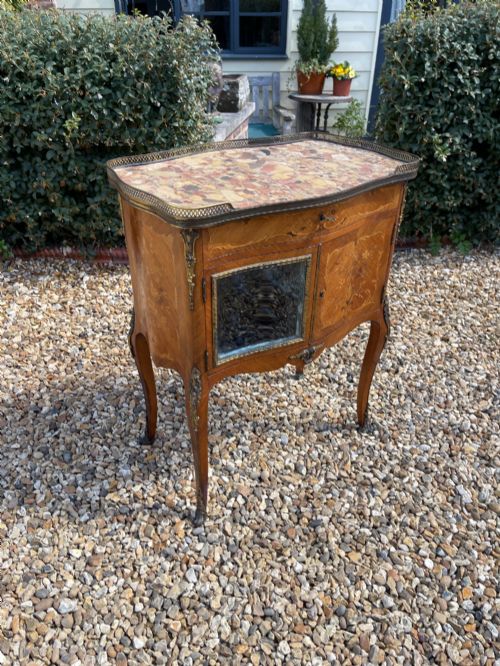
Decorative Marble Table
A decorative marble table brings cool stone surfaces and architectural form into a room.
Decorative Marble Table
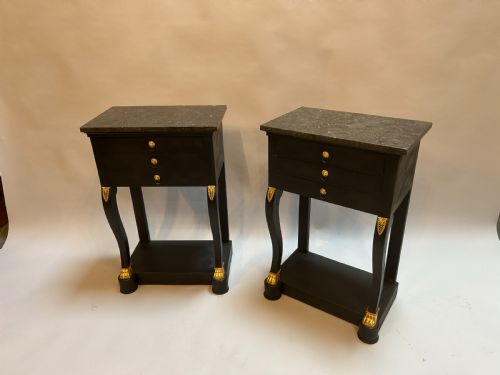
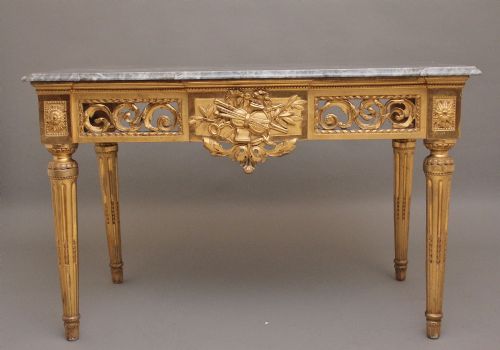
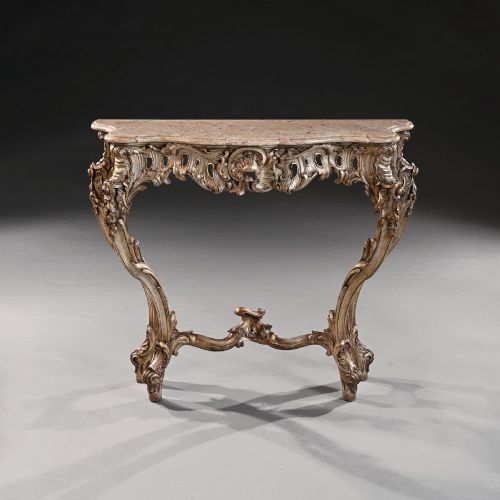
A decorative marble table combines a supportive timber, iron, or gilt frame with a shaped or polished stone surface. These pieces appear in forms ranging from compact occasional stands and wine tables to grand console tables intended for hallways and reception rooms.
The versions most commonly found here originate across the nineteenth and early twentieth centuries, spanning Victorian, Art Deco, and revivalist French styles. Makers utilised diverse stones, including white marble, rouge marble, and multi-coloured specimen tops, often matched with gilt bronze, brass, or carved wood supports.
How they were made
Craftsmen shaped marble tops by hand sawing and polishing slabs to fit precisely onto timber or metal frames. Bases typically combine wood, brass, or ormolu mounts, employing joinery and casting techniques common to French and Italian workshops of the period.
Surface ornamentation relies on carved floral mouldings, painted details, and inlaid stone work such as pietra dura. Metal components like ormolu and gilt bronze were cast, chased, and applied to accent the structural lines of the furniture.
Decorative Marble Table Retail Price Guide 2026
Typical asking prices for decorative marble table among the pieces listed under this phrase on Sellingantiques today, from the lower quarter to the upper quarter. They describe what is for sale here now, not the wider market.
Listings feature items from the 1850s to the 1930s, incorporating materials such as marble, brass, gilt bronze, and wood.
What varies in quality
The refinement of the carving and the intricacy of the metal mounts dictate the distinction between standard production and exceptional examples. Hand-chiseled ormolu mounts and finely fitted specimen marble tops demonstrate a higher level of workshop skill.
The integrity of the stone slab and the weight of the supporting frame also indicate quality. Solid timber construction, precise joinery, and well-preserved surface gilding separate robustly made tables from simpler variants.
Siffel and Cartier·P. Sega
The Decorative Marble Table Glossary
- Ormolu
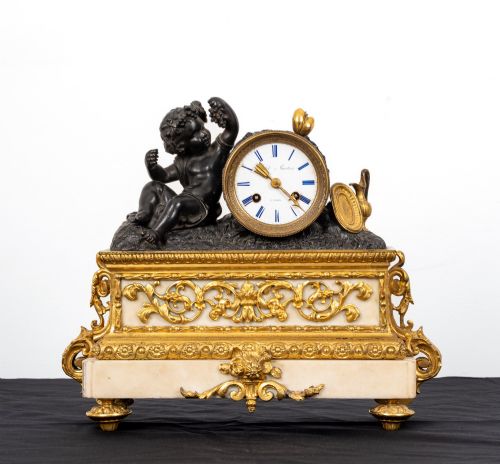
- A gilded bronze finish achieved through a mercury amalgamation technique, frequently used on nineteenth-century mounts and hardware. It imparts a rich, metallic lustre to decorative frames.
- Pietra dura
- An artistic technique involving the inlay of precisely cut coloured stones to create pictorial or geometric designs. This method appears on tabletops and decorative panels.
- Console table
- A wall-mounted or freestanding table designed to stand against a vertical surface, often featuring elaborate legs and a shaped stone top.
- Campana urn
- A bell-shaped vessel with a flared rim and footed base, frequently referenced in classical designs and lamp bases.
Decorative Marble Table: Frequently Asked Questions
Where should I place a decorative marble table?
These tables suit hallways, living rooms, and bedrooms depending on their scale. Console versions fit flat against walls, while round occasional or wine tables sit beside seating.
The cool stone surface provides a durable display area for lamps, clocks, or decorative objects. Ensure the floor is level to support the weight of the stone top safely.
How do I clean a marble top?
Use a soft, damp cloth with mild, pH-neutral soap to wipe the stone surface. Avoid acidic cleaners, vinegar, or harsh abrasives that can etch or dull the polish.
Dry the marble thoroughly after wiping to prevent water spots. Routine dusting keeps the polished finish clear.
Are nineteenth-century marble tables fragile?
The stone slabs are heavy and brittle, requiring care during relocation or placement. The supporting frames of wood, brass, or bronze provide structural stability.
Lifting the piece by the frame rather than the stone top prevents joint strain and accidental cracking.
How do I identify the period of a table?
Examine the decorative motifs, such as gilt bronze mounts, carved floral mouldings, or inlaid stone work. Styles like French Empire, Art Deco, and Victorian offer distinct chronological clues.
Construction methods, joinery types, and materials like ormolu or onyx further help narrow down the date of manufacture.