




Decorative French Shelf Clock
A decorative french shelf clock brings nineteenth-century salon grandeur to a mantelpiece through exuberant cast bronze and painted porcelain.
Decorative French Shelf Clock
A decorative french shelf clock stands as a substantial nineteenth-century mantel centrepiece, combining timekeeping with elaborate sculptural casing. These pieces emerge from periods such as the Victorian era, spanning decades from the eighteen-fifties through to nineteen hundred.
Most examples encountered here take the form of mantel clocks or bracket clocks with matching wall supports. Makers and workshops housed these movements in architectural or figural housings that reflect prevailing tastes of the nineteenth century.
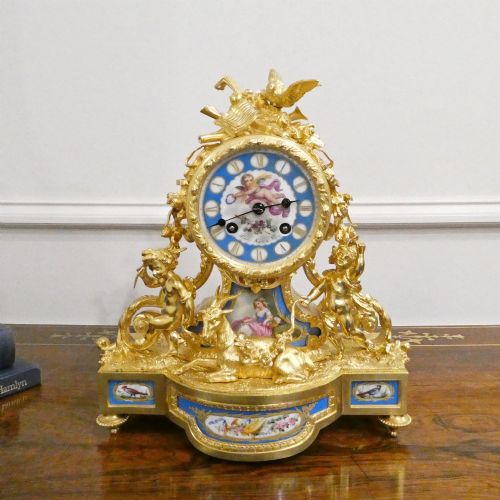
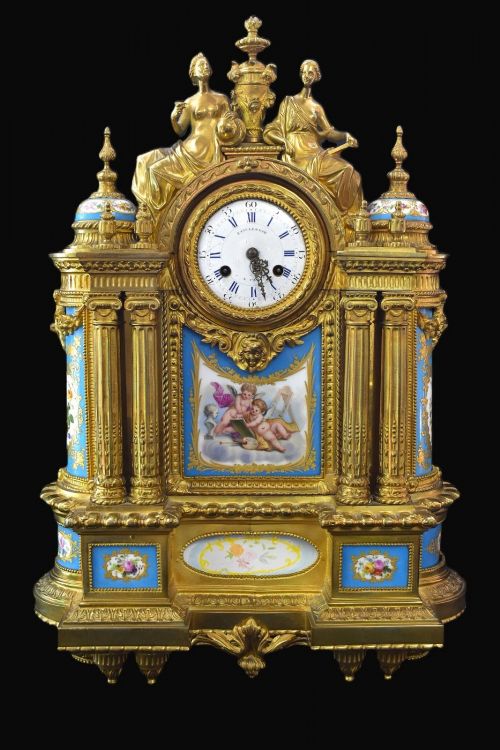
The aesthetic vocabulary draws heavily upon historical revivals, encompassing French Rococo, Empire, Neoclassical, and Art Nouveau idioms. Figures such as putti, doves, elephants, and classical deities frequently populate the cast metal housings.
Materials and construction methods
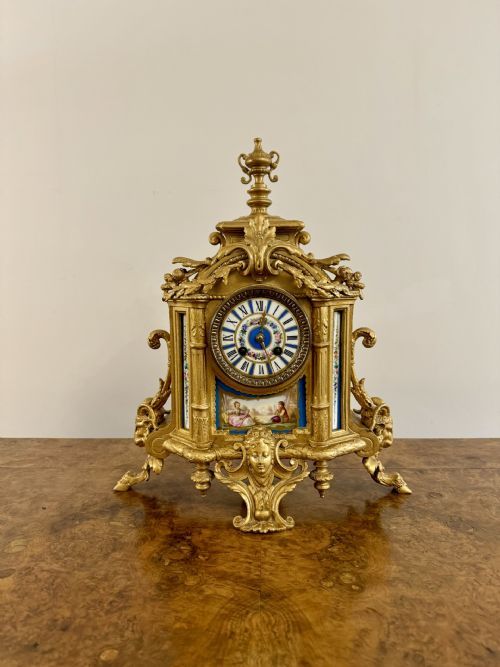
Makers utilised cast ormolu and gilt bronze extensively to construct gleaming architectural and figural cases. These metallic structures were frequently paired with hand-painted porcelain panels depicting floral motifs or pastoral scenes.
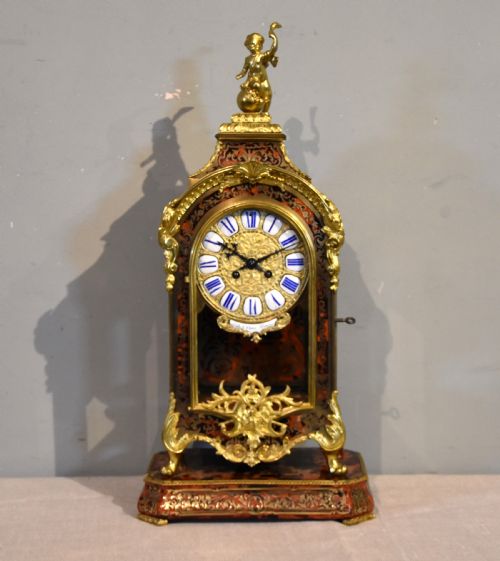
Casing enrichment involved contrasting elements like marble, glass, and wood veneers including faux tortoiseshell and ebonised finishes. Enamel dials with delicate numerals were fitted into the metalwork to display the passing hours.
Movements within these decorative french shelf clock pieces were designed for eight-day striking capability, housed securely behind glazed bezels. Artisans combined precision brass gear trains with weighty bronze and porcelain sculptures to achieve stability on the shelf.
Decorative French Shelf Clock Retail Price Guide 2026
Typical asking prices for decorative french shelf clock among the pieces listed under this phrase on Sellingantiques today, from the lower quarter to the upper quarter. They describe what is for sale here now, not the wider market.
Several clocks enlist bronze elephants and affectionate doves to guard the dial.
Assessing quality in decorative french shelf clock pieces
The integration of materials dictates distinction, where hand-painted porcelain plaques by houses like Sevres align seamlessly with heavy cast ormolu mounts. Finer clocks incorporate signed movements from known makers, indicating higher precision in the gear trains.
Henry Marc·Etienne Lenoir·Henri Dasson·P.H MOUREY·Japy Freres
The Decorative French Shelf Clock Glossary
- Ormolu
- Gilded bronze produced by applying a mercury and gold amalgam to cast brass or bronze, then heating to drive off the mercury. This technique creates a rich, lasting metallic lustre seen across nineteenth-century cases.
- Champleve
- An enamelling technique where troughs are dug into a metal surface and filled with vitreous enamel before firing. It appears frequently on nineteenth-century clock dials and bezels.
- Boulle
- A form of marquetry employing brass and tortoiseshell inlay, named after André-Charles Boulle. Pieces utilising this technique often feature rich dark surfaces contrasting with bright metallic patterns.
- Putti
- Depictions of plump, winged infant figures, often resembling cherubs or cupids. They frequently adorn the flanks of rococo revival clock cases.
- Bracket clock
- A portable clock designed to sit on a wall bracket or a shelf. Many examples include the matching wall support within their construction.
Decorative French Shelf Clock: Frequently Asked Questions
What periods do these clocks represent?
These timepieces originate predominantly from the nineteenth century, encompassing Victorian production alongside specific decades from eighteen-fifty to nineteen hundred. Styles shift from classical Empire and Rococo revivals toward organic Art Nouveau forms.
The dating relies on stylistic indicators within the cast bronze and porcelain components, reflecting changing European tastes across the victorian era.
How do I identify a bracket clock?
A bracket clock typically includes a matching wall shelf designed to support the weight of the wooden or ormolu housing. These units often feature ebonised or tortoiseshell veneers.
The design allows the timepiece to be mounted securely off the mantel surface, displaying the craftsmanship from multiple angles.
What materials make up the cases?
The housings combine cast ormolu, gilt bronze, brass, and marble with painted porcelain panels and glass dial covers. Wood veneers like faux tortoiseshell also appear on select architectural frames.
These mixed media constructions created contrasting textures of gleaming metal, smooth ceramic, and polished stone.
Are these clocks suitable for daily use?
Most pieces feature eight-day mechanical striking movements designed to keep time when wound correctly. They function well on sturdy mantelpieces or dedicated wall brackets.
Careful placement away from direct heat sources helps preserve the delicate gilt bronze surfaces and enamel dials.