






Decorative French Mantel Clock
When you search for a decorative french mantel clock, you are hunting for a piece that combines intricate metalwork with traditional timekeeping.
Decorative French Mantel Clock
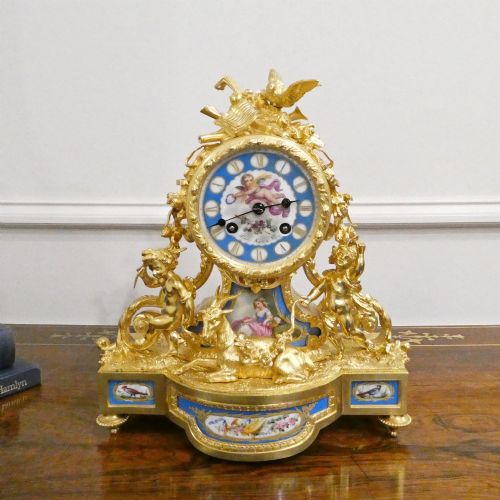
A decorative french mantel clock brings together varied materials such as ormolu, marble, porcelain and bronze in forms ranging from carriage clocks to larger garniture sets. These pieces often arrive from the nineteenth century, spanning periods from the Victorian era through to Art Deco.
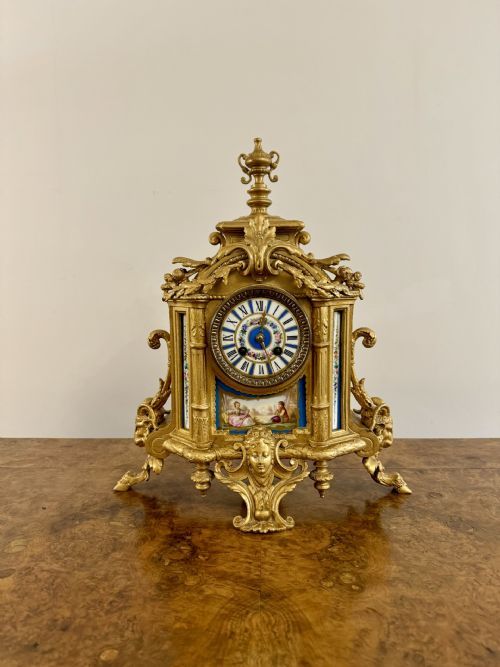
Buyers will frequently encounter mantel clocks, carriage clocks and clock garnitures that reflect revival styles like French Rococo, French Empire and Louis XVI. The selection covers smaller timepieces on bronze plinths alongside substantial porcelain and gilt metal constructions.
How they were made
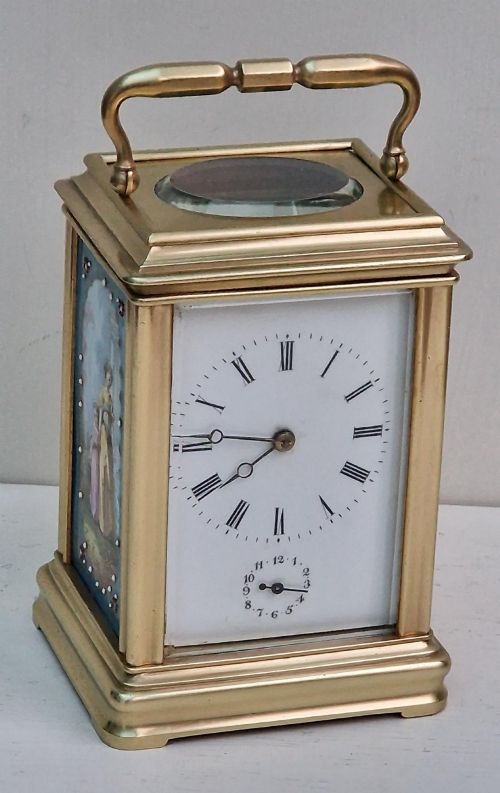
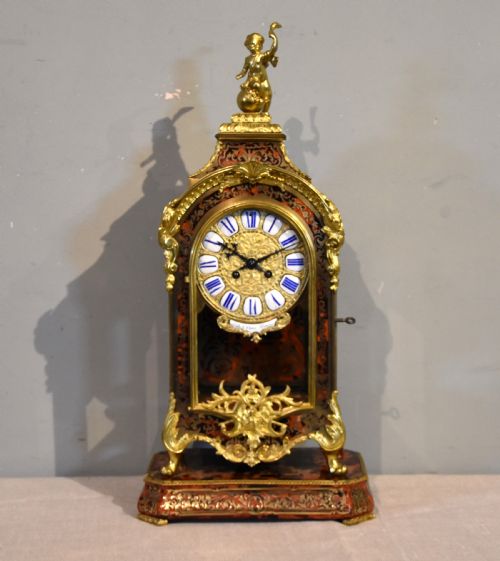
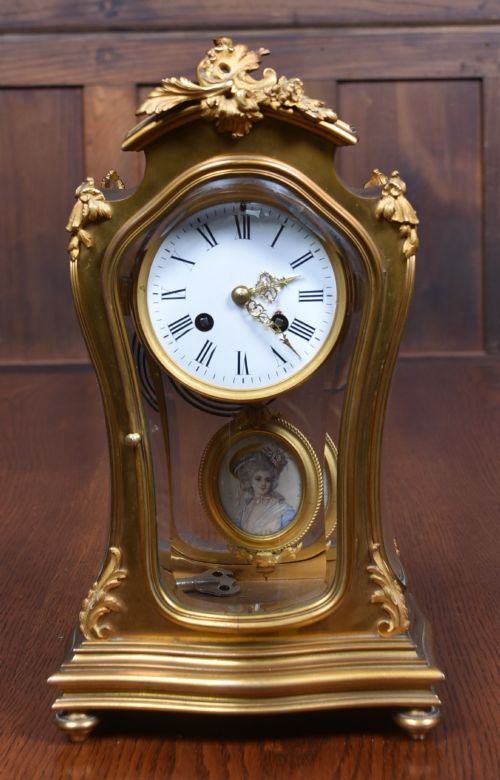
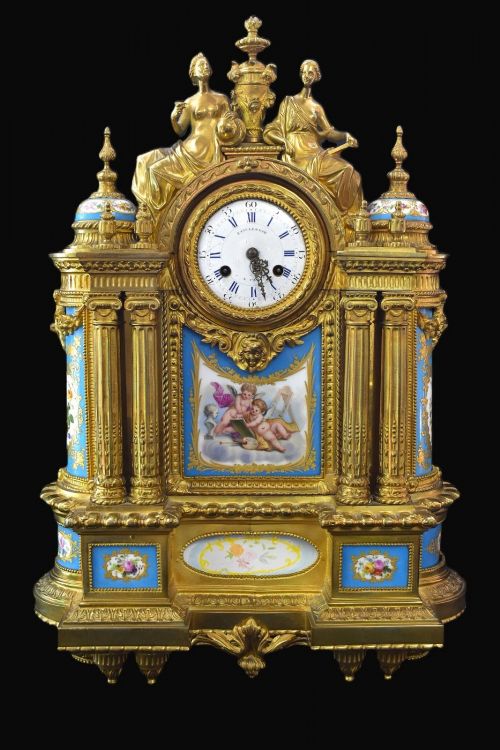
Makers utilised cast bronze, brass and ormolu to form elaborate cases, frequently combining these metals with hand-painted porcelain panels and enamel dials. Marble and glass also feature heavily in the construction, particularly in four-glass models and heavy architectural cases.
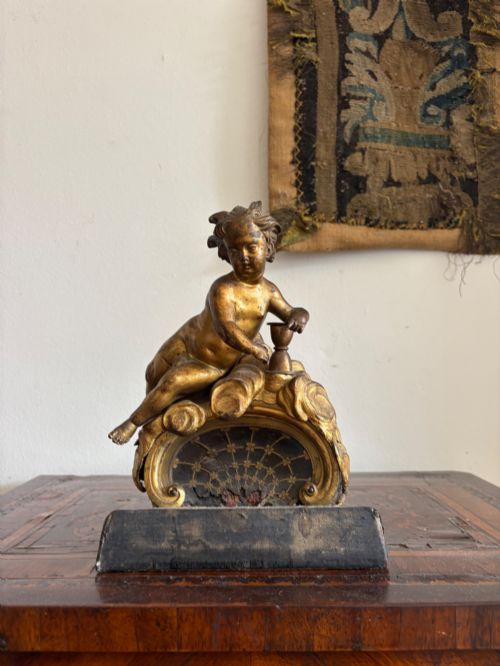
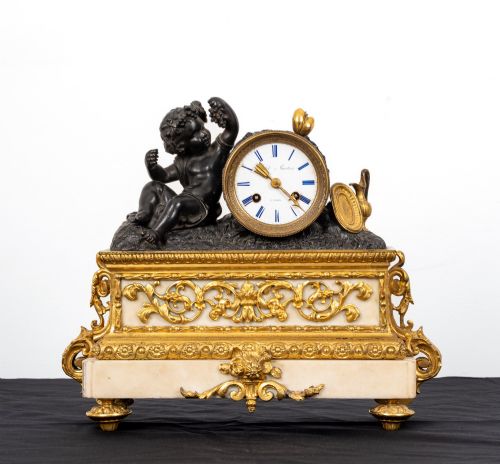
Decorative mounts, champleve enamel work and fine miniature paintings were applied to enrich the surfaces. Many examples incorporate intricate figural elements, such as putti or classical motifs, cast and chased by skilled hands.
Decorative French Mantel Clock Retail Price Guide 2026
Typical asking prices for decorative french mantel clock among the pieces listed under this phrase on Sellingantiques today, from the lower quarter to the upper quarter. They describe what is for sale here now, not the wider market.
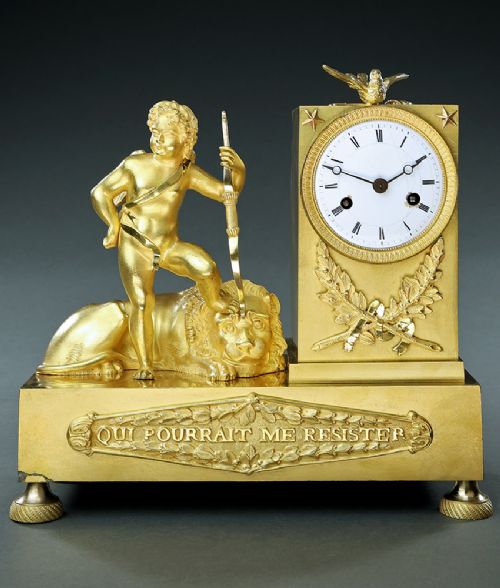
Some clocks feature putti figures leaning casually against the dial while time marches on regardless.
What varies in quality
The standard of a decorative french mantel clock rests on the crispness of the bronze casting and the depth of the gilding or ormolu. Finer examples display superior hand-painted details on porcelain panels and enamel dials rather than printed motifs.
The integration of the movement with the case, along with the complexity of styles like Boullework or champleve, dictates the distinction between standard production and exceptional maker output.
Henry Marc·Siffel and Cartier·Etienne Lenoir·Rodier·PH Mourey·Tiffany·Delépine Barrois·Japy Freres·E Portelance
The Decorative French Mantel Clock Glossary
- Ormolu
- Gilt bronze produced by applying a mixture of finely powdered gold and mercury to a bronze base. This technique was widely utilised on nineteenth-century clock cases to create a rich, durable golden finish.
- Garniture
- A set of matching ornamental pieces, typically comprising a central clock flanked by two matching vases or candelabra. These sets were designed to sit harmoniously on a mantelpiece.
- Champleve
- An enamelling technique where troughs or cells are carved into the metal surface and filled with vitreous enamel powder before firing. It creates vibrant coloured patterns across brass and bronze clock frames.
- Boulle
- An elaborate marquetry technique using brass and tortoiseshell inlaid into furniture and clock cases. It is named after the master cabinetmaker André-Charles Boulle.
- Carriage clock
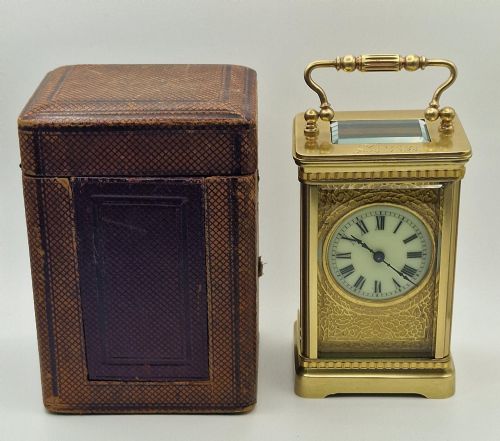
- A small, portable spring-driven clock originally designed for travellers. They often feature brass frames with bevelled glass panels allowing the movement to be seen.
Decorative French Mantel Clock: Frequently Asked Questions
What is a clock garniture?
A clock garniture is a matched set consisting of a central mantel clock accompanied by flanking decorative objects, such as urns or vases. These sets were manufactured to create a balanced display across a fireplace mantle.
The pieces share identical materials, gilding techniques and stylistic motifs, tying the decorative scheme of a room together.
How do I wind a carriage clock?
Carriage clocks are usually wound using a specialised key inserted into the arbours located on the backplate of the movement. Care must be taken not to overwind the mainspring.
Many of these portable clocks feature a platform escapement visible through the glass top, which regulates the beat of the mechanism.
What materials are common in these clocks?
The pieces frequently combine gilt bronze, ormolu and brass with natural elements like marble and glass. Enamel dials and hand-painted porcelain panels are also standard decorative components.
More ornate examples incorporate faux tortoiseshell or intricate Boulle marquetry across the wooden carcass.
How can I identify a nineteenth-century piece?
Nineteenth-century clocks often display distinct revival aesthetics, including French Rococo, Empire or Louis XVI styles. The materials, such as heavy gilt brass and Sevres-style porcelain, point directly to this era.
Signatures or stamps from makers recorded on the movements or dials provide further confirmation of the production period.