




Decorative Footstool
A decorative footstool brings immediate character and texture to a room, offering both functional seating and rich historical detail.
Decorative Footstool
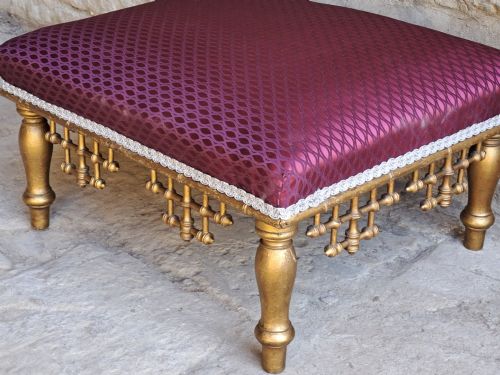
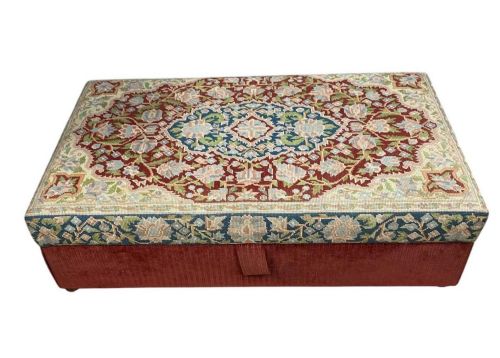
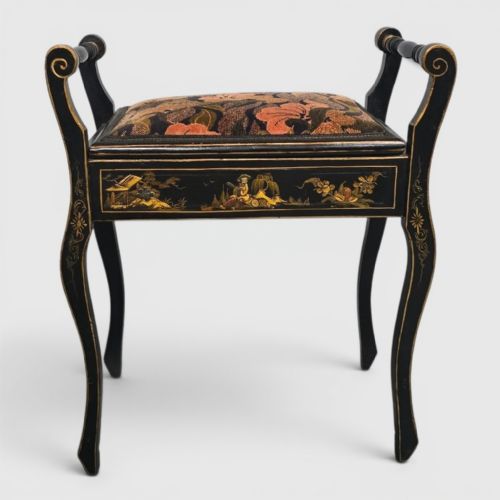
A decorative footstool encompasses a variety of forms including footstools, ottomans, piano stools, and sculptural seats originating predominantly from the nineteenth century. These pieces serve as functional furnishings while introducing distinct stylistic elements to an interior space.
The selections available on this page span several decades from the mid-nineteenth century to around nineteen hundred. They range from traditional English and Queen Anne styles to Continental Rococo, French Neoclassical, and Asian Folk Art expressions.
Common forms include carved wooden stools, upholstered ottomans with tapestry or needlepoint covers, and painted frames. Buyers often encounter pieces utilising walnut, rosewood, and hardwood foundations paired with velvet, textile, or fabric upholstery.
Materials and construction methods
Makers utilised solid timbers such as walnut, rosewood, and general hardwood to construct durable foundational frames. These wooden structures frequently showcase detailed hand carving, gold leaf application, and painted finishes.
Upholstery forms a vital component of these pieces, incorporating textiles, velvet, tapestry, and needlepoint covers. Artisans secured these materials over padded foundations to create comfortable resting surfaces for feet or seating.
Decorative Footstool Retail Price Guide 2026
Typical asking prices for decorative footstool among the pieces listed under this phrase on Sellingantiques today, from the lower quarter to the upper quarter. They describe what is for sale here now, not the wider market.
Listings feature pieces spanning the nineteenth century, including specific dates from eighteen sixty through to nineteen hundred, alongside styles like French Second Empire and Anglo-Indian.
Distinguishing quality across pieces
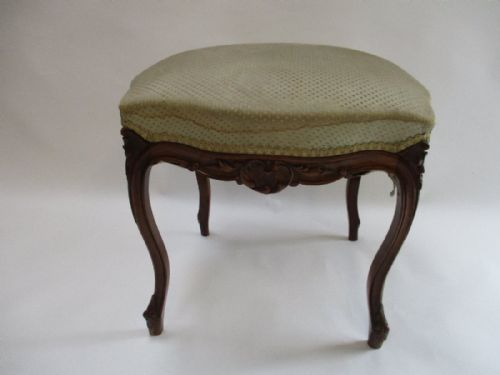
Quality in a decorative footstool is evident in the execution of the woodwork, particularly the precision of hand-carved details on cabriole legs and frames. Superior examples display crisp lines and deliberate sculptural form rather than shallow or softened detailing.
The choice of materials and the integrity of the upholstery significantly influence the character of each piece. Finely preserved needlepoint or tapestry covers and the use of dense hardwoods like walnut elevate the overall standard of the object.
A.M.E. Fournier
The Decorative Footstool Glossary
- Cabriole leg
- A furniture leg featuring a double curve, typically arching outward and then tapering inward to a foot. This form draws inspiration from animal limbs and frequently appears on traditional designs.
- Needlepoint
- A type of counted thread embroidery stitched onto a stiff open-weave canvas. It provides durable and highly decorative patterns for stool tops.
- Gold leaf
- Gold beaten into extremely thin sheets used for gilding wooden frames and decorative elements. It adds a reflective metallic finish to the surface.
- Tapestry
- A form of textile art woven on a loom, often depicting pictorial scenes or repeating motifs. These heavy fabrics frequently serve as top upholstery on nineteenth-century ottomans.
- Chinoiserie
- European artistic interpretations of Chinese and East Asian artistic traditions. This style manifests in decorative motifs and specific forms of piano stools.
Decorative Footstool: Frequently Asked Questions
What is a decorative footstool?
A decorative footstool is a low seat or rest for the feet, distinguished by ornamental carving, upholstery, or specific period styling. These pieces range from simple wooden forms to elaborate upholstered ottomans.
They function as both practical furniture and decorative accents, often incorporating fabrics like velvet and tapestry alongside carved hardwood frames.
How were nineteenth-century stools used?
Nineteenth-century stools served multiple purposes within period interiors, functioning as footrests before armchairs, piano seating, or small occasional tables when topped with a tray.
Larger ottoman variations also provided casual seating or surface space, reflecting the Victorian desire for versatile and comfortable domestic furnishings.
How do I style an antique stool?
Integrating an antique stool into a modern or traditional interior involves placing it near seating areas as a functional footrest or utilising it as a standalone sculptural accent. The varied upholstery and carved wooden frames allow them to complement diverse room schemes.
Consider the scale and height of surrounding furniture to ensure the piece integrates naturally into the layout of the room.
How do I identify French Neoclassical styles?
French Neoclassical styles typically feature restrained classical ornamentation, symmetrical designs, and clean structural lines inspired by antiquity. Carved wooden frames often showcase balanced proportions and refined floral or geometric motifs.
These pieces contrast with the more exuberant curves of Continental Rococo, focusing instead on structural clarity and classical elegance.