

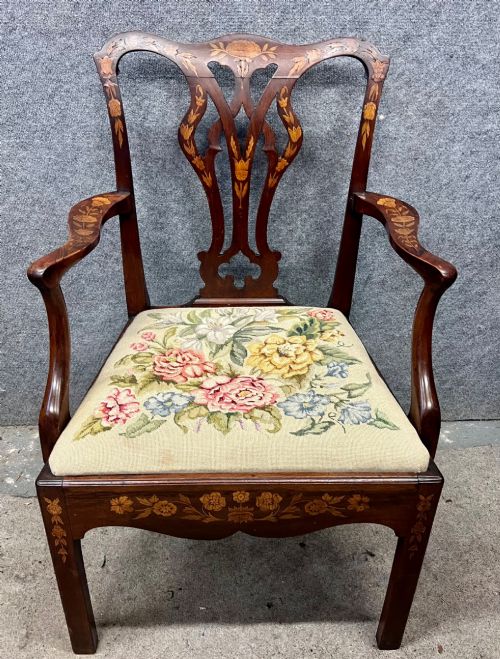
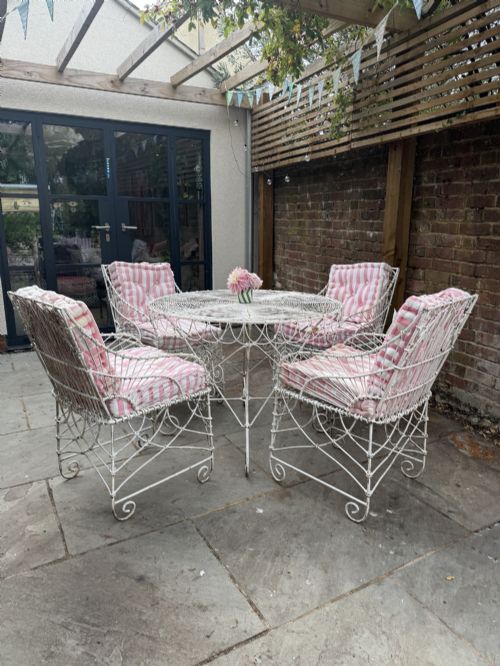
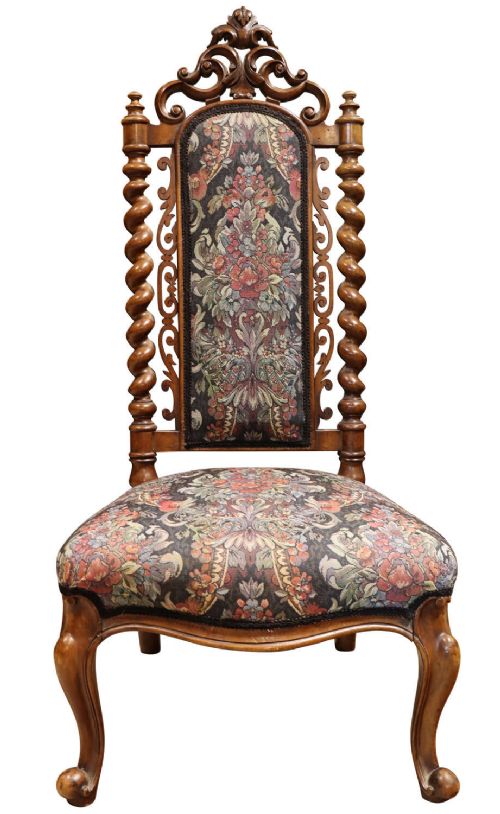
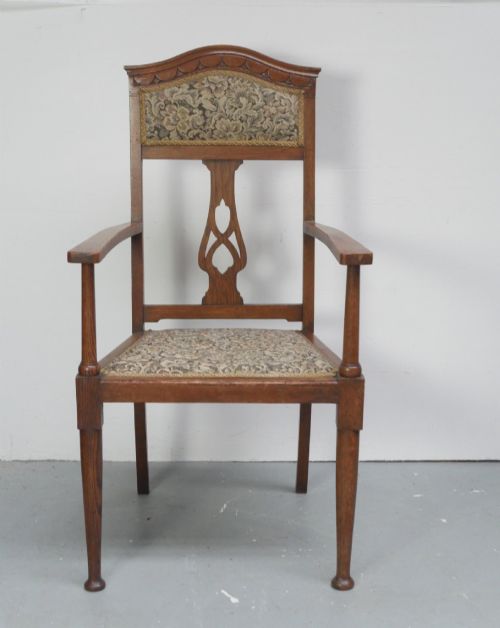


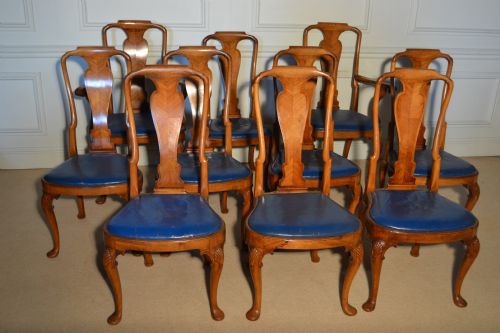


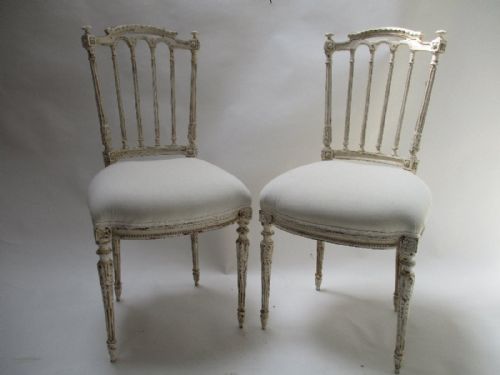
Decorative Dining Chairs
These decorative dining chairs bring character to a room, ranging from painted Regency examples to carved walnut Victorian seats.
Decorative Dining Chairs
When buyers search for decorative dining chairs, they encounter a diverse selection spanning the nineteenth century through the interwar decades. The examples found on this page encompass side chairs, armchairs, and sets intended for both interior dining spaces and garden settings.
The assortment includes period pieces such as Regency brass inlaid rosewood chairs alongside Victorian carved walnut designs and later twentieth-century interpretations. Materials range from traditional timbers like oak and walnut to wrought iron, wirework, and painted finishes.
Most pieces date from the Victorian era and the Regency period, though Arts and Crafts examples and 1930s garden sets also appear. Buyers will find individual chairs, pairs, and larger matched sets suitable for formal or casual seating arrangements.
Materials and construction methods
Cabinetmakers utilised hardwoods such as walnut, mahogany, and rosewood for formal indoor dining chairs, often incorporating detailed hand-carved ornamentation. Ebonised finishes, paintwork, and brass inlay further distinguished the more elaborate nineteenth-century seating.
Alternative materials include cast iron and wirework utilised in Victorian garden furniture designed to withstand outdoor conditions. Seating surfaces incorporate cane, tapestry upholstery, and fabric to provide comfort alongside aesthetic appeal.
Decorative Dining Chairs Retail Price Guide 2026
Typical asking prices for decorative dining chairs among the pieces listed under this phrase on Sellingantiques today, from the lower quarter to the upper quarter. They describe what is for sale here now, not the wider market.
Materials documented across the inventory include traditional walnut and oak, painted wood, wrought iron, wirework, and cane seating components.
Assessing quality and craftsmanship
The calibre of a decorative dining chair rests upon the precision of its hand-carving and the selection of timber used in its frame. Finer examples display crisp detail in walnut or rosewood, whereas simpler pieces rely on painted decoration or straightforward oak construction.
The integrity of applied details, such as brass inlay or hand-painted motifs, dictates the distinction between standard production and masterwork execution. Upholstery choice and structural joinery also determine the enduring resilience of the piece.
The Decorative Dining Chairs Glossary
- Side chair
- An upholstered or wooden chair without armrests, designed primarily for dining tables. These pieces form the majority of standard seating sets.
- Armchair
- A seating unit featuring side supports for the arms, often placed at the head of a dining table or used singly. They complement matching side chairs in larger sets.
- Regency style
- A design aesthetic drawing upon classical Greek, Roman, and Egyptian motifs, prominent during the early nineteenth century. Pieces often feature painted finishes, rosewood, and brass inlay.
- Arts and Crafts
- A movement prioritising traditional craftsmanship and visible construction methods over mass-produced ornamentation. Oak armchairs frequently represent this honest approach to materials.
- Chinese Chippendale
- A specific eighteenth-century revival style characterised by intricate fretwork and fret-cut chair backs. These mahogany pieces display complex geometric patterns.
Decorative Dining Chairs: Frequently Asked Questions
How do I clean wooden chairs?
Maintain wooden surfaces by dusting regularly with a soft, dry cloth to prevent dirt accumulation. Avoid harsh chemical cleaners that can damage vintage polishes and paintwork.
Condition the wood periodically using appropriate beeswax or furniture polish recommended for antique timber. Keep chairs away from direct heat sources and strong sunlight to prevent warping and fading.
Can I mix different chair styles?
Combining contrasting chair styles creates a curated interior aesthetic when linked by a common material or period palette. Pairing armchairs with simpler side chairs adds visual interest to a dining room.
Ensure seat heights remain uniform so diners sit at a comfortable level around the table. Maintaining a cohesive colour scheme helps disparate designs work together harmoniously.
What is ebonising?
Ebonising is a finishing technique that treats light-coloured wood to resemble expensive ebony. Makers applied this dark stain to create high-contrast decorative effects on nineteenth-century seating.
The process involves chemical darkening or specialised black finishes that penetrate the grain of the timber. This treatment was particularly popular in Regency and later revival periods.
Are iron chairs for indoors?
Victorian cast iron and wirework chairs were originally manufactured for garden dining sets and outdoor terraces. Their robust metal construction allowed them to withstand exposure to the elements.
Modern interiors often incorporate these pieces into sunrooms, conservatories, or eclectic dining spaces. Adding cushions provides necessary comfort for prolonged indoor seating.
How do I identify a Regency piece?
Regency seating is characterised by classical proportions, sabre legs, and sophisticated use of rosewood or mahogany. Authentic examples often feature delicate brass inlay or painted decorative motifs.
Construction details and joinery methods help distinguish original period pieces from later nineteenth-century revivals. Examining the underside and wear patterns reveals the age of the timber.