


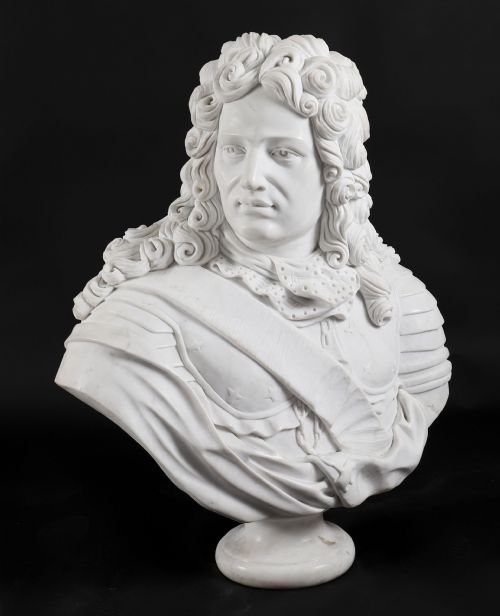
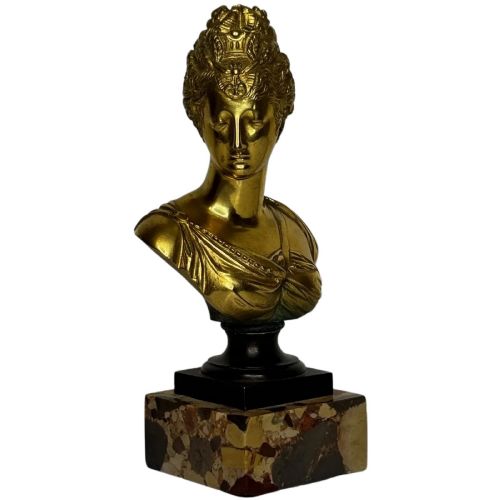


Decorative Classical Busts
Decorative classical busts bring antiquity and dignity to a room, offering sculpted likenesses of historical figures, deities, and nobility.
Decorative Classical Busts
When you search for decorative classical busts, you encounter sculptural portraits rooted in historical and mythological traditions. These pieces draw from neoclassical, Victorian, and revival styles that echo ancient Greek and Roman forms.
The selections available here range from nineteenth-century Carrara marble portraits to early twentieth-century painted plaster figures. You will frequently find subjects modelled after historical figures, literary icons, and mythological deities.
Forms extend beyond standalone library sculptures into functional objects such as inkwells, mantel clocks, and garden statuary paired with pedestals. These diverse formats allow the tradition of classical portraiture to fit into various domestic settings.
Materials and construction methods
Carved stone remains a primary medium, utilising marbles such as Carrara and fine-grained alabaster to achieve smooth, luminous flesh tones and crisp drapery. Artisans shaped these materials using chisels and rasps to capture intricate details in hair, armour, and facial expressions.
Plaster and terracotta offer alternative sculptural mediums, often cast from moulds and subsequently finished with paint or patination. Plaster versions provide a crisp surface for fine details, while terracotta brings warm earthen tones to both indoor pieces and garden statuary.
Decorative Classical Busts Retail Price Guide 2026
Typical asking prices for decorative classical busts among the pieces listed under this phrase on Sellingantiques today, from the lower quarter to the upper quarter. They describe what is for sale here now, not the wider market.
Even Homer found a quiet retirement on this page, cast faithfully in white plaster.
Assessing quality in sculptural busts
The standard of carving or modelling dictates the success of the piece, particularly in the rendering of facial anatomy, expression, and drapery folds. Superior works display a lifelike softness in the flesh and precise undercut details in the hair and clothing.
Material selection and surface finishing play significant roles in the overall impact of a bust. Pure white marble and finely patinated bronzes show greater refinement than painted plaster, though a skilful hand-painted finish on plaster can still achieve remarkable character.
John Wenlock Rollins·P.H Mourey·Auguste Moreau
The Decorative Classical Busts Glossary
- Carrara marble
- A type of white or blue-grey marble from the city of Carrara in Italy, prized since ancient times for its use in sculpture. It provides a dense, consistent ground for detailed carving.
- Alabaster
- A fine-grained, translucent stone often used for nineteenth-century sculptures and ornamental objects. Its softness allows for delicate carving, though it requires gentle handling.
- Terracotta
- Baked red clay used for sculptural figures and architectural elements. It can be left in its natural porous state or painted and patinated.
- Neoclassical
- A Western cultural movement drawing inspiration from the art and culture of classical antiquity. It dominated European art and architecture from the mid-eighteenth to the nineteenth century.
- Torchere
- A tall stand or ornamental candlestick originally designed to carry a torch. In later periods, they serve as pedestals for busts and sculptures.
Decorative Classical Busts: Frequently Asked Questions
How do I clean marble and alabaster busts?
Dust these stone surfaces gently with a soft, dry cloth to prevent the accumulation of dirt in carved crevices.
Avoid using water, chemical cleaners, or abrasive cloths, as these substances can damage the porous surface and alter the natural patina.
Where should I place a heavy marble bust?
Support heavy stone sculptures with sturdy furniture such as a strong console table, a dedicated column, or a reinforced pedestal.
Ensure the supporting surface sits on a level floor to maintain stability and prevent accidental tipping.
Are painted plaster busts fragile?
Plaster is a softer material than marble and is susceptible to chipping, scratching, and moisture damage if placed in damp environments.
Keep these pieces away from high-traffic areas and handle them with care during relocation.
How can I tell if a bust is nineteenth century?
Examine the material composition, tooling marks on the underside, and any inscribed signatures or dates typical of nineteenth-century production methods.
Compare the style of the dress, hair, and patina against documented examples from periods such as the Victorian era or French Second Empire.