



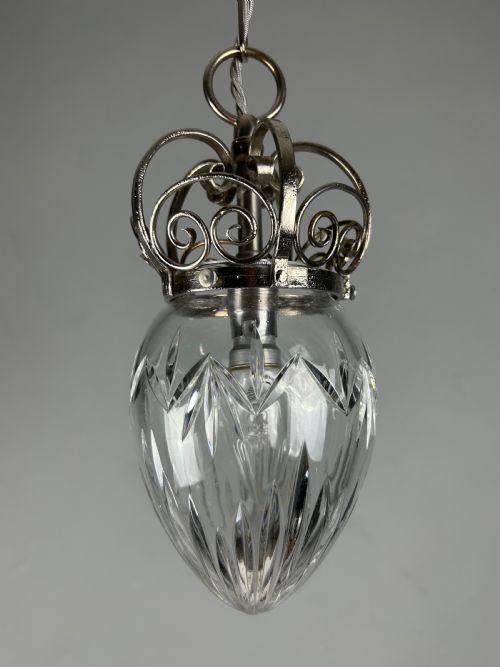

Decorative Ceiling Fixture
A decorative ceiling fixture changes the atmosphere of a room instantly, casting light downwards through brass, bronze, and glass.
Decorative Ceiling Fixture
A decorative ceiling fixture encompasses a wide variety of hanging lights designed to illuminate interior and exterior spaces from above. When browsing for a decorative ceiling fixture, buyers encounter chandeliers, pendant lights, hall lanterns, and porch lanterns dating from the Victorian and Edwardian eras through to the 1930s. The selection spans distinct design movements, including Art Deco, French Art Nouveau, Arts and Crafts, Gothic Revival, and French Rococo.
The most common forms on this page include multi-branched chandeliers and enclosed lanterns originating from France, Britain, and Italy. Pieces utilise frames of brass, bronze, copper, cast iron, and gilt metal, often suspended by chains or rods. Glass elements range from plain hand-blown shades to elaborate cut crystal drops, swags, and coloured fruit motifs.
How they were made
Maker construction methods rely heavily on metalworking techniques such as casting iron, shaping brass, and fabricating bronze or gilt metal frames. Iron components frequently show blacksmith-made characteristics, while bronze and brass frames use structured casting methods to support multiple light branches.
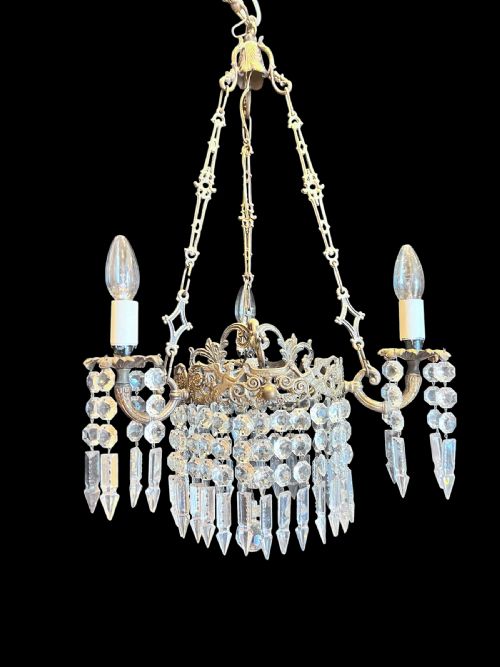
Glass components are formed through hand-blowing, diamond cutting, and leaded stained glass assembly. Many fixtures incorporate specialised elements such as polychrome toleware, slip shades, or cascading crystal drops and swags attached directly to the metal armature.
Decorative Ceiling Fixture Retail Price Guide 2026
Typical asking prices for decorative ceiling fixture among the pieces listed under this phrase on Sellingantiques today, from the lower quarter to the upper quarter. They describe what is for sale here now, not the wider market.
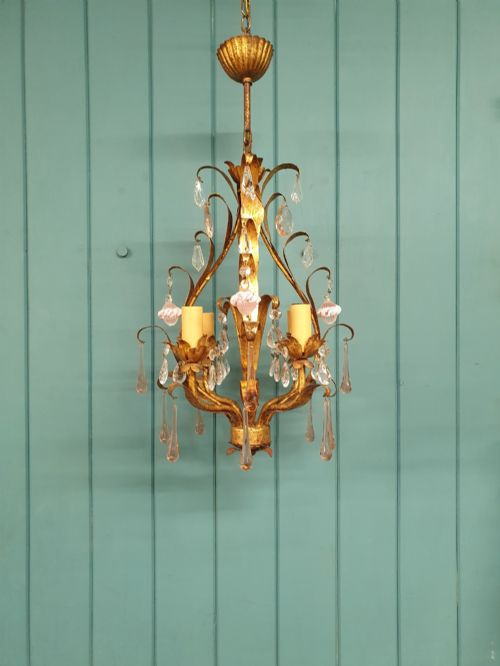
Some nineteenth-century iron chandeliers come decorated with coloured crystal fruits including grapes, apples, and pears.
What varies in quality
Quality in a decorative ceiling fixture rests on the ambition of the design and the purity of its materials. Heavy cast bronze, detailed Florentine gilding, and intricate blacksmith ironwork represent the upper tier of construction, while simpler brass and metal frames sit further down the scale.
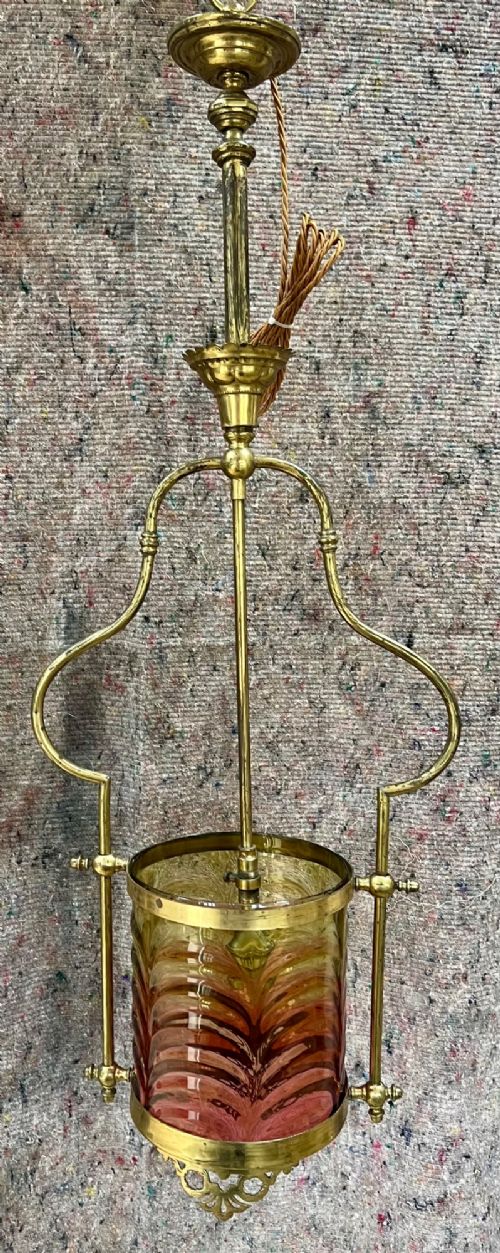
The sophistication of the glass work similarly dictates the calibre of the piece. Hand-blown cranberry glass, complex diamond-cut crystal bell jars, and leaded stained glass panels indicate superior craftsmanship compared to standard moulded glass shades.
The Decorative Ceiling Fixture Glossary
- Chandelier
- A branched ceiling-mounted lighting fixture designed to hold multiple bulbs or candles. These pieces often feature glass or crystal drops suspended from metal arms.
- Toleware
- Painted or enamelled sheet metal items used for decorative light fittings. This technique allows for polychrome finishes on chandelier bodies.
- Slip Shade
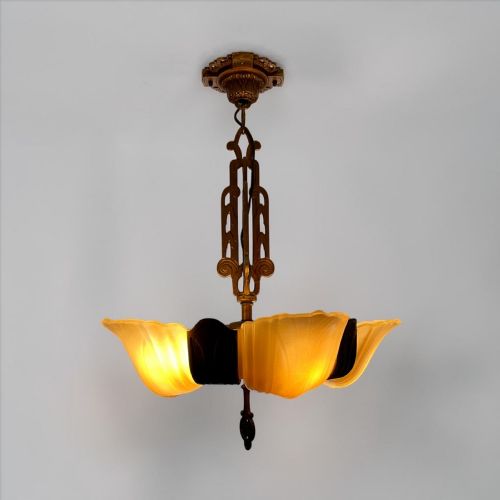
- A moulded piece of glass that slides into a metal frame to form a bowl or shade. These are characteristic of Art Deco lighting designs.
- Porch Lantern
- An enclosed exterior or semi-exterior hanging light fixture designed to withstand weather exposure. They frequently utilise leaded stained glass or copper framing.
- Open-Cage Chandelier
- A lighting form featuring an open metal framework surrounding the central stem and lights. This style protects the interior components while allowing maximum light distribution.
Decorative Ceiling Fixture: Frequently Asked Questions
How do I hang a heavy antique chandelier safely?
Hanging a heavy piece requires securing the fixture directly into a ceiling joist or utilising a heavy-duty metal support box capable of bearing the weight of bronze, iron, or crystal components.
Professional electrical installation is strongly recommended to ensure the internal wiring safely handles the electrical load of multiple branch lights.
Can I adjust the drop height of these hanging lights?
Many fixtures are suspended by chain links, which allows you to shorten the drop by removing links or adjusting the connecting loops.
Solid rod or fixed frame fixtures offer less flexibility for height adjustment without professional alteration of the structural hanging hardware.
How do I clean cut glass and crystal drops?
Cleaning cut glass and crystal involves washing individual drops in warm soapy water using a soft cloth, then drying them thoroughly to restore their reflective brilliance.
Leaving the drops attached to the frame while cleaning requires careful wiping with a specialised glass cleaner sprayed onto a cloth rather than directly onto the metal.
What is the difference between an Edwardian and a Victorian fixture?
Victorian lighting tends to feature heavier bronze, cut glass, and ornate Gothic Revival or Rococo details that project formal elegance.
Edwardian pieces often embrace lighter Arts and Crafts principles or early forms of crystal bowl chandeliers with cleaner, more restrained lines.