





Decorative Brass Handles
These decorative brass handles span the nineteenth century and the Edwardian era, bringing functional metalwork and mounted glass to period doors.
Decorative Brass Handles
Decorative brass handles encompass door hardware and furniture mounts from the Victorian and Edwardian periods. Buyers searching for decorative brass handles will find matching pairs of door pulls and mounted glass handles that preserve historical interiors.
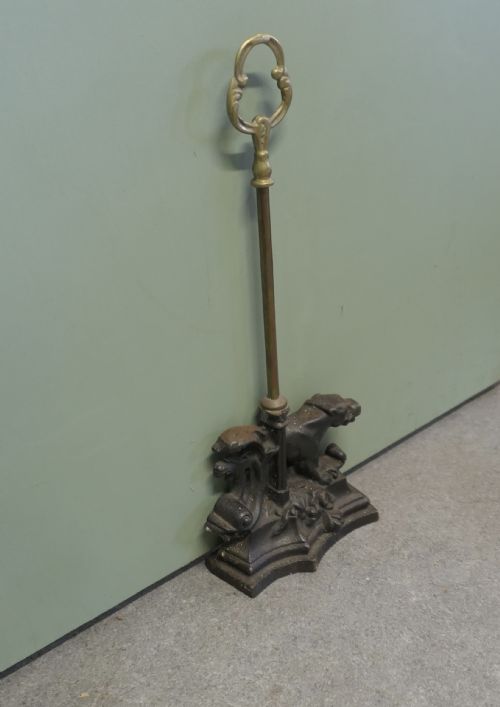
The selection ranges from heavy cast brass doorstops and finger plates to delicate blue glass door handles set in ornate brass mounts. These pieces reflect the functional requirements of nineteenth-century domestic spaces.
How they were made
Casting forms the basis of many pieces, utilising molten brass poured into moulds to create heavy doorstops and detailed mounts. Artisans combined this cast metal with lead crystal and blue glass to produce contrasting textures.
Surface finishing involved hand polishing and mounting techniques that secured glass grips firmly into metal collars. These construction methods ensured the hardware could withstand daily domestic use.
Decorative Brass Handles Retail Price Guide 2026
Typical asking prices for decorative brass handles among the pieces listed under this phrase on Sellingantiques today, from the lower quarter to the upper quarter. They describe what is for sale here now, not the wider market.
The inventory records door furniture spanning the eighteenth century through the Edwardian era, showing consistent use of sand-cast and turned brass components.
What varies in quality
Quality depends upon the crispness of the casting and the depth of the chased detail on the metal surface. Superior examples retain sharp definition in their ornamentation rather than smoothed edges from worn moulds.
The integrity of the union between the brass mount and the glass or crystal component distinguishes finer pieces. Solid weight and substantial metal gauge indicate robust construction.
The Decorative Brass Handles Glossary
- Brass
- An alloy of copper and zinc commonly utilised for hardware and decorative items throughout the nineteenth century. It takes a bright polish and ages to a rich patina.
- Door Porter
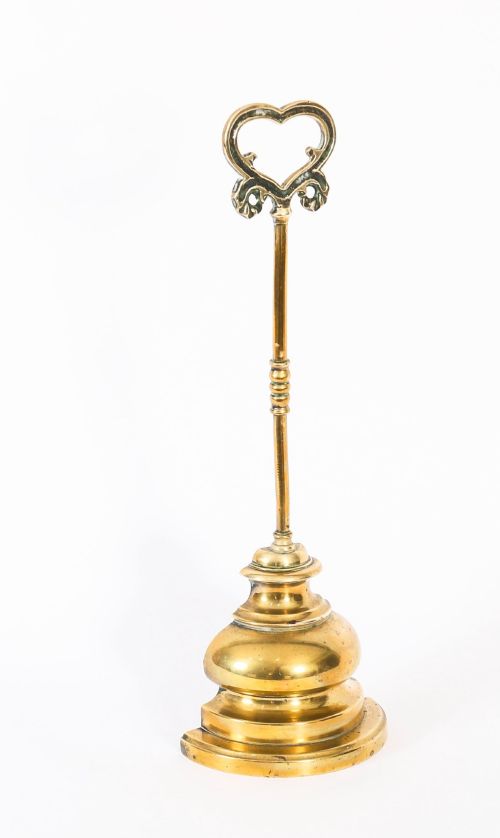
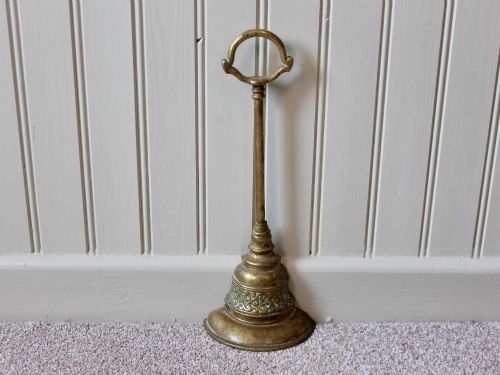
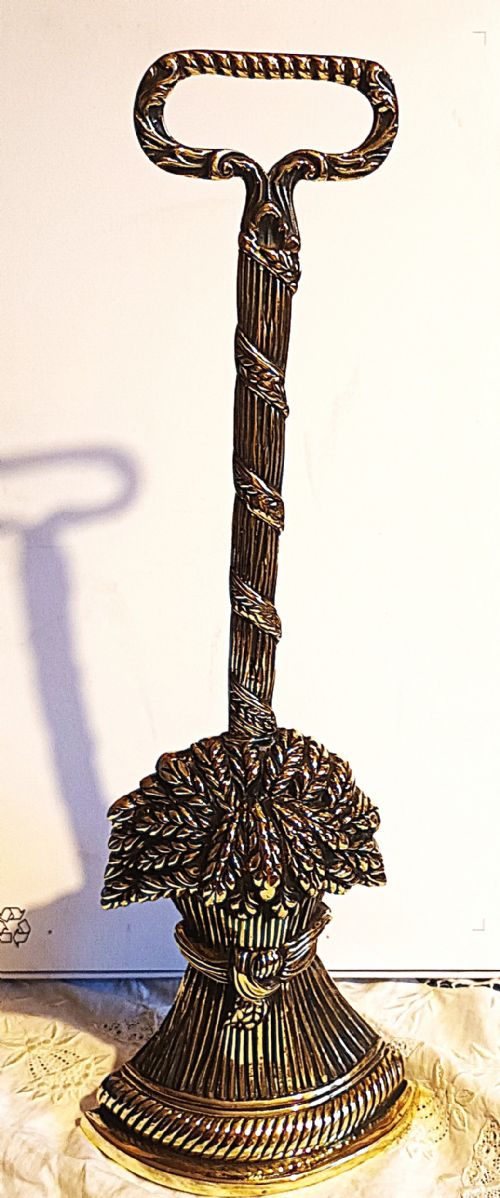
- A heavy freestanding weight placed against a door to keep it open, often incorporating a brass handle for lifting. These are frequently cast in figurative or urn designs.
- Lead Crystal
- A heavy, clear glass containing lead oxide, used alongside brass mounts on door handles and pulls. It refracts light sharply and offers a cool weight in the hand.
- Finger Plate
- A flat metal plate mounted on a door around the handle to protect the wood from marks. They appear in matched sets with corresponding door knobs.
Decorative Brass Handles: Frequently Asked Questions
How do I clean brass handles?
Remove surface dust with a soft cloth and warm soapy water, avoiding harsh chemical dips that strip the historic finish.
Allow the metal to dry completely before gentle buffing to maintain the natural sheen accumulated over the decades.
Are these handles suitable for modern doors?
Many nineteenth-century pairs adapt well to standard modern doors, provided the spindle size and backplate dimensions align with existing mortices.
Check the mechanical fit carefully before installation to ensure the vintage mechanism operates without binding.
What is the difference between brass and bronze?
Brass is primarily an alloy of copper and zinc, yielding a bright golden tone, whereas bronze is copper combined with tin.
Victorian hardware listings often use the terms interchangeably, but bronze typically displays a deeper, reddish-brown hue.
How do I date a brass handle?
Examine the manufacturing marks, casting seams, and screw types, as handmade slots differ from machine-threaded modern fasteners.
Stylistic cues such as Edwardian restraint or Victorian ornamentation also help narrow the decade of production.