



Decorative Brass Fire Screen
These decorative brass fire screen pieces protect a room from stray embers while bringing warmth and shine to a fireplace.
Decorative Brass Fire Screen
A decorative brass fire screen sits before an unlit or dying hearth, turning a utilitarian safety barrier into a focal point of the room. The selection here spans the Victorian and Edwardian eras, alongside pieces from the decades around nineteen hundred.
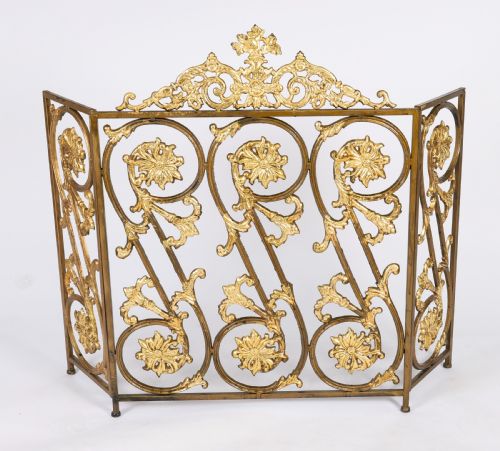
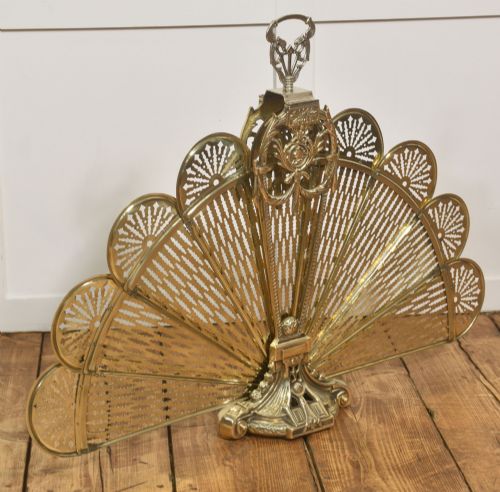
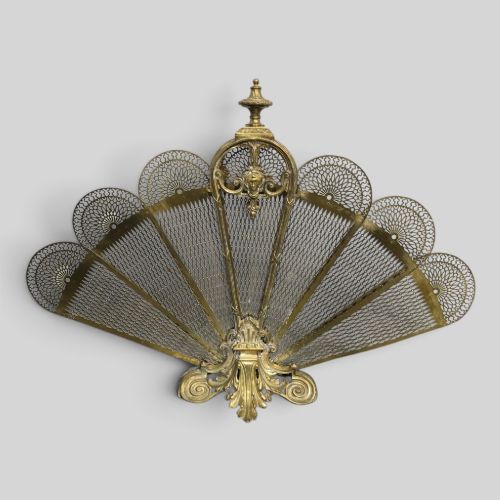
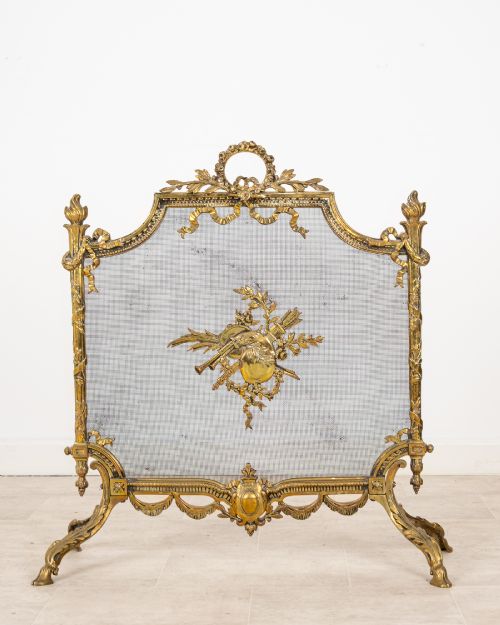
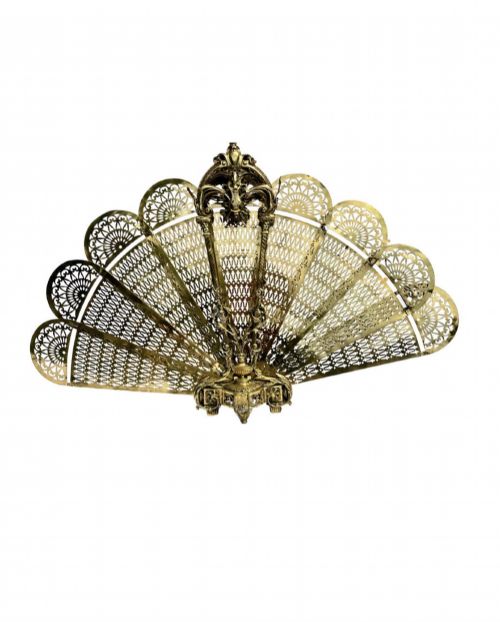
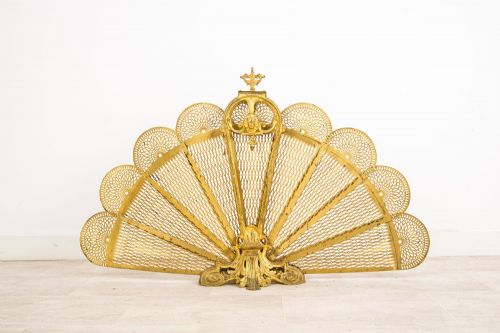
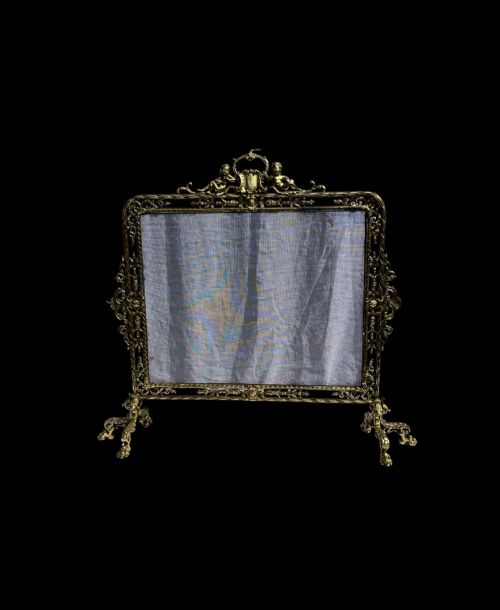
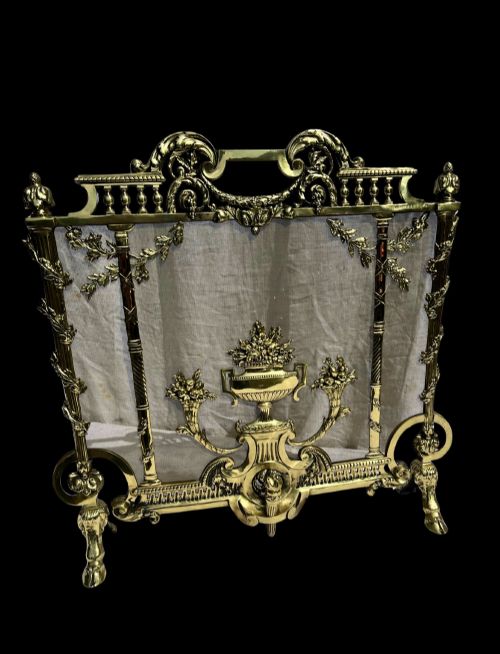
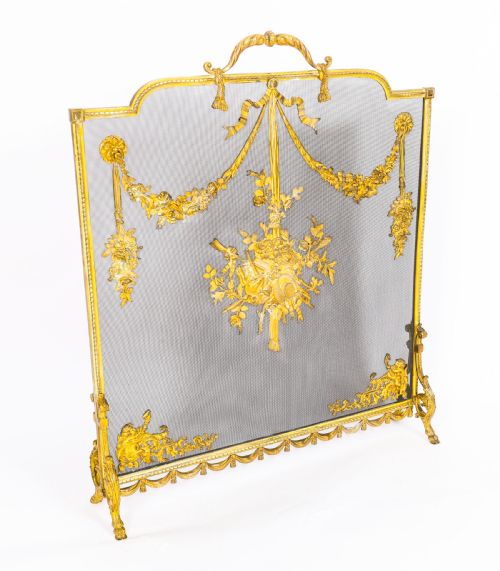
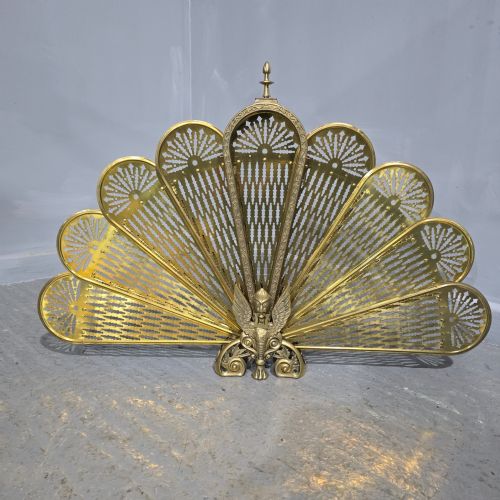
You will encounter folding fan designs that open like peacock feathers alongside solid frames fitted with wire mesh, glass panels, or fabric inserts. Many examples draw heavily on French Rococo Revival, Louis XIV, and Louis XVI styles with elaborate cast ornament.
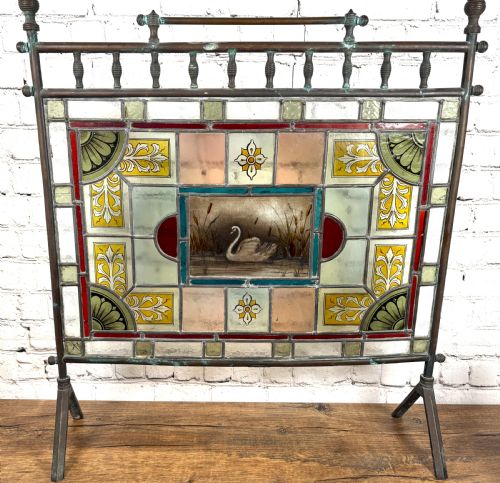
Art Nouveau versions also appear, bringing whiplash curves, stylised florals, and cut or stained glass panels into the mix. Whether configured as a space-saving folding guard or a sturdy free-standing frame, each object serves as a functional heat shield.
How they were made
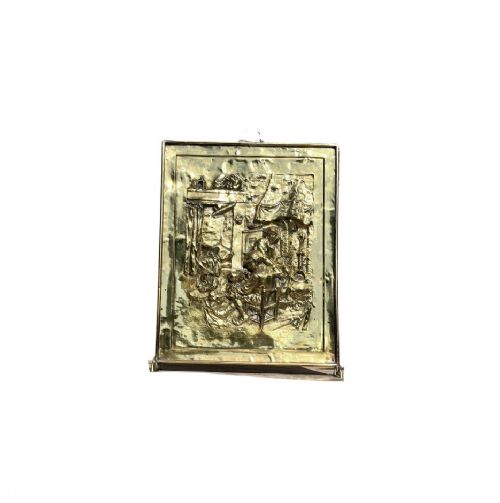
Makers utilised brass, gilt brass, gilt bronze, and ormolu to form the structural frames and decorative mounts. Casting allowed for intricate scrollwork, musical trophies, and floral motifs in the Rococo and Neoclassical manner.
Panels incorporated wire mesh, glass, mirror plates, and occasionally tapestry or stained glass to catch the light of the room. Folding fan screens relied on articulated brass blades that pivoted smoothly from a weighted base.
Listings span the nineteenth century through the nineteen-twenties, incorporating Victorian and Edwardian examples alongside French revival styles.
What varies in quality
The crispness of the casting marks the division between standard production and superior craftsmanship, visible in the depth and hand-chasing of foliage and scrollwork. Heavier gauges of brass and well-secured joints provide stability to larger frames.
The choice of secondary materials, such as bevelled cut glass, intact stained glass, or original mercury gilding, elevates an ordinary guard into an accomplished decorative object.
The Decorative Brass Fire Screen Glossary
- Ormolu
- Gilt bronze ornamentation applied to furniture and metalwork. The technique involves creating an amalgam of mercury and gold applied to a bronze base.
- Spark screen
- A fine wire mesh barrier designed to catch flying embers from an open fire. It prevents stray sparks from damaging carpets and furniture.
- Peacock fan
- A folding hearth screen composed of radiating metal blades that expand like a tail feather. They became immensely popular during the Victorian period.
- Rococo Revival
- A nineteenth-century design movement favouring asymmetrical scrolls, shell motifs, and naturalistic curves. It draws inspiration from eighteenth-century French royal aesthetics.
Decorative Brass Fire Screen: Frequently Asked Questions
How do I clean a brass fire screen?
Dust the metal gently with a soft dry cloth to remove daily soot and debris.
Avoid abrasive metal polishes that can strip away original patination or vintage gilding, especially on gilt bronze and ormolu surfaces.
Can I use these screens with a real fire?
Many of these pieces were built as functional hearth guards with wire mesh or solid metal to block stray embers.
Delicate glass panels or fabric tapestry inserts are better suited to unlit hearths where heat exposure will not cause damage.
What is the difference between a fire screen and a fire guard?
The terms are often used interchangeably for nineteenth and early twentieth-century hearth accessories.
Screens frequently emphasise decorative panels like stained glass or mirrors, while guards often lean towards protective wire mesh.
How do I date an antique brass screen?
Examine the stylistic cues, such as the flowing organic lines of Art Nouveau or the exuberant curves of Rococo Revival.
Construction methods, including the type of screws, hinge mechanisms, and casting quality, also offer strong clues to the period.