


Decorative Brass Candlesticks
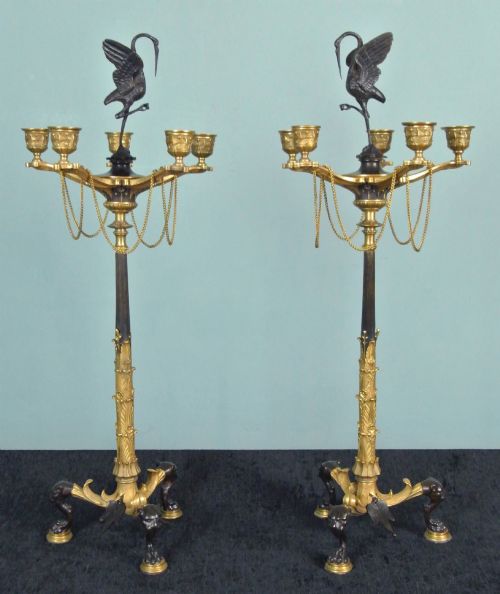
These decorative brass candlesticks span centuries of domestic illumination, offering varied forms from humble chambersticks to grand French ormolu candelabra.
Decorative Brass Candlesticks
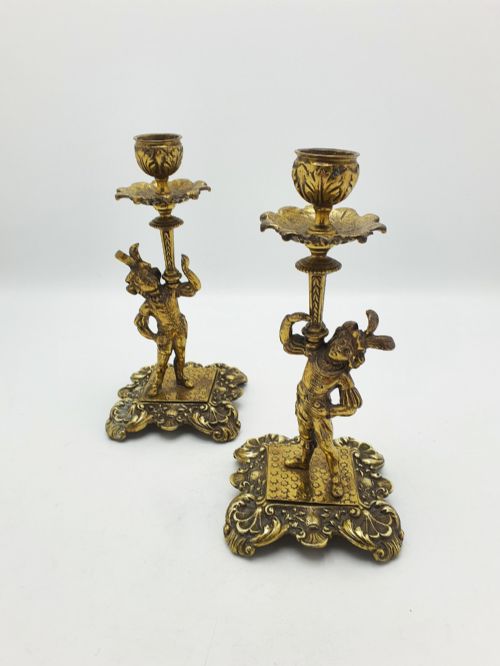
When you search for decorative brass candlesticks, you enter a field populated largely by matched pairs from the nineteenth century alongside eighteenth-century continental pieces. The forms range from simple chambersticks and column lamps to figural designs featuring animals, putti, and neoclassical motifs.
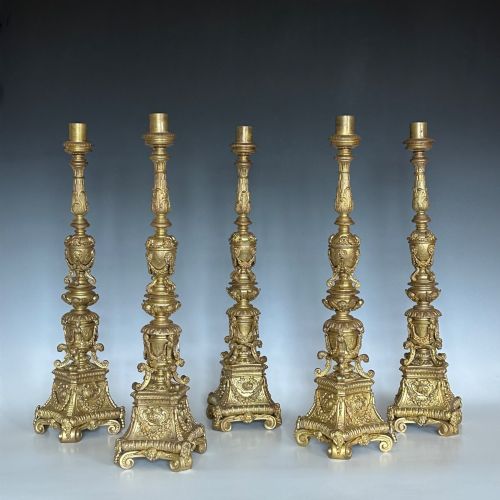
Victorian and Edwardian examples dominate the selection, often drawing on Gothic Revival, French Rococo, or Aesthetic movement styles. Buyers encounter everything from heavy cast altar sticks to small domestic pieces designed for bedroom use or desk illumination.
Regional diversity surfaces across the inventory, including Venetian gilt bronze, Persian hand-engraved work, and Japanese bronze alongside English and French output. This variety means collectors choose between austere classical columns and ornate, figurative sculptures.
Materials and Construction
Makers utilised cast brass, bronze, and ormolu, frequently combining these metals with marble, porcelain, or wood to create textural contrast. Gilt bronze and parcel-gilt surfaces appear alongside patinated bronze and hand-engraved brass.
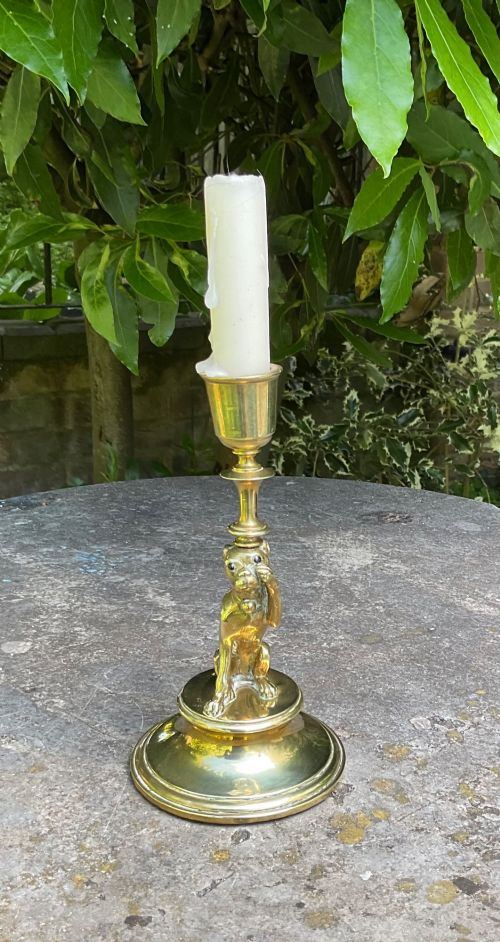
Foundry techniques involved sand casting or lost-wax casting for figural elements such as pug dogs, cats, dolphins, and putti, followed by chasing and gilding. Heavy column sticks and chambersticks relied on robust brass casting to provide structural stability.
Listings feature materials including marble, porcelain de Paris, fabric, and oak alongside brass, bronze, and gilt ormolu.
Distinctions in Quality
The standard of chasing and the crispness of detail define the higher tiers of these pieces. Fine examples retain sharp relief in cast ornamentation, whereas simpler or later items show softer edges from worn moulds.
Material integration also separates the output, with top-tier objects combining fire-gilt ormolu, substantial bronze weight, and secondary materials like marble or porcelain de Paris rather than thin sheet brass and lacquer.
Barbedienne·Abel Landry
The Decorative Brass Candlesticks Glossary
- Ormolu
- Gilded bronze, usually produced by applying a mercury-gold amalgam to a bronze base and heating it. This technique creates a rich, durable golden surface seen on French pieces.
- Chamberstick
- A short candlestick fitted with a shallow pan and a loop handle for carrying about a house. They were essential for lighting bedroom paths before electric domestic wiring.
- Candelabra
- A multi-branched lighting device holding several candles or electric lights. They often stand taller and present a more decorative silhouette than single candlesticks.
- Pricket
- A sharp metal spike in the centre of a candleholder designed to impale the base of a candle. These appear frequently on altar sticks and ecclesiastical designs.
- Gothic Revival
- An architectural and decorative style drawing on medieval forms. In lighting, this translates to pointed arches, trefoils, and heavy structural geometry.
Decorative Brass Candlesticks: Frequently Asked Questions
How do I date a brass candlestick?
Dating relies on manufacturing techniques, style periods, and wear patterns. Sand-casting seams, base construction, and stylistic clues like Aesthetic movement motifs point to specific decades.
Heavier cast brass and distinct patination styles further help distinguish eighteenth-century items from late nineteenth-century revivals.
Were these candlesticks converted to lamps?
Some pieces in the inventory are configured as table lamps or electric candelabra. Conversion methods varied over time, sometimes involving wiring run through the original column.
Buyers should examine whether the conversion preserves the original metal structure without compromising the antique brass or bronze body.
What is the difference between brass and ormolu?
Brass is an alloy of copper and zinc, valued for its warm metallic tone and durability. Ormolu refers specifically to gilded bronze utilised in high-end decorative arts.
While solid brass can be polished repeatedly, ormolu relies on a delicate surface layer of gold applied to a bronze core.
How should I clean antique brass?
Gentle dusting and occasional cleaning with a soft cloth preserve the historic patination. Aggressive chemical polishes strip away the aged surfaces that collectors prize.
Leaving a degree of natural tarnish often maintains the visual depth and character of nineteenth-century metalwork.