



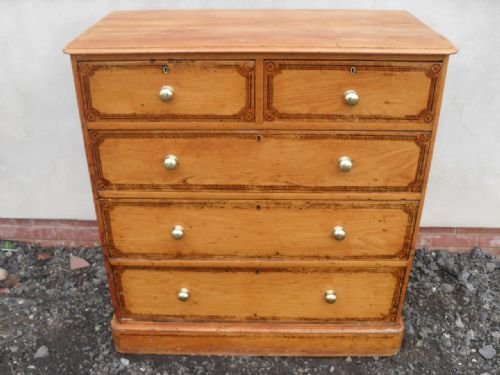


Decorative Bedroom Drawers
These decorative bedroom drawers bring painted surfaces, rich veneers, and practical storage together in rooms of every scale.
Decorative Bedroom Drawers
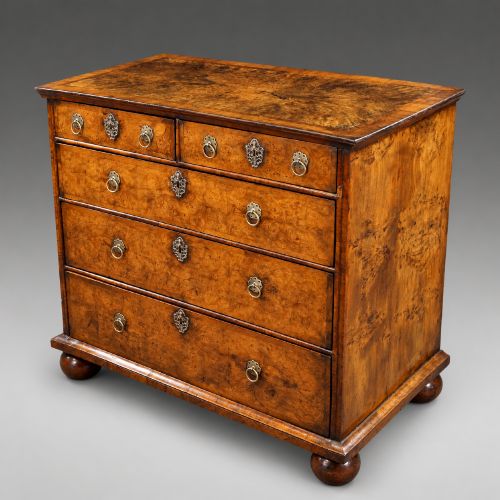
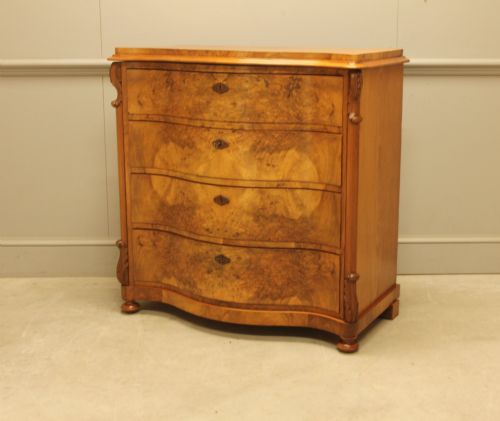
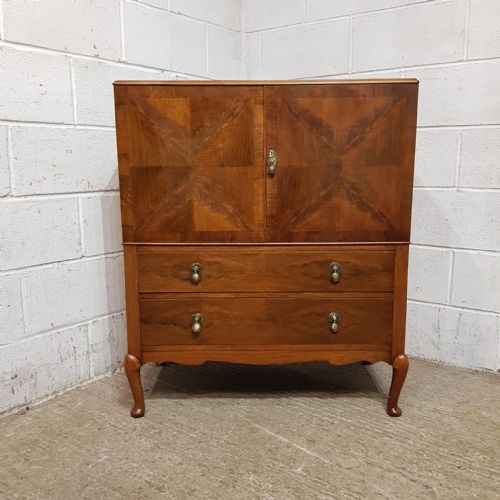
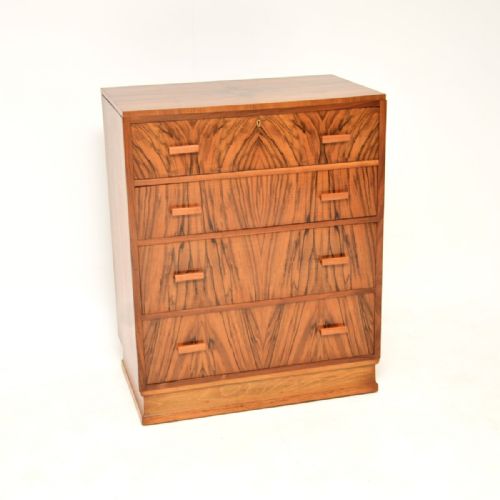
Decorative bedroom drawers encompass chests of drawers, tallboys, and commodes originating from periods ranging from the eighteenth century through the Art Deco era. Buyers examining these listings find pieces shaped by various regional traditions, including French provincial, Swedish, English, and Welsh cabinet-making.
The dominant forms on this page include painted pine country pieces alongside grander veneered designs in burr walnut and flame mahogany. These items serve the dual purpose of domestic storage and visual centrepieces within a bedroom setting.
How they were made
Makers constructed the carcases using solid timbers such as pine and hardwood, often applying elaborate veneers of burr walnut or flame mahogany to the primary visible surfaces. Drawer construction typically utilised traditional joinery methods to ensure durability over centuries of daily use.
Surface decoration defined many of these pieces, employing hand-applied paintwork, japanning, and delicate inlay alongside original brass hardware. French and Swedish workshops frequently favoured painted or commode-style finishes, while English cabinets displayed figured grain and contrasting stringing.
Decorative Bedroom Drawers Retail Price Guide 2026
Typical asking prices for decorative bedroom drawers among the pieces listed under this phrase on Sellingantiques today, from the lower quarter to the upper quarter. They describe what is for sale here now, not the wider market.
Listings feature pieces spanning the 18th, 19th, and early 20th centuries, utilising materials from simple painted pine to burr walnut veneer.
What varies in quality
Quality separates through the integrity of the timber selection and the skill applied to the surface decoration, whether in the matching of burr walnut veneers or the execution of hand-painted motifs. Superior examples maintain their original hardware, balanced proportions, and untouched surface patination.
Lesser pieces often show later repainting, replaced handles, or heavy alterations to the internal drawer linings. The precision of the drawer dovetailing and the crispness of any inlaid details further distinguish finer workshop output from simpler vernacular work.
The Decorative Bedroom Drawers Glossary
- Tallboy
- A tall chest of drawers, often consisting of one chest stacked upon another or built as a single elevated unit to maximise vertical storage.
- Commode
- A low chest of drawers or cabinet, frequently of French or continental European origin, standing on relatively short legs.
- Japanning
- A European imitation of East Asian lacquerwork, created using layers of varnish and often featuring raised metallic designs on a painted ground.
- Serpentine
- A furniture front or top shaped with a convex centre flanked by concave curves, creating a gentle undulating line.
- Flame mahogany
- Mahogany veneer sliced from the point where a branch joins the main trunk, producing a distinctive flickering flame-like grain pattern.
Decorative Bedroom Drawers: Frequently Asked Questions
How do I clean a painted chest of drawers?
Dust surfaces regularly with a soft, dry cloth to prevent the accumulation of grit that can scratch aged paintwork. Avoid modern chemical cleaners or excessive moisture, which can lift historic paint layers.
Test any mild cleaning solution on a hidden area if stubborn marks require attention. Preserving the original patina ensures the decorative character remains intact for future generations.
Are these drawers suitable for daily use?
Most pieces function well for clothing storage provided the drawers slide smoothly within their original runners. Historic timber responds best to steady indoor humidity rather than extreme environmental shifts.
Lining the drawer bases with acid-free paper protects both the interior timber and delicate fabrics. Gentle handling preserves traditional joinery that was built to last centuries.
How do I identify an 18th century commode?
Eighteenth-century commodes typically feature hand-cut dovetails, pegged joints, and native timbers specific to their region of origin. Construction details inside the drawers and behind the backboards reveal the hand methods of early cabinet-makers.
Proportions tend to be heavier and more grounded than later revival pieces. Examining the wear patterns around the handles and feet offers clues to long-term domestic use.
What is the difference between walnut and mahogany?
Walnut was widely favored in earlier periods for its rich brown tones and intricate burr patterns. It offers a warm, tactile surface that responds well to traditional wax polishing.
Mahogany became popular later, known for its reddish-brown hue and ability to take fine carvings and sharp inlay details. Flame mahogany specifically provides a dramatic, highly figured visual texture.