




Deconstructed Wingback Armchair
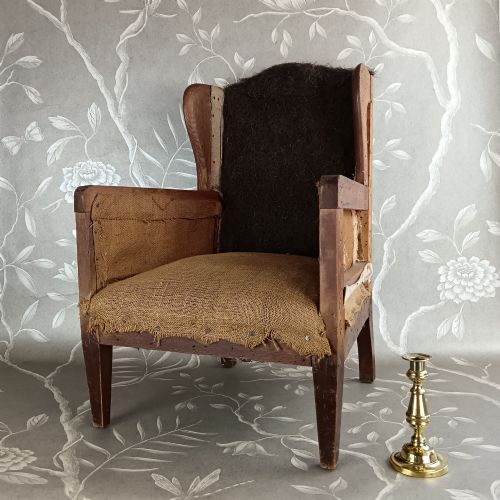
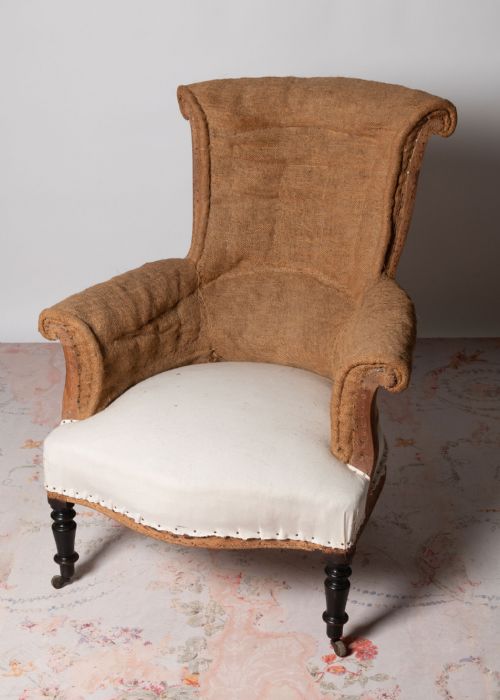
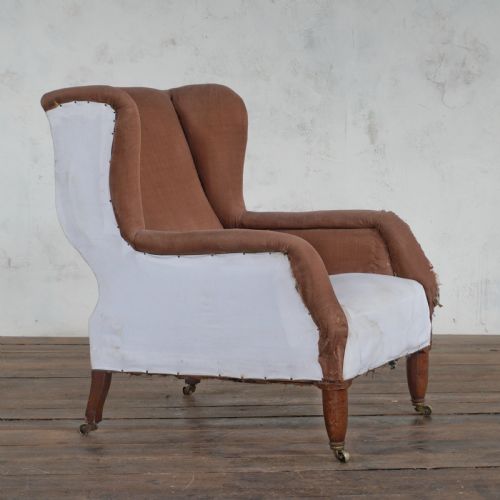
A deconstructed wingback armchair strips away traditional upholstery to reveal raw timber frames, internal webbing, and honest stitching.
Deconstructed Wingback Armchair
A deconstructed wingback armchair strips away final top fabrics and covers to expose the internal framing, webbing, and padding beneath. When buyers search for a deconstructed wingback armchair, they seek these stripped-down seating pieces that display the structural bones of historical chairs.
The examples gathered here span from the 18th century and early Georgian periods through to Victorian, Edwardian, and 19th century French iterations. Forms range from a child's wingback armchair to full-scale English winged armchairs.
Most pieces met on this page originate from the 19th century, carrying the classic high-backed silhouette designed to shield sitters from draughts. They bridge historical cabinet-making with contemporary industrial interior design tastes.
How they were made
Makers constructed these frames primarily using solid timber such as mahogany and oak, joined with traditional carpentry methods. These wooden skeletons form the robust architectural core exposed by the deconstruction process.
Original padding and structure rely heavily on hessian, linen, and calico layers secured by brass tacks or nails. These utilitarian textile components remain visible on the exterior to showcase the authentic layering of historical upholstery.
Deconstructed Wingback Armchair Retail Price Guide 2026
Typical asking prices for deconstructed wingback armchair among the pieces listed under this phrase on Sellingantiques today, from the lower quarter to the upper quarter. They describe what is for sale here now, not the wider market.
One tiny child-sized wingback armchair proves that even 1910 toddlers required serious draught protection by the hearth.
What varies in quality
The integrity of the underlying woodwork dictates the fundamental standard of each piece, distinguishing sturdy period timber frames from weaker structures. Grain patterns in the exposed oak or mahogany and the precision of early joinery separate standard examples from finer works.
The character of the remaining textile elements also defines the tier of the piece, particularly the density of the original hessian and the placement of brass fixings. Authenticity of age in the frame and materials outweighs uniform surface neatness.
Thomas Sopwith of Newcastle
The Deconstructed Wingback Armchair Glossary
- Wingback
- An armchair featuring protective side panels, known as wings, originally designed to block draughts and trap fireplace heat. This defining silhouette remains central to the design.
- Hessian
- A coarse woven fabric typically utilised for internal scrim and foundational support beneath upholstery stuffing. It provides the characteristic textured surface seen on stripped frames.
- Calico
- A plain-woven unbleached textile historically employed as an inner lining layer before decorative top fabrics were applied. It often remains partially intact on these pieces.
- Timber
- Wood prepared for building and carpentry, encompassing structural elements made from oak and mahogany. The quality of this material underpins the durability of the chair.
Deconstructed Wingback Armchair: Frequently Asked Questions
What is a deconstructed wingback armchair?
A deconstructed wingback armchair is a seating piece stripped of its final decorative outer fabric to expose the inner wooden frame, webbing, and structural textiles. This style highlights the raw materials and historical craftsmanship usually hidden beneath upholstery.
These pieces combine traditional furniture forms with an industrial aesthetic, making them popular statement items for modern interiors.
How do I date an antique wing chair?
Dating relies on examining the timber species, joinery techniques, and the shape of the wooden frame. Earlier 18th century and Georgian examples feature distinct proportions compared to later Victorian or Edwardian pieces.
The specific style of the wings and legs also provides reliable clues to the era of manufacture.
Are these chairs comfortable to sit in?
While the upholstery is minimal or stripped back, the structural padding and supportive spring or stuffing layers often remain functional. They offer a firm seat rather than the plush feel of a fully upholstered modern chair.
Many buyers place them in living spaces as focal points or reading seats where structural character matters most.
Which woods were used for the frames?
Cabinet makers utilised durable hardwoods such as oak and mahogany for the primary structural frames. These sturdy timbers ensured the large winged silhouette remained stable over centuries of use.
Exposed wood grain adds visual warmth to the stripped-back exterior of the chair.