



Deco Storage Box
These deco storage box pieces bring sharp lines and practical organisation into a room, offering the exact geometric elegance collectors want.
Deco Storage Box
A deco storage box encompasses everything from compact walnut cigar containers to large camphor wood chests and coal bins designed with the geometric rigour of the interwar years. Buyers searching this phrase will find a diverse array of functional vessels originating from the 1920s, 1930s, and 1940s.
The most common versions met on this page include cigarette boxes, trinket holders, and larger canteens or chests utilising oak, silver plate, and leather. These objects reflect the transition from ornate earlier styles to clean, industrial, and streamlined modernism.
Materials and construction
Construction relies heavily on traditional cabinet-making timbers like oak, walnut, and camphor wood, often paired with metal elements such as brass or silver plate. Artisans combined these structural materials with interior linings of baize or leather to protect delicate contents.
Surface treatments range from limed wood finishes and carved details to black lacquer and enamel work. Faceted glass and figural metal castings also appear, demonstrating the varied decorative techniques employed during the period.
Deco Storage Box Retail Price Guide 2026
Typical asking prices for deco storage box among the pieces listed under this phrase on Sellingantiques today, from the lower quarter to the upper quarter. They describe what is for sale here now, not the wider market.
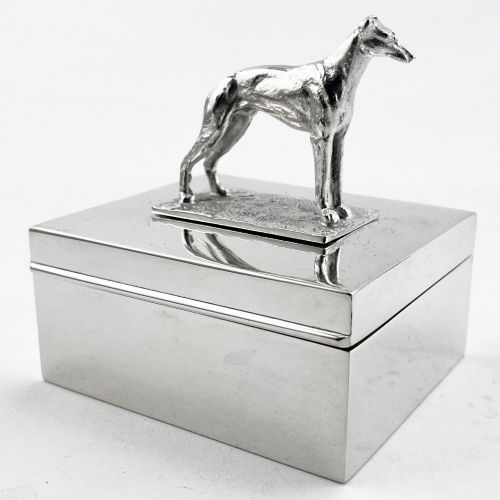
A greyhound sits perpetually on guard atop one 1930s trinket box, watching over the cigarettes within.
Judging quality in interwar boxes
Quality reveals itself in the integrity of the materials and the precision of the construction, such as tightly fitted joints on wooden chests and substantial weight in silver plated or metal containers. Pieces that incorporate luxury accents like enamel or specialised interior fittings occupy the upper tier of the range.
Design ambition also separates standard utilitarian items from superior examples, where figural castings or named maker associations elevate the object. The harmony between exterior decoration and internal utility dictates the overall merit of each piece.
JH Browne of The Waldorf Hotel
The Deco Storage Box Glossary
- Art Deco
- A design style characterised by streamlined shapes, geometric patterns, and modern industrial materials that dominated the 1920s and 1930s. It represents a sharp departure from organic Victorian and Edwardian ornamentation.
- Silver Plate
- A thin layer of silver applied to a base metal foundation to give the appearance of solid silver. This technique allowed manufacturers to produce decorative boxes and canteens at a lower cost while maintaining a bright finish.
- Baize
- A coarse woolen material resembling felt, frequently used to line the interiors of boxes, canteens, and jewellery cases. It protects stored items from scratching against hard wood or metal surfaces.
- Camphor Wood
- An aromatic timber known for its distinctive scent and resistance to insects, often utilised for chests and storage boxes. Its natural properties made it ideal for protecting clothing and valuable contents.
- Canteen
- A fitted box or case designed specifically to hold a set of cutlery or tableware in an organised manner. These items often feature multiple tiers or slotted compartments.
Deco Storage Box: Frequently Asked Questions
What were deco storage boxes used for?
These vessels served everyday organizational needs in domestic and hospitality settings, holding items ranging from cigars and cigarettes to jewellery and razor sets. Larger examples functioned as coal bins, log buckets, or substantial chests for household goods.
Their dual role as functional storage and striking decorative objects made them prominent fixtures on sideboards, desks, and dressing tables throughout the period.
How do I date a deco storage box?
Dating relies on identifying stylistic markers, material combinations, and manufacturing techniques characteristic of the 1920s, 1930s, or 1940s. The presence of streamlined geometric motifs, limed oak, or specific metal plating points directly to the interwar decades.
Maker marks, engraved dates, or retailer inscriptions provide definitive chronological anchors when present on the piece.
Are these boxes suitable for daily use?
Most pieces remain robust enough for regular handling, provided they are treated with the care appropriate for vintage wood, glass, and metalwork. Interiors lined with baize or leather continue to protect modern contents effectively.
Placing them in stable environmental conditions prevents the warping of wooden elements or tarnishing of silver plated surfaces.
How do I clean a vintage storage box?
Maintenance depends entirely on the specific material composition, requiring gentle dusting for carved wood and specialised polishing cloths for silver plate or brass elements. Moisture should be kept away from fabric linings like baize and delicate lacquer or enamel surfaces.
Harsh chemical cleaners must be avoided to preserve the original patina and finish developed over the decades.