



Deco Sconces
Deco sconces bring structural geometry and diffused illumination to an interior, drawing on French and international designs from the early twentieth century.
Deco Sconces
Deco sconces comprise wall-mounted lighting fixtures and brackets originating principally from the 1920s and 1930s, alongside related forms from adjacent periods like the Edwardian era and the late nineteenth century. Buyers encounter a diverse selection of wall lights, girandoles, and exterior lamps shaped by Art Deco, Art Nouveau, and Amsterdam School aesthetics.
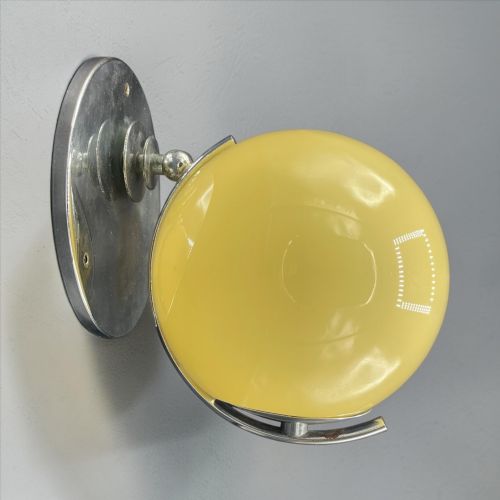
The most common variants on this page pair gleaming metallic frames in chrome, brass, or nickel with moulded or frosted glass shades. These fixtures manifest in matched pairs and suites, taking geometric configurations such as cloud shapes, trumpet cylinders, skyscraper profiles, and flame motifs.
Origins span British, Dutch, and particularly French workshops, merging utilitarian wall brackets with decorative metalwork and specialised pressed glass. Alongside electric wall lights, the category extends to candelabras and candle lamps adapted for wall hanging.
Materials and Construction
Makers utilised base metals such as brass, bronze, wrought iron, and copper, frequently finished with contemporary plating in chrome, nickel, or silver. These metallic backplates and arms support shades formed from pressed, frosted, cut, or enamelled glass.
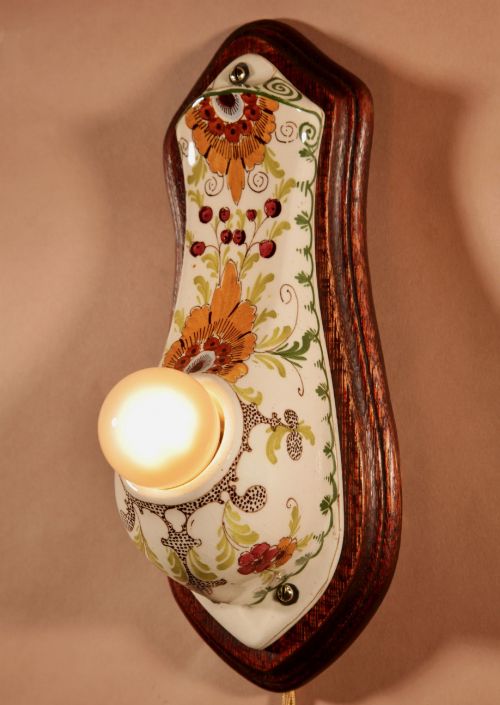
Glass production relied on specialised moulding techniques to achieve diffusing surfaces, cloud profiles, and stepped skyscraper geometries. Secondary materials include early plastics such as Bakelite, Catalin, and Lucite, integrated alongside ceramic elements and mirrored glass panels.
Deco Sconces Retail Price Guide 2026
Typical asking prices for deco sconces among the pieces listed under this phrase on Sellingantiques today, from the lower quarter to the upper quarter. They describe what is for sale here now, not the wider market.
Several pieces combine early plastic switches with heavy metal frames, proving that mid-century decorators loved a tactile click just as much as we do.
Evaluating the Pieces
Quality rests upon the integrity of the original pairing between metalwork and glass shade, noting whether components share identical period manufacture. Hand-chased details on copper or bronze and the weight of the cast metal frame distinguish finer work from standard production.
The distinction between standard lighting and superior pieces involves the presence of signed glass elements from notable makers and the preservation of original finishes such as coloured enamel or specialised plating.
Maison Bagues·Dugué·Baccarat·Lalique
The Deco Sconces Glossary
- Frosted glass
- Glass treated to diffuse light by acid-etching or sandblasting the surface. This technique softens the glare from exposed bulbs.
- Girandole
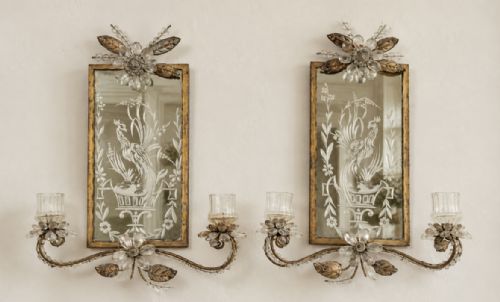
- An ornamental bracket for candles or electric lights featuring a mirrored backplate. The mirror reflects and multiplies the illumination in a room.
- Bakelite
- An early synthetic thermosetting plastic formed from phenol and formaldehyde. It appears frequently in switch plates and decorative mounts on period lighting.
- Skyscraper style
- An architectural and decorative motif characterised by stepped vertical setbacks. This form echoes the rising urban skylines of the 1920s and 1930s.
- Wall bracket
- A structural fixture projecting from a vertical surface to support a light fitting. These metal arms secure the weight of the shade and electrical components.
Deco Sconces: Frequently Asked Questions
How do I wire period sconces for modern use?
Period wall lights require professional rewiring to meet contemporary electrical standards and safety regulations. Qualified electricians can adapt internal wiring while preserving the original metal backplates and mounting points.
Most fixtures accommodate modern candle-style bulbs or low-wattage LEDs behind their original glass shades. Careful installation ensures the weight of heavy glass and metal components is securely anchored to wall studs.
Where should I place wall sconces in a room?
Wall lights function effectively in pairs flanking mirrors, doorways, or fireplaces to create balanced ambient illumination. Placing them at eye level provides flattering indirect light in hallways, stairwells, and living spaces.
Exterior variants mount beside doorways to provide functional illumination on porches and outdoor facades. Positioning depends on the scale of the room and the projection of the specific wall bracket.
How do I identify Art Deco lighting?
Art Deco fixtures rely on symmetrical geometry, stepped forms, and stylised motifs such as flames and skyscrapers. Metals like chrome and nickel frequently combine with frosted or moulded glass shades.
Earlier transitional pieces may retain Art Nouveau curves or Edwardian proportions alongside emerging modernist lines. Examining the construction methods and materials helps confirm the manufacturing era.
Are replacement glass shades available if one breaks?
Original period glass shades are specific to their makers and matched suites, making exact replacements challenging to source. Many collectors accept minor manufacturing imperfections as evidence of authenticity.
When necessary, period-appropriate glass elements can sometimes be found through specialist dealers. Care must be taken during cleaning and maintenance to protect fragile frosted and moulded components.