


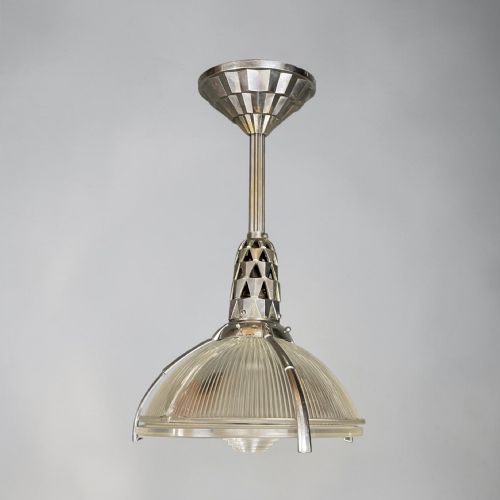
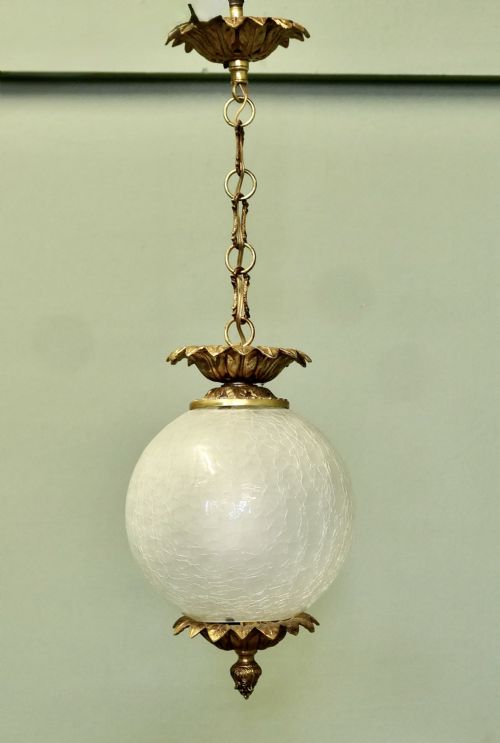
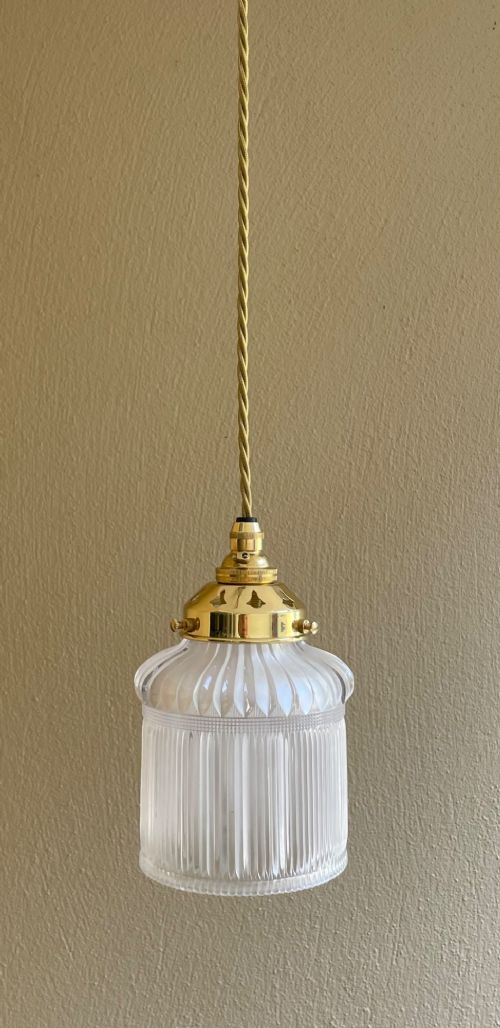
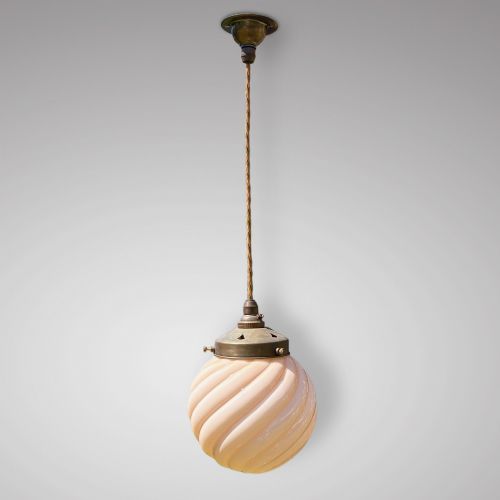


Deco Hanging Lamp
A deco hanging lamp brings geometric lines and industrial form directly to overhead spaces, offering functional illumination with distinct period character.
Deco Hanging Lamp
A deco hanging lamp draws on stylistic influences from the early decades of the twentieth century, appearing frequently in forms such as pendant lights, ceiling lights, and hallway lanterns. These fixtures originate predominantly from the nineteen-twenties and nineteen-thirties, reflecting the streamlined aesthetics of the period alongside occasional industrial applications.
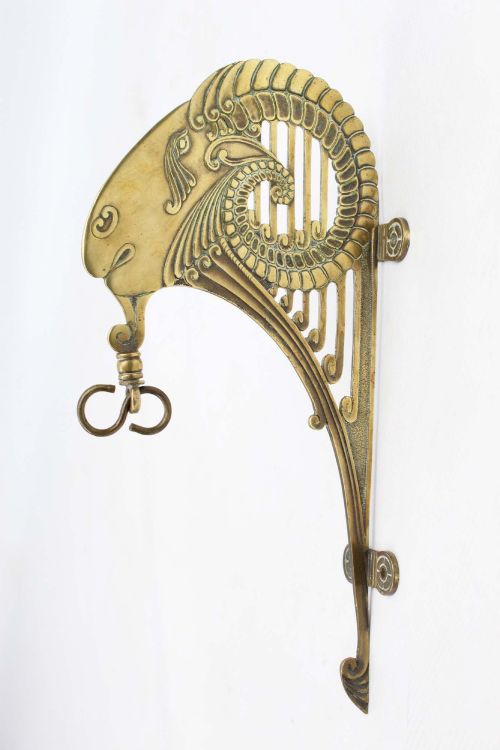
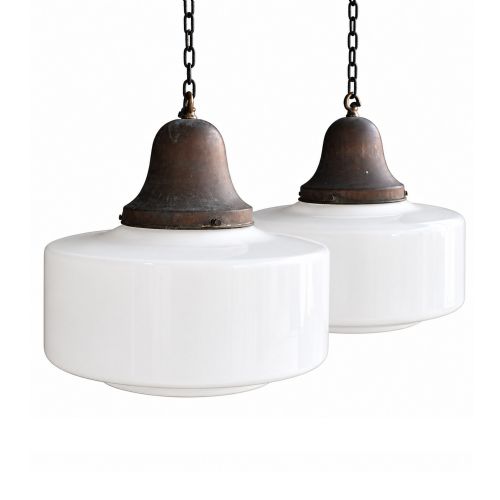
The selection ranges from large matched pairs intended for institutional settings to compact glass globes and brass wall hanging brackets designed for domestic hallways. Pieces often emerge with specific regional characteristics, linking French design houses and English workshops to distinct lighting formats.
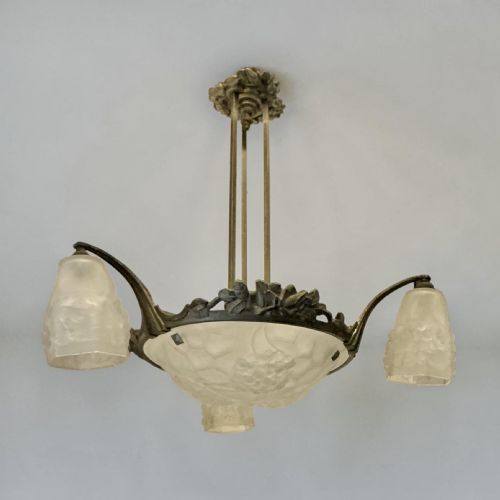
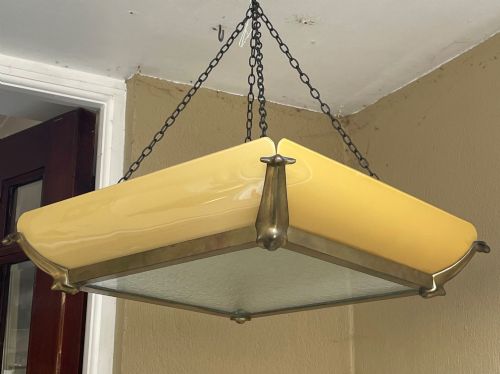
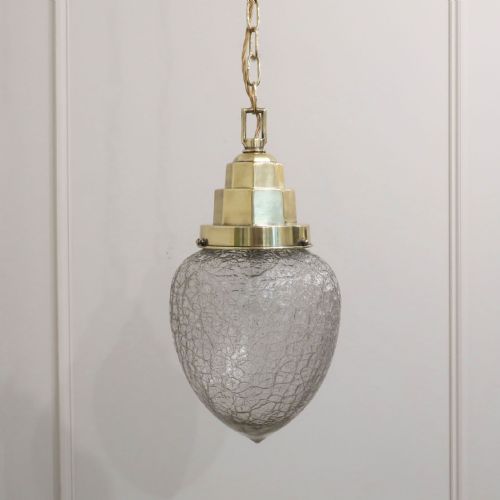
Structural variations include multi-tiered ceiling fittings, pear-shaped opaline shades, and square brass centre lights that demonstrate the breadth of forms available within this category. Buyers encounter both utilitarian factory fixtures and decorative domestic centerpieces.
Materials and construction techniques
Construction relies heavily on durable metals paired with various forms of decorative glass to diffuse light effectively. Workshops utilised brass, copper, bronze, chrome, and steel for frames and galleries, while shades were cast, blown, or moulded in opaline, frosted, crackle, cut, mercury mirrored, and alabaster glass.
Metal components often feature polished or patinated surfaces designed to support heavy glass diffusers, globes, and conical shades securely. Techniques combined precision metalwork with artisanal glass production to achieve the characteristic geometric profiles and clean silhouettes associated with the era.
Deco Hanging Lamp Retail Price Guide 2026
Typical asking prices for deco hanging lamp among the pieces listed under this phrase on Sellingantiques today, from the lower quarter to the upper quarter. They describe what is for sale here now, not the wider market.
Listings span periods from the nineteenth century through the nineteen-forties, with a strong concentration of nineteen-twenties and nineteen-thirties pieces.
Evaluating construction and design distinction
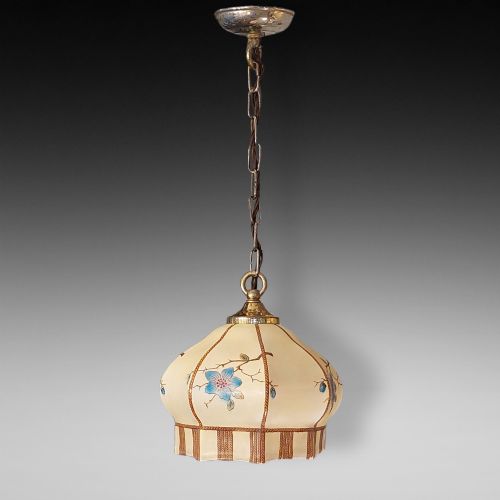
Quality separates fixtures by the weight and finish of the metal framework and the sophistication of the glasswork. Heavier gauges of brass, bronze, and copper, combined with specialised glass treatments like crackling or hand-painting, distinguish standard utility fittings from superior decorative examples.
The integration of specific design movements, such as Amsterdam School framing or documented maker attributions, elevates certain pieces above anonymous commercial production. The precision of the joinery and the original integrity of the glass shades determine the overall distinction of any given lamp.
Degué·Émile-Jacques Ruhlmann·Jean Gauthier
The Deco Hanging Lamp Glossary
- Opaline glass
- A milky, semi-translucent glass used to soften light output while maintaining a bright, even glow. It appears frequently in spherical and conical pendant shades from the interwar period.
- Plafonnier
- A ceiling light fixture designed to sit flush or very close to the ceiling surface. These often feature decorative glass bowls held by metal mounts.
- Gallery
- The metal collar or rim that holds a glass shade in place and connects it to the suspension rod or chain. Galleries vary from simple industrial rings to elaborate decorative castings.
- Holophane
- A brand of prismatic glass designed to direct and diffuse light efficiently. These shades feature ribbed patterns engineered for industrial and commercial illumination.
- Alabaster
- A fine-grained, translucent stone used for carved lighting bowls and shades. It provides a soft, natural diffusion of light with unique mineral veining.
Deco Hanging Lamp: Frequently Asked Questions
How do I hang a heavy deco pendant?
Heavy fixtures require secure anchoring into ceiling joists using appropriate hooks or brackets to support the combined weight of metal and glass safely.
Professional electrical installation is recommended to ensure the suspension wiring matches the structural load of the lamp.
Are these lamps wired for modern use?
Many vintage fixtures are rewired to meet contemporary electrical standards while preserving their original exterior metal and glass components.
Buyers should verify internal wiring status with individual listings before installation in domestic spaces.
What rooms suit a hallway lantern?
Hallway lanterns and smaller pendants fit well in entryways, stairwells, and compact corridors where overhead clearance is limited yet decorative impact is desired.
Their enclosed glass designs help protect internal bulbs from dust and drafts in high-traffic transition areas.
How do I identify a nineteen-thirties fitting?
Nineteen-thirties pieces typically display streamlined geometric shapes, symmetrical stepped details, and a preference for chrome, brass, or frosted opaline glass.
These characteristics contrast with the more ornate nineteenth-century cut glass designs or the heavier industrial ironwork of earlier decades.