

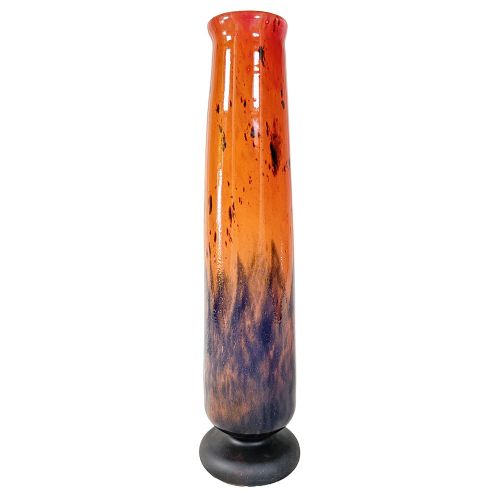
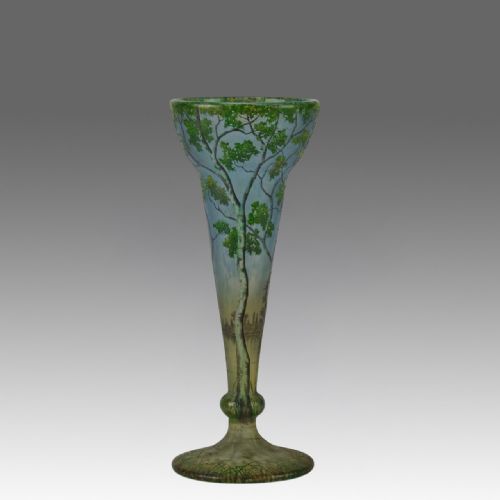
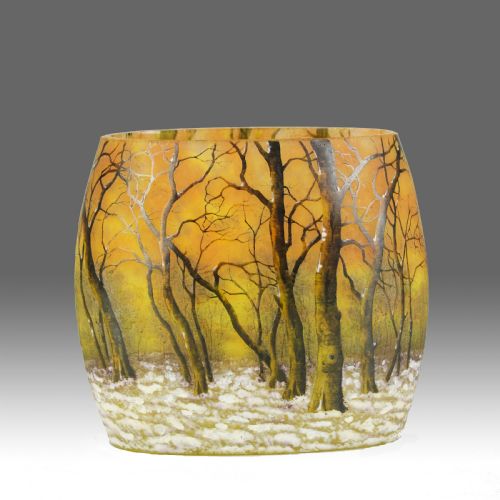


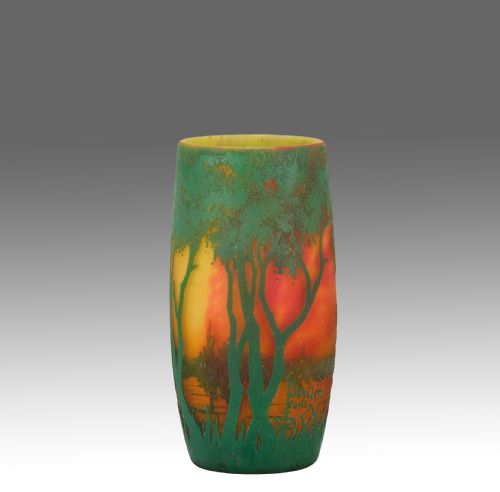


Daum Nancy Cameo
daum nancy cameo pieces combine layered glass and etching to capture delicate botanical and landscape scenes.
Daum Nancy Cameo
When you search for daum nancy cameo, you find decorative glassware originating from France during the late nineteenth and early twentieth centuries. These vessels showcase the mastery of glassmaking techniques developed by the Daum brothers in Nancy, capturing natural forms and atmospheric scenery.
Vases dominate the selections available, ranging from miniature vessels to large statement pieces standing over forty centimetres tall. Table lamps, decanters, and jugs also appear, providing functional forms that utilise the same distinctive glass techniques.
The objects span transitional periods from Art Nouveau to Art Deco. Art Nouveau examples celebrate botanical motifs like sweet peas, irises, and lilies of the valley alongside winter and summer landscapes, while Art Deco pieces offer bolder geometric interpretations.
How they were made
Makers utilised blown glass as the foundation, often incorporating powdered glass and enamel to build up rich layers of colour. Acid-etched glass and wheel carving techniques then cut through these outer layers to reveal contrasting hues and intricate designs.
Certain vessels integrate additional materials such as silver or bronze mounts, framing the glass body with metalwork. This combination of glass chemistry and mechanical carving yields the signature textured relief seen across the collection.
Daum Nancy Cameo Retail Price Guide 2026
Typical asking prices for daum nancy cameo among the pieces listed under this phrase on Sellingantiques today, from the lower quarter to the upper quarter. They describe what is for sale here now, not the wider market.
Materials appearing across the current inventory include cameo glass, blown glass, enamel, silver, and bronze.
What varies in quality
The depth and precision of the carving dictate the visual impact of each piece. Superior examples display meticulous control over acid-etching and wheel carving, creating fine detail in floral petals and landscape horizons.
Complexity of colour and subject matter also separate standard production from exceptional works. Multi-layered scenes with enamel highlights and winter or sunset lighting effects demand advanced technical execution during production.
Daum Frères·Georg Adam Scheid
The Daum Nancy Cameo Glossary
- Cameo Glass
- Glass formed with multiple layers of contrasting colours, where portions of the outer layers are carved away to create a raised design. This technique requires immense patience and steady hands to avoid piercing the background layer.
- Acid-Etched Glass
- Glass exposed to acid baths to eat away unmasked surfaces and create depth or texture. The method allows for intricate patterns that would prove difficult to carve by hand alone.
- Wheel Carved Glass
- Glass shaped and detailed using a rotating abrasive wheel held against the surface. Artisans employ this method to refine cameo reliefs and add sharp linear accents.
- Enamel
- Opaque or translucent glass paste applied to the surface and fired to fuse with the vessel. It provides vibrant supplementary colour details on top of the etched glass.
- Powdered Glass
- Finely ground glass fused into the body during melting to create mottled background effects and subtle colour gradients. This technique gives the glass body a textured depth.
Daum Nancy Cameo: Frequently Asked Questions
What is daum nancy cameo glass?
It is decorative glassware produced in France featuring layered glass carved or etched to reveal contrasting colours. The designs typically depict botanical subjects or scenic landscapes.
The works emerged from the renowned Nancy-based glassworks during the Art Nouveau and Art Deco periods, combining artistic vision with complex chemical and mechanical techniques.
How do I identify a winter landscape vase?
Winter landscape pieces generally feature stark trees rendered in dark enamel or cameo against a snowy background of frosted or mottled white and yellow glass. These scenes often evoke cold atmospheric conditions.
Such vessels capture specific seasonal moods, contrasting sharply with the vibrant floral motifs and sunlit summer landscapes found in other pieces from the same makers.
Where were these pieces made?
They were produced in Nancy, France, a major centre for the Art Nouveau movement and glass manufacturing. The local school of art fostered collaboration between glassblowers, etchers, and designers.
Production spanned several decades, adapting from naturalistic floral forms into the more stylised aesthetics of the twentieth century while maintaining headquarters in Nancy.
How do I display table lamps safely?
Table lamps require stable placement away from high-traffic areas to protect the delicate glass shades and bodies. Use low-heat modern bulbs to prevent thermal stress on antique glass.
Ensure the electrical components meet current safety standards while preserving original metal mounts and fittings where applicable to maintain the integrity of the object.