





Dark Wood Wine Caddy
These dark wood wine caddy pieces are sturdy storage boxes and carriers designed to keep bottles safe and close at hand.
Dark Wood Wine Caddy
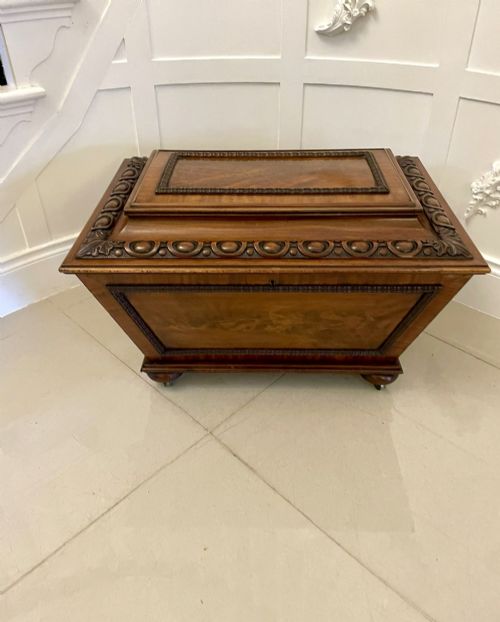
When you search for a dark wood wine caddy, you encounter a range of heavy storage vessels and portable carriers designed for holding bottles securely. The examples on this page span the eighteenth and nineteenth centuries, taking forms such as cellarettes, wine coolers, decanter holders, and bottle carriers.
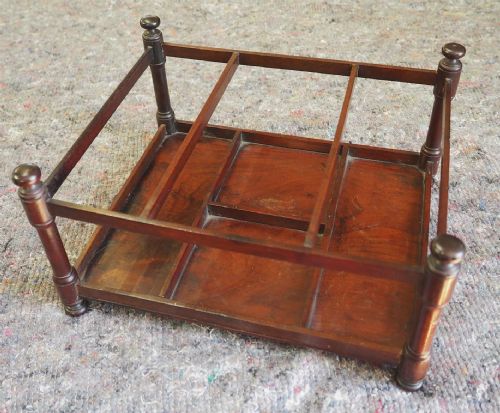
You are most likely to meet mahogany pieces from the Georgian, Regency, and Victorian periods, often styled in the manner of Chippendale or George III designs. These items function as portable bottle carriers or floor-standing storage cases, reflecting the dining customs of past centuries.
The origins vary from English workshops to Anglo-Indian colonial production, showing diverse regional interpretations of standard forms. Sarcophagus shapes and multi-section bottle carriers appear frequently among the listings, demonstrating how makers adapted the timber to practical containment.
How they were made
Carpenters constructed these items primarily from dense hardwoods like mahogany and padouk, applying wood veneer and inlay to create patterned surfaces. Timber selection provided both structural strength for holding heavy liquid-filled bottles and a rich dark ground for decorative finish.
Metal components such as brass fittings, cast metal details, and bone elements were integrated to reinforce corners, provide handles, and form internal dividers. These additions ensured that transportable bottle carriers and larger cellarettes could withstand regular handling.
Dark Wood Wine Caddy Retail Price Guide 2026
Typical asking prices for dark wood wine caddy among the pieces listed under this phrase on Sellingantiques today, from the lower quarter to the upper quarter. They describe what is for sale here now, not the wider market.
Materials recorded across the inventory include mahogany, padouk, brass, inlay, bone, and wood veneer.
What varies in quality
The refinement of the timber grain and the precision of the inlay set individual pieces apart. Finer examples display carefully selected mahogany or padouk with harmonious figuring across the visible surfaces.
The execution of brass hardware and internal compartment dividers distinguishes superior workshops from standard production. Well-fitted fittings and robust section dividers indicate careful construction intended to endure heavy daily use.
Gillows·Freemans of Norwich
The Dark Wood Wine Caddy Glossary
- Cellarette
- A lockable container used for storing wine and spirits near the dining table. They frequently take the form of heavy boxes on feet or low stands.
- Sarcophagus
- A monumental container shape featuring a domed or peaked lid and a flared body, popular for large nineteenth century wine coolers.
- Padouk
- A heavy, durable tropical hardwood with a deep reddish-brown colour. It appears in colonial pieces from the eighteenth century.
- Treen
- Small handmade wooden household objects and utensils. In this context, it describes turned or carved wooden bottle holders.
Dark Wood Wine Caddy: Frequently Asked Questions
What is a dark wood wine caddy used for?
These pieces served historically to hold and transport wine bottles and decanters around the dining room. They kept bottles upright and secure while stored near the table.
Today, buyers utilise them as decorative storage cases or drinks cabinets in living spaces. Their solid timber construction allows them to function practically as intended.
How do I date a mahogany cellarette?
Dating relies on observing the timber choice, construction methods, and stylistic details associated with periods like the Georgian or Victorian eras. Early pieces often feature dense mahogany and hand-cut joinery.
Secondary materials like brass hardware and bone accents also help narrow down the period. Comparing the overall form to documented examples provides further clarity on age.
Are these pieces made of solid wood?
The listings show items constructed from dense hardwoods such as mahogany and padouk, alongside wood veneer surfaces. Timber choice depended on the required structural strength for holding heavy bottles.
Makers combined solid structural elements with decorative veneers to achieve both durability and visual depth. Internal dividers and exterior panels reflect these mixed construction techniques.
What is the difference between a cellarette and a wine cooler?
A cellarette is typically a lidded box or chest designed to store bottles securely, often featuring internal divisions or a lock. They sat on the floor or on low stands.
A wine cooler refers broadly to vessels that held ice or water to chill bottles during meals. The two terms often overlap in historical descriptions of dining room furniture.