
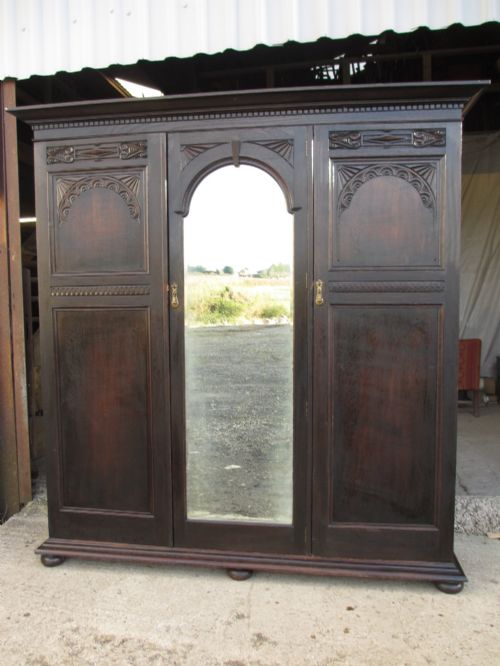
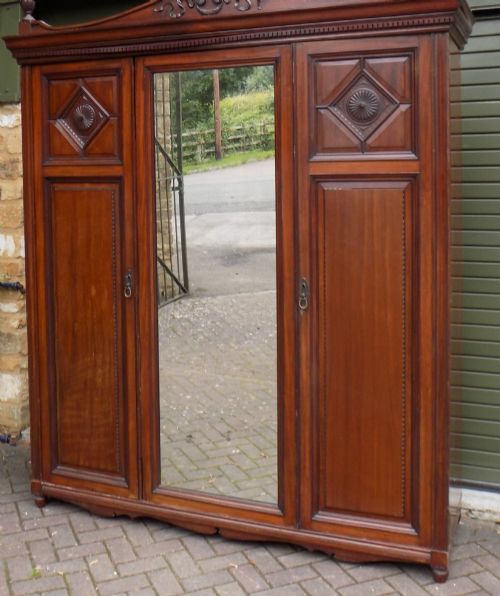


Dark Wood Triple Wardrobe
A dark wood triple wardrobe brings commanding presence and immense hanging space to a bedroom, combining traditional craftsmanship with rich timber tones.
Dark Wood Triple Wardrobe
A dark wood triple wardrobe is a substantial piece of bedroom furniture designed to provide extensive storage through a three-door configuration. These grand items typically divide their internal space between hanging sections and linen compartments, often incorporating central mirrored doors or drawer units below.
The pieces available span the Victorian and Edwardian eras, showcasing distinct design movements from the mid-nineteenth century up to nineteen hundred. Buyers are most likely to encounter mahogany constructions, including figured, flame, and inlaid variations, alongside robust oak and occasional rosewood examples.
Formats range from breakfront configurations and compactum designs to sentry box combinations and armoires. Victorian gothic revival, French empire, and art nouveau styling occasionally supplement the prevailing traditional aesthetic across the selection.
Materials and Construction
Makers utilised solid timbers and sophisticated veneers, notably flame mahogany and satinwood, bonded to sturdy carcases to achieve rich surface figuring. Brass hardware, such as handles and escutcheons, provides functional and decorative accents against the dark wood surfaces.
Carving and inlay work required skilled carpentry, utilising contrasting woods to create delicate linear patterns on door panels and cornices. Glass was expertly integrated into bevelled mirror doors, demanding robust framing to support the substantial weight.
The selection spans Victorian and Edwardian eras, utilising mahogany, oak, and rosewood with glass and brass elements.
Assessing Quality and Distinction
The distinction between standard pieces and exceptional examples rests in the selection of timber figures, where dramatic flame mahogany or intricate satinwood inlay elevates the visual impact. The crispness of hand-carved details and the integration of bevelled mirror glass further separate superior commissions from simpler utilitarian furniture.
Structural complexity also defines the upper tier, seen in breakfront silhouettes and compactum internal configurations that demand superior joinery. Original brass fittings and sound architectural proportions complete the markers of higher craftsmanship.
The Dark Wood Triple Wardrobe Glossary
- Breakfront
- A piece of furniture having a central section that projects forward from the flanking wings. This architectural arrangement creates a dynamic silhouette and accommodates deeper internal compartments.
- Compactum
- A multi-functional wardrobe featuring a combination of hanging space, drawers, and linen shelves within a single unit. It represents a highly organised approach to bedroom storage.
- Flame mahogany
- A veneer cut from timber where the grain resembles flickering flames, prized for its dramatic pattern. It was extensively utilised on high-status Victorian and Edwardian furniture.
- Sentry box
- A narrow, upright wardrobe design often found in combination pieces. The term derives from its resemblance to a military sentry post.
- Satinwood
- A pale, hard timber used predominantly for contrasting inlay and stringing on darker cabinet furniture. It provides a luminous highlight against mahogany and rosewood surfaces.
Dark Wood Triple Wardrobe: Frequently Asked Questions
What is a gentleman's wardrobe?
A gentleman's wardrobe typically integrates hanging compartments with banks of internal drawers specifically sized for folded garments and accessories. This hybrid format predates modern fitted closets and offers specialised storage.
Such pieces often reflect mid-Victorian domestic organisation, prioritizing compartmentalized storage over full-length hanging space alone.
How do I tell Victorian from Edwardian?
Victorian pieces generally display heavier proportions, darker finishes, and robust architectural detailing such as breakfront cornices or gothic revival motifs. Mahogany and rosewood dominate this earlier nineteenth-century production.
Edwardian furniture tends to be lighter in feel, frequently incorporating satinwood inlay, lighter mahogany tones, and brighter brass hardware reflecting the shift toward airier bedroom aesthetics.
Are mirrors original to these pieces?
Many Edwardian and late Victorian wardrobes feature bevelled mirror doors that were integral to the original design, intended to reflect light and add utility. Examining the silvering and the fit within the wooden frame helps confirm authenticity.
Original mirrors often show subtle signs of age, such as light foxing or oxidation around the bevelled edges, which distinguishes them from modern replacements.