



Dark Wood Serpentine Dresser
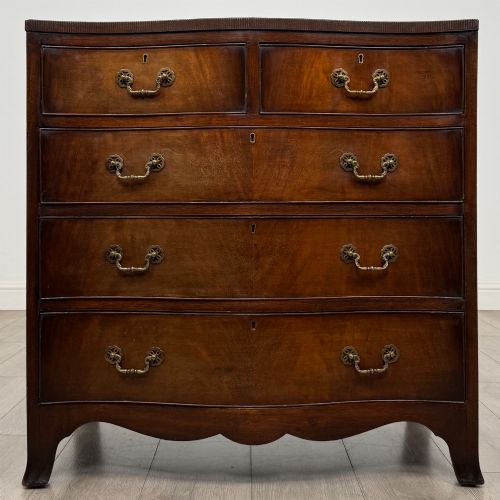
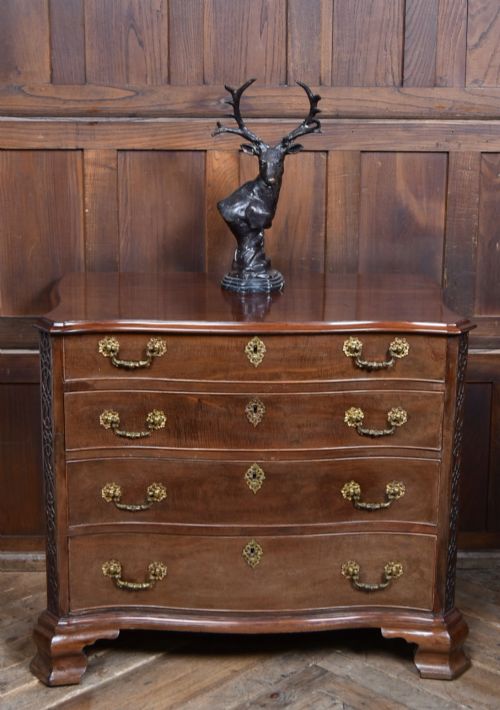
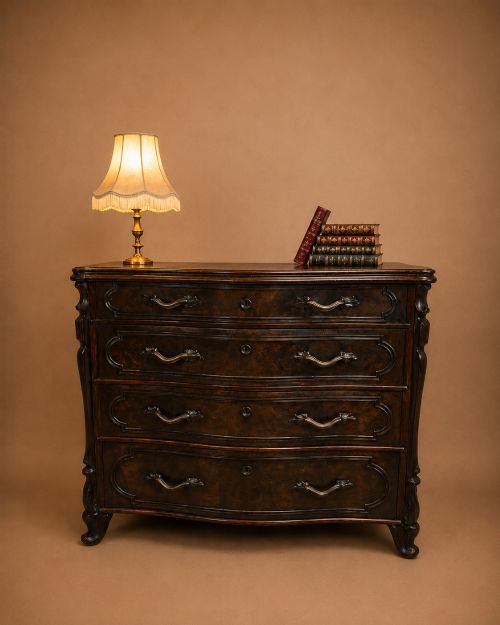
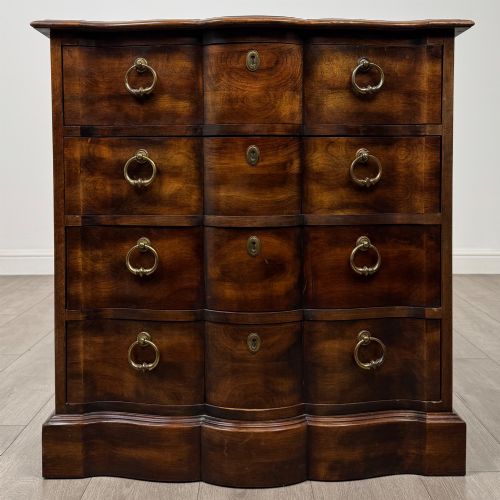
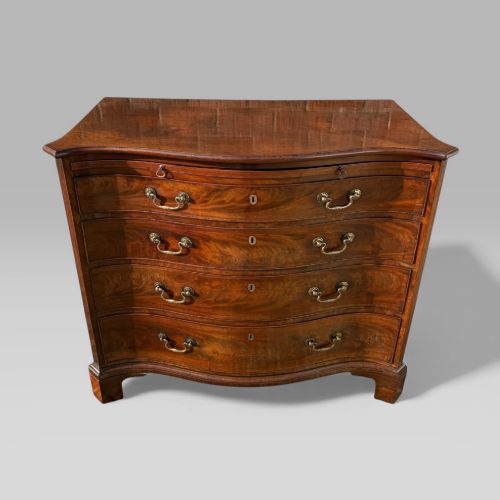
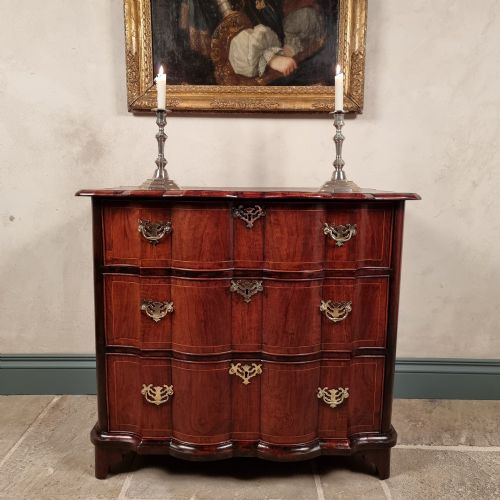
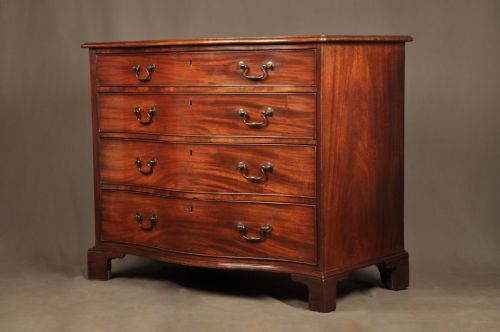
A dark wood serpentine dresser brings sinuous, undulating curves and rich timber tones into a room.
Dark Wood Serpentine Dresser
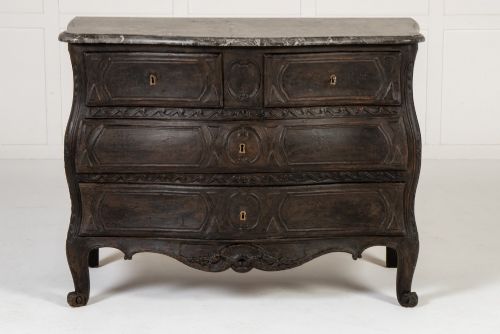
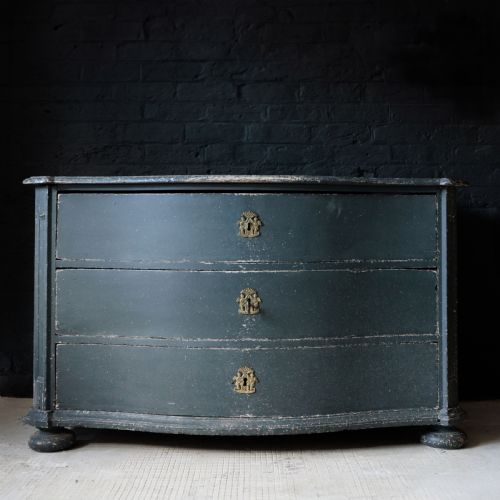
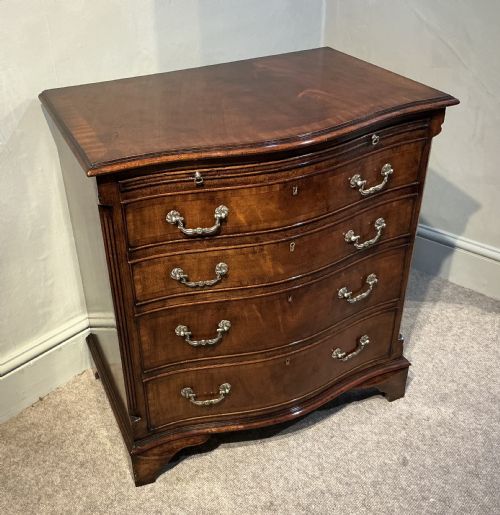
When you search for a dark wood serpentine dresser, you are looking at chests of drawers and commodes built with a distinctive wavy front that sweeps outward at the sides and recesses in the centre. The dark wood serpentine dresser most commonly seen on this page is fashioned from mahogany, walnut, or oak, often dating from the Georgian period or the eighteenth century, alongside later revivals.
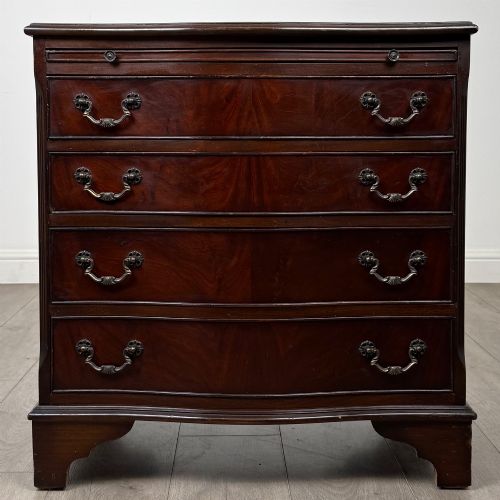
Makers shaped these timber forms with varied profiles, ranging from standard chests of drawers to commodes equipped with lift tops, writing slides, and brush attachments. These case pieces serve as focal storage units in domestic interiors, combining functional drawer space with sculptural cabinetry.
Examples span the eighteenth century through to Edwardian and later twentieth-century interpretations, drawing on Georgian, Chippendale, and French Provincial styles. The defining characteristic across these eras remains the undulating serpentine contour paired with dark timber.
How they were made
Cabinetmakers built these pieces using solid hardwoods like mahogany and walnut, frequently applying burr walnut veneer over secondary timbers to create patterned surfaces. Brass hardware, including handles and escutcheons, provides functional contrast against the dark wood grain.
Construction involved shaping thick timber planks into the characteristic curved front profile, requiring precise hand joinery to maintain structural integrity across the undulating drawer fronts. Some pieces incorporate painted finishes or marble tops, adding decorative texture to the foundational woodwork.
Listings feature mahogany, walnut, and oak timbers shaped into serpentine forms across Georgian, Edwardian, and eighteenth-century periods.
What varies in quality
The distinction between tiers of quality rests upon the choice of timber and the precision of the carved serpentine curves. Superior examples display carefully selected figured mahogany or burr walnut veneer with consistent grain alignment across the undulating drawer fronts.
Construction details such as dovetailed drawer joints and original brass fittings separate finer craftsmanship from later revival pieces. The fluidity of the serpentine sweep and the crispness of any applied mouldings dictate the overall refinement of the cabinet.
The Dark Wood Serpentine Dresser Glossary
- Serpentine
- A front contour that curves outward at the ends and recesses in the middle. This undulating shape requires advanced cabinetmaking skill to execute correctly.
- Commode
- A low chest of drawers or cabinet originating in France. These pieces often feature decorative hardware and polished wooden or marble surfaces.
- Veneer
- A thin layer of figured wood applied to a base timber. Burr walnut veneer creates patterned, decorative surfaces on furniture fronts.
- Chippendale Style
- A design classification inspired by eighteenth-century cabinetmaker aesthetics. Pieces in this style frequently incorporate elaborate carved details and serpentine profiles.
- Writing Slide
- A pull-out board integrated into the upper section of a chest. This feature provides a compact surface for correspondence.
Dark Wood Serpentine Dresser: Frequently Asked Questions
How do I identify a Georgian serpentine chest?
Look for period construction methods such as hand-cut dovetails and native timber framing beneath the mahogany or walnut surfaces. The proportions and hardware typically align with eighteenth-century manufacturing practices.
Examine the serpentine curve on the front drawers to ensure the sweep is shaped from solid timber or thick veneer rather than modern moulded composition.
Where should I place a serpentine dresser?
Position the piece against a flat wall in a bedroom or hallway where the curved front can be fully appreciated without obstruction. Ensure adequate clearance for drawers and any pull-out writing slides.
Keep the cabinet away from direct heat sources and strong sunlight to protect the dark wood polish and prevent veneer warping.
What is the difference between a chest and a commode?
The term commode often denotes pieces with French or continental styling, sometimes featuring lift tops or painted finishes. Chests of drawers generally follow British proportions and structural layouts.
Both forms utilise the serpentine front profile seen across eighteenth-century and revival periods.
How do I care for dark wood furniture?
Dust the timber regularly with a soft, dry cloth to prevent particle buildup on the polished surface. Avoid silicone-based sprays that can damage antique finishes over time.
Maintain stable room humidity levels to protect the solid mahogany, walnut, or oak construction from expansion and contraction.