
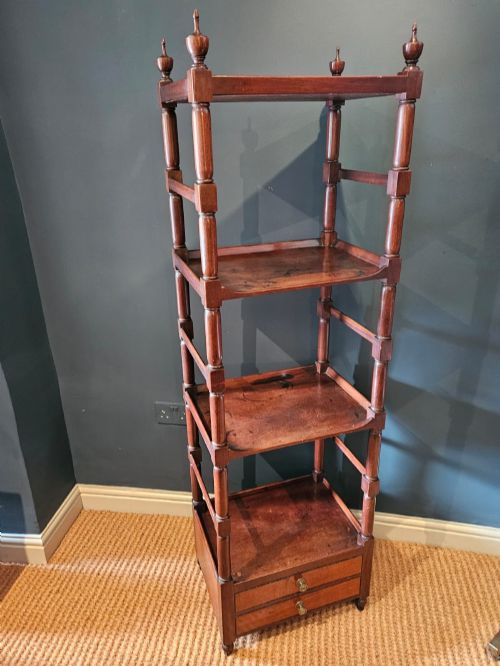
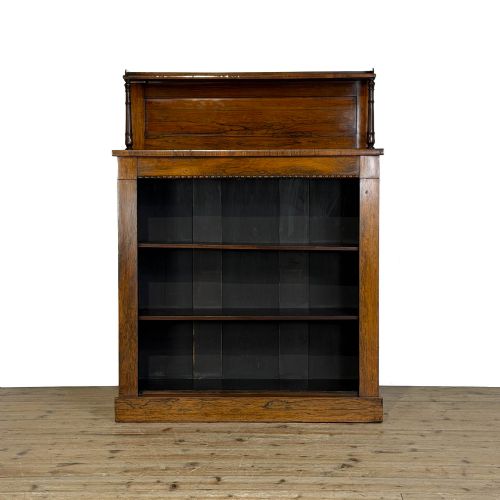
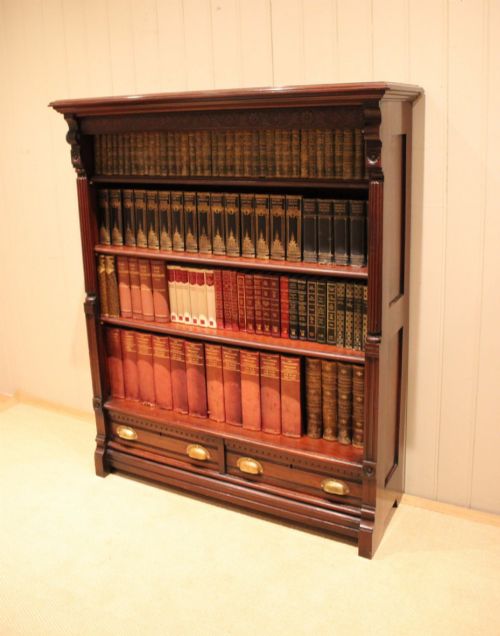
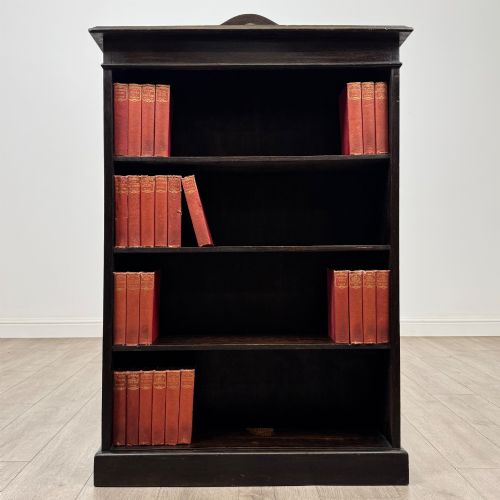
Dark Wood Library Shelves
Dark wood library shelves bring order and warmth to a room, offering sturdy timber housing for heavy volumes.
Dark Wood Library Shelves
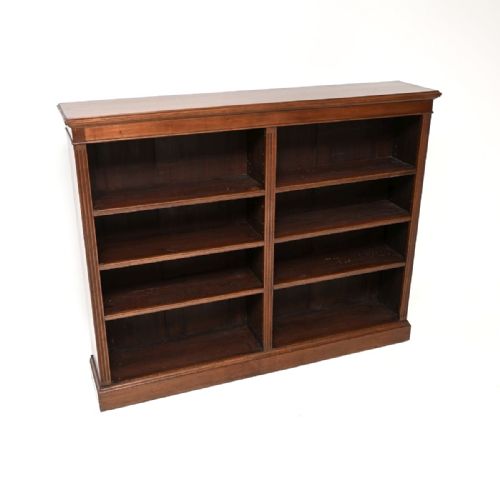
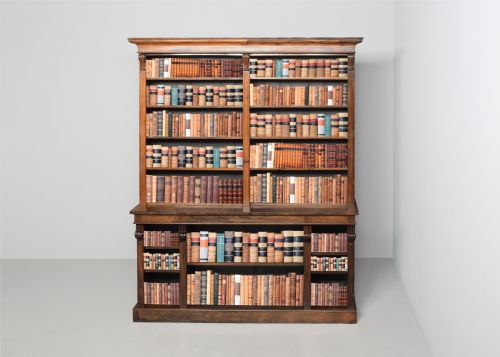
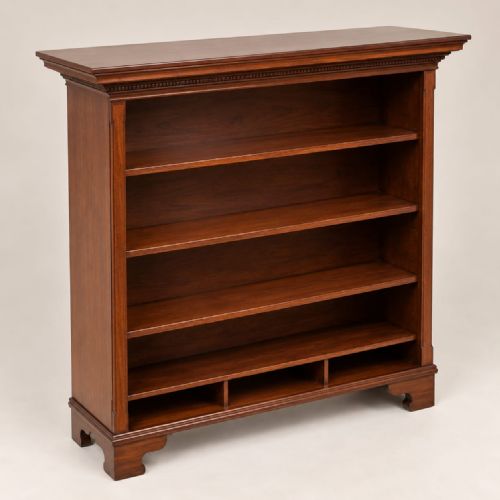
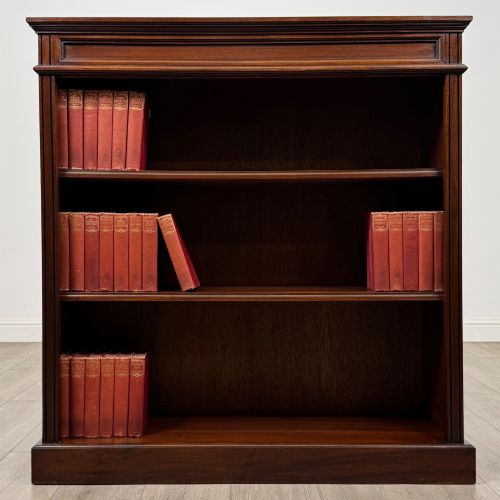
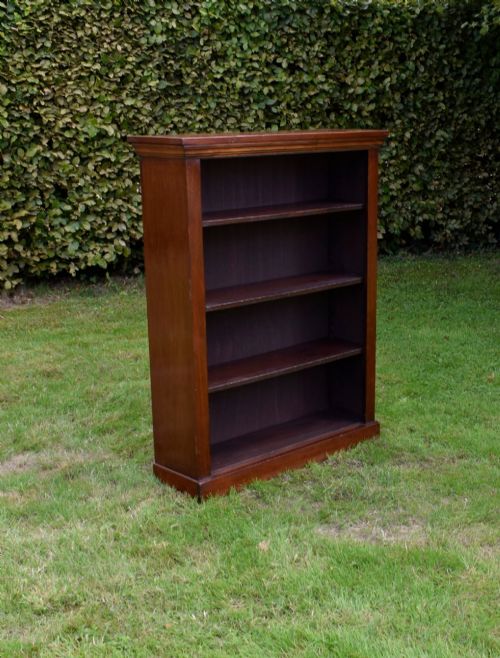
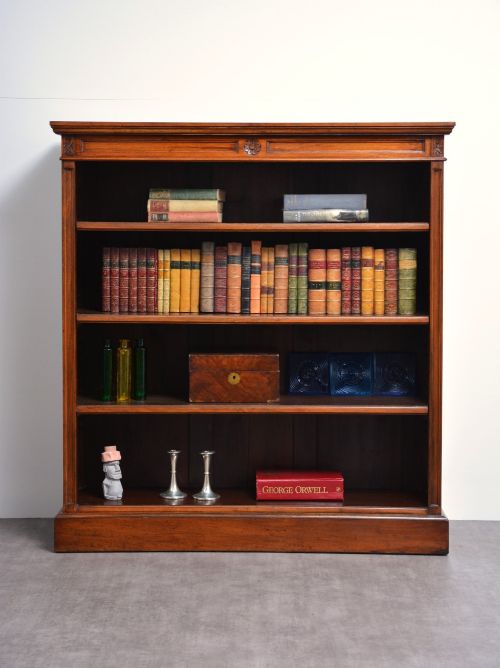
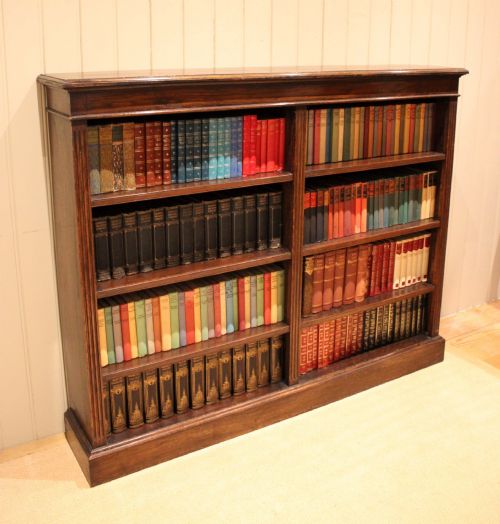
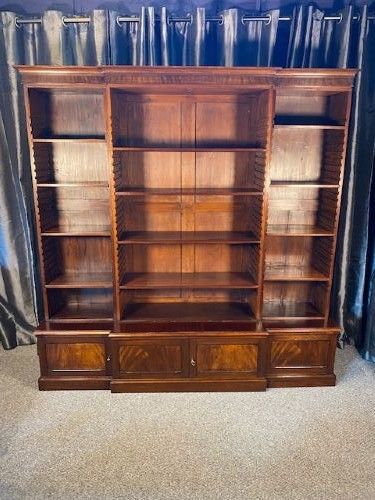
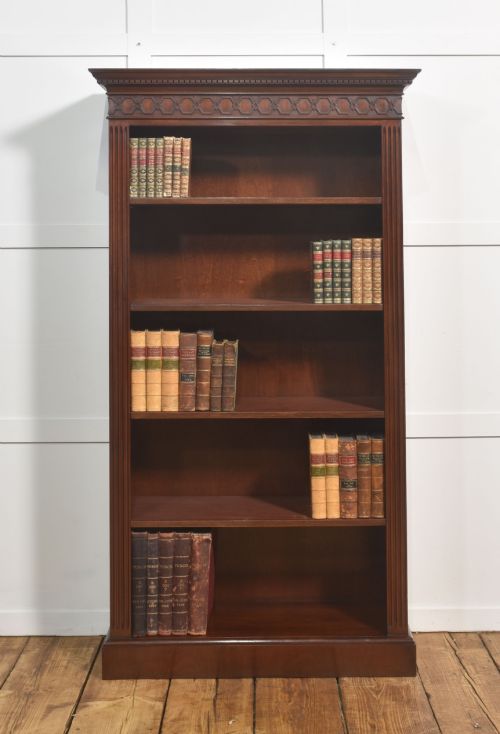
Dark wood library shelves primarily take the form of open bookcases and breakfront shelving units designed to hold large collections of books. Pieces matching dark wood library shelves span the Regency, Victorian, and Edwardian periods, running through the nineteenth and early twentieth centuries. Buyers frequently encounter tall mahogany, walnut, and oak designs equipped with adjustable shelves.
Makers and workshops of the nineteenth century built these library pieces to stand against walls or divide rooms in substantial homes. Variants range from low dwarf bookcases to large stepped structures and revolving models. Many surviving examples date from the Victorian era, offering deep shelves and robust timber construction.
Materials and construction
Cabinet makers utilised dense hardwoods such as mahogany, rosewood, walnut, and oak to build library shelves capable of supporting heavy rows of books. Flame mahogany and figured walnut veneers provided rich surface patterns on larger breakfront bookcases. Timber preparation relied on traditional joining methods to ensure the vertical uprights held firm under continuous weight.
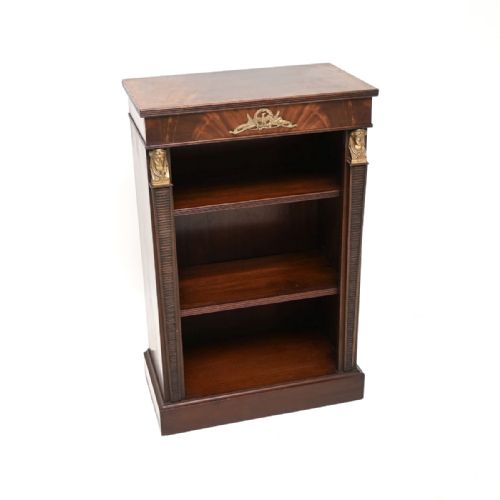
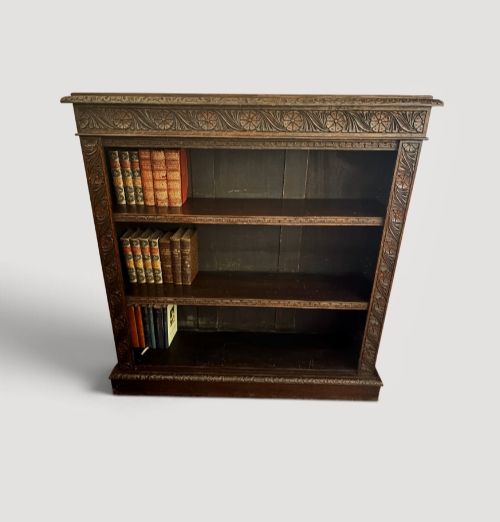
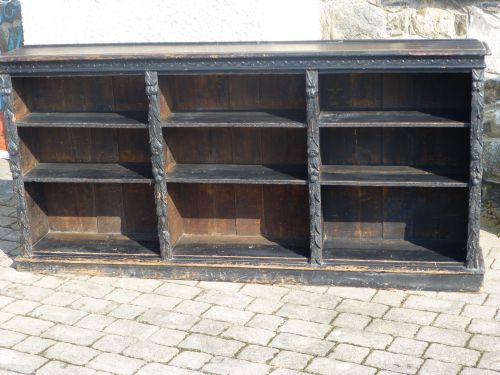
Mounts in brass and ormolu often decorated nineteenth-century walnut and mahogany pieces, adding contrasting metallic highlights to the timber. Glass doors appeared on select enclosed cabinets, though open shelving dominated standard library formats. Carved details, such as green man motifs or geometric mouldings, appeared on specific Victorian and Edwardian oak surfaces.
Listings feature mahogany, oak, walnut, rosewood, and pine across nineteenth-century and early twentieth-century periods.
Assessing quality and proportion
Quality rests in the selection of the timber, visible in the grain consistency of flame mahogany, rosewood, and walnut boards. Superior pieces exhibit precise joinery in the shelf supports and carcass frames, ensuring stability over decades of heavy loading. Finer library shelves integrate functional mechanical elements like smooth-sliding adjustable shelf pegs or solid brass brackets.
Proportion and scale distinguish standard utility furniture from pieces produced for grander libraries. Breakfront designs and larger stepped bookcases demonstrate more ambitious planning by the workshop. The presence of secondary timbers and refined edge mouldings separates simpler vernacular pieces from workshop-built productions.
Waring and Gillows·Globe Wernicke
The Dark Wood Library Shelves Glossary
- Breakfront
- A cabinet or bookcase where the central section projects forward from the flanking wings. This format creates visual depth in large library rooms.
- What-Not
- An open set of standing shelves with multiple tiers used for displaying or storing books and objects. These pieces often feature slender upright supports.
- Ebonised
- Timber treated to imitate the dark, dense appearance of ebony wood. Cabinet makers used this finish on nineteenth-century decorative items.
- Ormolu
- Gilt bronze mounted onto furniture surfaces for decorative effect. This technique appears on high-status Victorian walnut pieces.
- Dwarf bookcase
- A low shelving unit designed to sit beneath window height or along plain wall spaces. These items keep books within easy reach.
Dark Wood Library Shelves: Frequently Asked Questions
How do I adjust the shelves?
Most nineteenth-century library shelves use wooden ratchets, brass pegs, or vertical slots set into the interior carcass sides. You simply lift each shelf slightly to release it from the support mechanism and reposition it at the desired height.
Take care when moving heavy timber shelves to avoid damaging the interior veneer or support tracks. Ensure both sides are seated level before placing books back onto the timber.
Are these shelves strong enough for heavy books?
These library units were originally built from dense hardwoods like oak, mahogany, and walnut to hold heavy volumes. Solid timber construction provides natural resistance to sagging under normal library loads.
Over long periods, very wide shelves can develop a slight bow if overloaded. Distribute heavier folios across shorter shelf spans to maintain the integrity of the wood.
How do I identify a Victorian bookcase?
Victorian bookcases often feature rich mahogany or walnut timbers, sometimes complemented by brass mounts or carved oak detailing. Construction methods from this era include hand-cut dovetails and solid backboards.
Many examples from this period incorporate adjustable shelving systems using wood or metal supports. Proportions tend to be generous, reflecting the scale of nineteenth-century domestic interiors.